Ballon d’Or Winners Ranked: Players with the Most Awards
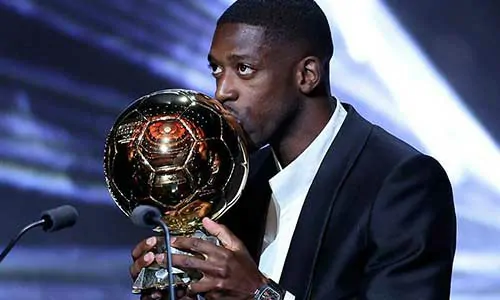
The Ballon d’Or remains the ultimate individual honor in professional football. Established in 1956, this prestigious award celebrates the absolute peak of footballing excellence. Over the decades, a select group of legendary players has managed to win the coveted trophy multiple times. In this comprehensive article, we rank the players with the most Ballon d’Or awards, highlighting their historic achievements and enduring legacies on the pitch.
Table of Contents
- 1. A Brief History of the Ballon d’Or
- 2. Quick Ranking Table: Players with Multiple Awards
- 3. The Elite: Most Ballon d’Or Wins (4+ Awards)
- 4. The Legends of Yesterday: Three-Time Winners
- 5. Double Triumphs: Two-Time Winners
- 6. Recent Ballon d’Or Winners (2020–2025)
- 7. The Evolution of the Voting System and Criteria
- 8. Conclusion and Reflection
- 9. Frequently Asked Questions (FAQ)
A Brief History of the Ballon d’Or
In 1956, the French sports magazine France Football introduced a simple yet profound concept: crowning the best football player in Europe. Spearheaded by renowned sports writer Gabriel Hanot, this initiative resulted in the creation of the Ballon d’Or. Initially, the award was exclusively reserved for European players, earning it the popular moniker of the European Footballer of the Year. Consequently, early global icons like Pelé and Diego Maradona were ineligible during their peak years.
Furthermore, the eligibility criteria underwent a monumental shift in 1995. The organizers expanded the pool to include any player representing a European club, regardless of nationality. This historic change immediately bore fruit when George Weah of Liberia claimed the trophy that same year, becoming the first non-European winner. Consequently, the award grew in prestige, capturing the attention of football fans across every continent.
Another major evolution occurred in 2007, when the Ballon d’Or officially went global. From that point forward, any professional footballer playing anywhere in the world became eligible for nomination. In addition, a partnership between France Football and FIFA from 2010 to 2015 briefly merged the accolade with the FIFA World Player of the Year, creating the FIFA Ballon d’Or. Although this partnership eventually ended, the original trophy retained its status as the most coveted individual prize in the sport.
Quick Ranking Table: Players with Multiple Awards
To understand the exclusive nature of this club, it is helpful to look at the numbers. Only a handful of athletes have stood atop the footballing world more than once. The following table provides a clear overview of the players who have claimed the Ballon d’Or on multiple occasions.
| Rank | Player | Country | Wins | Years Won |
|---|---|---|---|---|
| 1 | Lionel Messi | Argentina | 8 | 2009, 2010, 2011, 2012, 2015, 2019, 2021, 2023 |
| 2 | Cristiano Ronaldo | Portugal | 5 | 2008, 2013, 2014, 2016, 2017 |
| 3 | Michel Platini | France | 3 | 1983, 1984, 1985 |
| – | Johan Cruyff | Netherlands | 3 | 1971, 1973, 1974 |
| – | Marco van Basten | Netherlands | 3 | 1988, 1989, 1992 |
| 6 | Franz Beckenbauer | Germany | 2 | 1972, 1976 |
| – | Ronaldo Nazário | Brazil | 2 | 1997, 2002 |
| – | Alfredo Di Stéfano | Spain / Argentina | 2 | 1957, 1959 |
| – | Karl-Heinz Rummenigge | Germany | 2 | 1980, 1981 |
| – | Kevin Keegan | England | 2 | 1978, 1979 |
The Elite: Players with the Most Ballon d’Or Wins
The modern era of football has been defined by an unprecedented level of dominance. Two players, in particular, managed to redefine what was considered possible, rewriting the history books over a span of fifteen years.
Lionel Messi – 8 Ballon d’Or Awards
Lionel Messi stands alone at the pinnacle of football history with an astonishing eight trophies. The Argentine maestro achieved his first Ballon d’Or in 2009, initiating an era of unparalleled individual and collective success under manager Pep Guardiola at FC Barcelona.
What followed was an extraordinary run. Messi secured four consecutive awards between 2009 and 2012. In 2012, he shocked the sporting world by scoring 91 goals in a single calendar year, surpassing Gerd Müller’s long-standing record. Furthermore, he added his fifth trophy in 2015 after inspiring Barcelona to a historic continental treble alongside Neymar and Luis Suárez.
As his career progressed, Messi continued to evolve. He won his sixth award in 2019, followed by a seventh in 2021 after leading Argentina to a long-awaited Copa América victory. Ultimately, he secured his eighth Ballon d’Or in 2023, a triumph widely attributed to his legendary performance at the 2022 FIFA World Cup in Qatar, where he captained Argentina to the world title.
Cristiano Ronaldo – 5 Ballon d’Or Awards
The only player to closely rival Messi’s tally is Portugal’s Cristiano Ronaldo, who has claimed the prestigious trophy five times. Known for his incredible athleticism, relentless work ethic, and unmatched goalscoring instincts, Ronaldo won his first Ballon d’Or in 2008 while playing for Manchester United under Sir Alex Ferguson.
Following his high-profile transfer to Real Madrid, Ronaldo took his game to even greater heights. Although he finished as runner-up on several occasions, his perseverance resulted in back-to-back wins in 2013 and 2014. These victories were largely driven by his record-breaking goal tallies in the UEFA Champions League.
Moreover, Ronaldo secured his fourth and fifth trophies in 2016 and 2017. During this golden period, he guided Real Madrid to successive Champions League titles and captained Portugal to Euro 2016 glory. His rivalry with Messi defined a generation, elevating the standards of modern football to heights never seen before.
The Legends of Yesterday: Three-Time Winners
Before the Messi-Ronaldo duopoly, winning the trophy three times was considered the absolute benchmark of a legendary career. Only three players in history managed to reach this remarkable milestone.
Michel Platini – Three Consecutive Crowns (1983, 1984, 1985)
Michel Platini was the undisputed general of the midfield in the mid-1980s. Representing Juventus and the French national team, he became the first player in history to win three consecutive Ballon d’Or awards, demonstrating a level of sustained dominance that had never been achieved before.
Platini’s peak came in 1984, when he captained France to victory in the European Championship. He scored an incredible nine goals in just five tournament matches, a record that still stands. His elegant passing, clinical free-kicks, and tactical intelligence made him the focal point of every team he played for.
Johan Cruyff – The Visionary of Total Football (1971, 1973, 1974)
Johan Cruyff did not just play football; he fundamentally changed how the game was understood. The Dutch icon claimed his first trophy in 1971 with Ajax, before adding two more in 1973 and 1974 after his influential transfer to FC Barcelona.
Cruyff was the primary orchestrator of “Total Football,” a revolutionary tactical system where players could seamlessly swap positions. His movement, vision, and leadership on the pitch earned him immense respect, and his legacy continues to influence modern coaching philosophies worldwide.
Marco van Basten – The Ultimate Number Nine (1988, 1989, 1992)
Marco van Basten is widely regarded as one of the most complete strikers in the history of the sport. The Dutch forward claimed three trophies during a spectacular career with AC Milan and the Netherlands national team.
Van Basten’s 1988 triumph was highlighted by his legendary volley in the European Championship final against the Soviet Union. In addition, his clinical finishing helped AC Milan dominate European club football. Tragically, persistent ankle injuries forced him into early retirement at the age of 28, leaving fans to wonder how many more awards he might have won.
Double Triumphs: Two-Time Winners
Winning the award twice is a clear indicator of sustained, elite performance across different seasons. Five legendary players belong to this exclusive category.
Franz Beckenbauer – Der Kaiser (1972, 1976)
It is exceptionally rare for a defender to win the Ballon d’Or, making Franz Beckenbauer’s two victories even more extraordinary. “Der Kaiser” revolutionized the defensive side of the game by creating the role of the modern attacking sweeper, or “libero.”
Beckenbauer led Bayern Munich to three consecutive European Cups and captained West Germany to victory in both the 1972 European Championship and the 1974 World Cup. His composure on the ball and tactical intelligence set a new standard for defenders.
Ronaldo Nazário – O Fenômeno (1997, 2002)
At his peak, Ronaldo Nazário was practically unstoppable. He won his first award in 1997 at the age of 21, becoming the youngest recipient in the history of the prize—a record that still stands today.
Despite suffering devastating knee injuries that threatened to end his career, Ronaldo made a miraculous comeback. He led Brazil to the 2002 World Cup title, finishing as the tournament’s top scorer and securing his second trophy later that year.
Alfredo Di Stéfano – Real Madrid’s Engine (1957, 1959)
Alfredo Di Stéfano was the driving force behind Real Madrid’s historic dominance in the early years of European football. A versatile forward who could defend, playmake, and score, he won the award in 1957 and 1959.
In 1989, France Football presented Di Stéfano with a unique honor: the “Super Ballon d’Or.” He remains the only player in history to receive this award, which recognized him as the best player of the previous three decades.
Karl-Heinz Rummenigge and Kevin Keegan
Two other icons achieved back-to-back victories during the late 1970s and early 1980s:
- Kevin Keegan (1978, 1979): The English forward won consecutive awards while starring for German side Hamburger SV, showcasing his immense work rate and technical ability.
- Karl-Heinz Rummenigge (1980, 1981): The powerful German forward dominated European football with Bayern Munich, leading them to consecutive Bundesliga titles and a European Cup final.
Recent Ballon d’Or Winners (2020–2025)
As the legendary careers of Messi and Ronaldo entered their final chapters, a new generation of talent emerged to challenge for the crown. Consequently, the list of winners has diversified significantly in recent seasons.
In 2022, Karim Benzema claimed the award following a stellar season with Real Madrid, where he produced numerous crucial goals in their Champions League-winning campaign. Following him, Manchester City’s midfield anchor Rodri took home the trophy in 2024 after securing the Premier League and guiding Spain to victory at Euro 2024.
Most recently, the 2025 ceremony saw French forward Ousmane Dembélé win his first-ever Ballon d’Or. Dembélé enjoyed a spectacular season with Paris Saint-Germain, leading them to their historic first UEFA Champions League title alongside a domestic double, scoring 35 goals and providing 16 assists in 53 matches. On the women’s side, Aitana Bonmatí made history by winning her third consecutive Women’s Ballon d’Or in 2025, solidifying her status as the premier player in women’s football.
The Evolution of the Voting System and Criteria
The process of choosing the winner has evolved over time to ensure greater fairness and accuracy. Historically, only European journalists were permitted to vote. However, the modern voting panel consists of specialized sports journalists from the top 100 FIFA-ranked nations for the men’s award.
Furthermore, the evaluation criteria were updated ahead of the 2022 edition. The primary change shifted the focus from the calendar year to the European club season (August to July). Today, the three main criteria for voting are:
- Individual performance and decisive character of the nominees.
- Team collective success and trophies won during the season.
- Player class, reputation, and commitment to fair play.
Conclusion and Reflection
The history of the Ballon d’Or is a reflection of the history of modern football itself. From the early dominance of Alfredo Di Stéfano to the extraordinary era of Lionel Messi and Cristiano Ronaldo, this trophy continues to represent the absolute pinnacle of individual achievement. Each winner has left an indelible mark on the sport, inspiring future generations to strive for greatness.
As football enters a new era filled with exciting young talent, the race for the next golden ball promises to be highly competitive. Who do you think will dominate the next decade of football awards? Will we see another player reach the historic heights of Messi and Ronaldo? Let us know your thoughts in the comments below!
Frequently Asked Questions (FAQ)
Q1: Who has won the most Ballon d’Or awards in history?
A1: Lionel Messi holds the record for the most awards, having won the trophy eight times (2009, 2010, 2011, 2012, 2015, 2019, 2021, and 2023).
Q2: Has a goalkeeper ever won the Ballon d’Or?
A2: Yes, Lev Yashin of the Soviet Union is the only goalkeeper to win the award, claiming it in 1963 due to his revolutionary style of play and exceptional shot-stopping ability.
Q3: Why did Pelé and Diego Maradona never win the Ballon d’Or?
A3: Prior to 1995, only European players active in Europe were eligible for the award. Because Pelé played mostly in Brazil and Maradona was non-European, they were ineligible. However, in 2016, France Football published an honorary re-evaluation, stating Pelé would have won seven awards had he been eligible.
Q4: What is the difference between the Ballon d’Or and FIFA’s “The Best” award?
A4: The Ballon d’Or is organized independently by the French magazine France Football, while “The Best” is organized directly by FIFA, the sport’s global governing body. Both use different voting panels and criteria.
Q5: Who won the Ballon d’Or in 2025?
A5: Ousmane Dembélé won the men’s award in 2025 after leading Paris Saint-Germain to Champions League and domestic glory. Aitana Bonmatí won the women’s award for the third consecutive year.
Q6: Who is the youngest player to ever win the award?
A6: Ronaldo Nazário is the youngest winner in history, claiming his first trophy in 1997 at the age of just 21 years and 95 days.
For more official details and historic rankings, you can visit the official France Football Portal or check out official updates on UEFA’s Official Website.