BMO Field World Cup 2026 Upgrades: How Toronto Is Preparing for FIFA
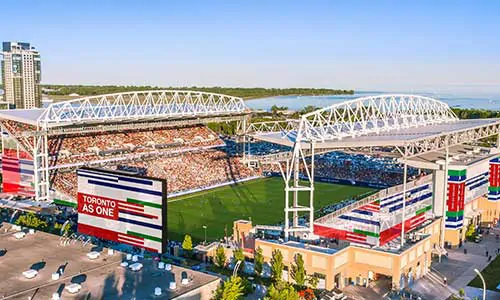
The excitement is reaching a fever pitch as Toronto prepares to take center stage on the global soccer map. The iconic BMO Field, which will be officially referred to as Toronto Stadium during the tournament, has undergone a massive transformation to prepare for the prestigious FIFA World Cup 2026. This $157.9 million renovation represents a monumental milestone in Canadian sports history, bringing the world’s most-watched sporting event to the country for the first time. Consequently, both local fans and international visitors are eager to see how the venue has evolved to meet elite international standards.
As the city counts down the final days to kickoff, Toronto is buzzing with energy. The tournament is set to bring thousands of global fans, cultural celebrations, and elite athletic competitions to Ontario’s capital. In this detailed guide, we will break down the extensive renovations, technology integrations, and logistical plans that ensure Toronto is fully prepared to deliver a world-class sporting spectacle.
Table of Contents
- 1. The Evolution from BMO Field to Toronto Stadium
- 2. Construction Timeline: A Two-Phase Engineering Feat
- 3. Meeting the Standards for the FIFA World Cup 2026
- 4. High-Tech Upgrades: LED Boards, Wi-Fi, and Broadcast Infrastructure
- 5. Seating Capacity and the FIFA World Cup 2026 Requirements
- 6. Premium Hospitality: Suites, Lounges, and Expanded Dining
- 7. The World-Class Hybrid Pitch and Team Facilities
- 8. The FIFA World Cup 2026 Match Schedule in Toronto
- 9. Transit, Logistics, and the FIFA Fan Festival
- 10. The Lasting Legacy: What Happens After the Final Whistle?
- 11. Frequently Asked Questions (FAQ)
1. The Evolution from BMO Field to Toronto Stadium
BMO Field has long been the heart of outdoor sports in Toronto. Nestled within the historic grounds of Exhibition Place, the venue has served as the home turf for Major League Soccer’s Toronto FC and the Canadian Football League’s Toronto Argonauts. However, hosting a global tournament requires temporary rebranding and massive restructuring. Because of FIFA’s strict policies against commercial stadium names during international events, the venue is operating under the moniker “Toronto Stadium” for the duration of the tournament.
The venue is one of only two Canadian sites chosen to host the FIFA World Cup 2026, alongside Vancouver’s BC Place. To prepare the municipally-owned stadium for this massive task, the City of Toronto partnered closely with Maple Leaf Sports & Entertainment (MLSE). Together, they embarked on an ambitious revitalization plan funded by municipal, provincial, and federal investments. This historic collaboration ensures that the venue meets every stringent criterion laid out by soccer’s governing body while creating a vibrant atmosphere for visiting fans.
2. Construction Timeline: A Two-Phase Engineering Feat
Rebuilding a major sports stadium while keeping it operational is an incredibly complex engineering task. To minimize disruption to ongoing Toronto FC and Toronto Argonauts seasons, construction teams executed the upgrades in two distinct phases between December 2024 and March 2026. This structured schedule was necessary so that the stadium could remain functional during construction, maintaining its operations until the final handover for the FIFA World Cup 2026.
The first phase, which concluded in September 2025, focused on the underlying structural and technical systems. Engineers laid down high-bandwidth fiber optic cabling, built upgraded electrical substations, and integrated foundational broadcast wiring. On the other hand, the second phase, completed in March 2026, focused heavily on tournament-ready features. This phase introduced the massive temporary seating blocks, refined player facilities, and installed the brand-new pitch, successfully delivering a fully compliant stadium ahead of schedule.
3. Meeting the Standards for the FIFA World Cup 2026
To secure host status for the FIFA World Cup 2026, the organizing committee had to comply with strict regulatory frameworks. These guidelines make sure that every facility hosting a match under the FIFA World Cup 2026 umbrella offers a uniform player and fan experience. Key requirements spanned across various categories, including field dimensions, broadcast quality, and accessibility standards.
In addition to physical seating requirements, FIFA mandates specific dimensions for the pitch and the surrounding safety zones. To accommodate these regulations, Toronto Stadium had to modify its sidelines and relocate team dugouts. Additionally, the venue upgraded its media tribunes to accommodate hundreds of sports journalists from across the globe, ensuring that the local stories of the tournament reach a worldwide audience without technical interruptions.
4. High-Tech Upgrades: LED Boards, Wi-Fi, and Broadcast Infrastructure
Modern sports fans expect flawless digital connectivity, and global broadcasters require top-tier production environments. Recognizing this, project managers prioritized technology during the stadium’s overhaul. The most striking visual upgrade is the addition of four giant LED videoboards situated in each corner of the stadium. These state-of-the-art screens replace the older, single scoreboard, offering crisp replays and match data from any seat in the house.
Furthermore, the stadium’s wireless internet infrastructure was completely rebuilt. Fans can now access high-speed public Wi-Fi, allowing thousands of users to upload videos, check live stats, and stream content simultaneously without lag. Broadcasting a tournament of this scale requires immense power and connectivity, especially when managing the globally televised matches of the FIFA World Cup 2026. As a result, the expanded broadcast compound is now equipped with redundant power systems and high-capacity fiber nodes to support seamless 4K and 8K transmissions.
5. Seating Capacity and the FIFA World Cup 2026 Requirements
Perhaps the most challenging aspect of Toronto’s venue preparation was expanding the seating capacity. Under governing regulations, any stadium hosting group stage matches in the FIFA World Cup 2026 must have a minimum capacity of 45,000 spectators. Prior to these renovations, Toronto Stadium’s standard capacity sat at a modest 28,180. Consequently, a massive structural expansion was required to close the gap.
To achieve this, construction crews installed a total of 17,756 temporary seats, bringing the total tournament capacity to 45,736. The vast majority of these temporary structures are distributed across the north and south ends of the stadium. Specifically, the distribution of these temporary additions includes:
- North Grandstand: Approximately 10,000 temporary seats constructed over the existing open patio.
- South Grandstand: Roughly 7,000 temporary seats, featuring specialized fieldside rows situated just feet away from the pitch boundary.
These temporary stands are engineered with high-strength steel scaffolding designed to withstand heavy loads and severe weather conditions. Therefore, temporary seating became the perfect solution for the FIFA World Cup 2026 preparations, allowing the city to scale up without long-term overhead.
6. Premium Hospitality: Suites, Lounges, and Expanded Dining
With thousands of international media and high-profile guests arriving for the FIFA World Cup 2026, the stadium’s premium areas needed a massive face-lift. The completed renovations introduced 32 brand-new, ultra-luxurious hospitality suites, alongside 4,000 dedicated hospitality seats. A new premium center-field lounge provides an exclusive viewing area with direct views of the players’ tunnel, giving guests an intimate look at the athletes before they step onto the field.
Moreover, the general fan experience has been greatly improved. The stadium now features an expanded central kitchen and modernized food concession stands. To reduce queuing times, developers integrated self-serve ordering kiosks and contactless payment technology. Spectators can choose from a staggering array of 140 to 180 customized menu items, highlighting the multicultural culinary identity of Toronto.
7. The World-Class Hybrid Pitch and Team Facilities
The quality of the playing surface is paramount to player safety and the flow of the game. To meet elite standards, the old grass surface was replaced with a cutting-edge hybrid stitched pitch. This specialized system combines premium natural Kentucky bluegrass with millions of synthetic reinforcing fibers stitched deep into the soil. This state-of-the-art pitch ensures that the intense fixture schedule of the FIFA World Cup 2026 does not degrade the quality of the playing surface.
To give you a better understanding of how these field upgrades stack up against previous configurations, consider the comparison table below:
| Feature | Previous Configuration | New World Cup Configuration |
|---|---|---|
| Pitch Technology | Standard Natural Kentucky Bluegrass | Stitched Hybrid Grass (SISGrass System) |
| Seating Capacity | 28,180 seats | 45,736 seats (including temporary stands) |
| Scoreboard Displays | One primary northern end screen | Four giant LED boards in each corner |
| Team Locker Rooms | Standard MLS/CFL grade dressing rooms | Modernized elite team suites & medical rooms |
Behind the scenes, player facilities have been completely overhauled. Both the home and away locker rooms were expanded to feature premium recovery tubs, specialized tactical briefing areas, and advanced medical suites. Consequently, players participating in the FIFA World Cup 2026 will experience one of the finest, most consistent pitches and locker room setups in North American soccer.
8. The FIFA World Cup 2026 Match Schedule in Toronto
Toronto is scheduled to host a total of six highly anticipated matches. The tournament officially kicks off at Toronto Stadium on June 12, marking a historic moment as the first men’s match of the FIFA World Cup 2026 played on Canadian soil. Most excitingly, this opening game will feature the Canadian Men’s National Team, setting up an electric environment for local supporters.
Having the home nation kick off their campaign here cements Toronto’s status as a core pillar of the FIFA World Cup 2026. Following the opening match, the stadium will host four additional group-stage fixtures, bringing diverse footballing cultures from across the world to Exhibition Place. The final match in Toronto will be a high-stakes Round of 32 knockout fixture on July 2, where teams will battle for a spot in the later rounds of the tournament.
9. Transit, Logistics, and the FIFA Fan Festival
Successfully hosting a major global sporting event requires more than just a beautiful stadium; it demands a highly coordinated urban transport strategy. Because Toronto Stadium is located at Exhibition Place, it is uniquely positioned near major rail and streetcar corridors. To accommodate the millions of travelers expected during the FIFA World Cup 2026, transit networks are scaling up their schedules.
Metrolinx and GO Transit have scheduled increased train frequencies along the Lakeshore West line, delivering fans directly to the Exhibition GO Station adjacent to the stadium. Additionally, the Toronto Transit Commission (TTC) is dedicating express shuttle buses and prioritizing key streetcar lines, such as the 509 Harbourfront and 511 Bathurst, to keep the city moving smoothly. For those looking to celebrate outside the stadium, the official FIFA Fan Festival will take place at Fort York National Historic Site and The Bentway, offering giant outdoor viewing screens, live music, and interactive fan zones.
10. The Lasting Legacy: What Happens After the Final Whistle?
A major concern with hosting mega-events is the post-tournament utility of the infrastructure. Fortunately, the city and MLSE designed these stadium upgrades with a sustainable legacy in mind. While some elements are temporary, the vast majority of the investments made for the FIFA World Cup 2026 will leave a permanent positive impact on Toronto’s sporting scene.
Immediately following the conclusion of the tournament, crews will begin dismantle operations on the 17,756 temporary seats. This will return Toronto Stadium back to its standard capacity, making it a highly intimate and manageable venue for Toronto FC and the Toronto Argonauts once again. However, the premium hospitality lounges, the high-speed Wi-Fi, the advanced sound systems, and the hybrid pitch will remain intact. This ensures that Toronto’s sports infrastructure is elevated for decades to come.
As we count down to kick-off, the stage is set for an unforgettable FIFA World Cup 2026 experience. The upgraded Toronto Stadium stands ready to showcase Canadian hospitality and passion to the entire world. For more details on tickets and spectator guides, you can visit the official FIFA website or check transit and security advisories on the City of Toronto portal.
11. Frequently Asked Questions (FAQ)
Q1: How many matches will Toronto host during the FIFA World Cup 2026?
A: Toronto Stadium is scheduled to host six matches in total. This includes five group-stage matches (including Canada’s historic opening match on June 12) and one Round of 32 knockout fixture on July 2.
Q2: What is BMO Field’s capacity for the FIFA World Cup 2026?
A: The stadium’s capacity has been expanded to 45,736 seats. This was achieved by adding 17,756 temporary seats to the north and south ends to meet the tournament’s minimum seating requirement.
Q3: Why is BMO Field referred to as “Toronto Stadium” during the tournament?
A: FIFA regulations strictly prohibit corporate-sponsored stadium names during its official tournaments. Therefore, the venue has temporarily dropped its “BMO” branding and will go by “Toronto Stadium” throughout the event.
Q4: What will happen to the extra seats after the tournament ends?
A: The 17,756 temporary seats will be carefully dismantled and removed after the final whistle. The stadium will return to its standard operational capacity of approximately 28,000 seats for TFC and Argonauts games.
Q5: What are the main permanent upgrades that will remain at the stadium?
A: Permanent improvements include the cutting-edge hybrid stitched pitch, four high-definition corner videoboards, upgraded audio and lighting systems, robust public Wi-Fi, and modernized team dressing rooms and hospitality suites.
Q6: Where is the FIFA Fan Festival in Toronto located?
A: The official FIFA Fan Festival is hosted at the Fort York National Historic Site and The Bentway. This family-friendly zone features massive viewing screens, culinary options, interactive games, and live performances.