Box-to-Box Midfielder Explained: Duties, Skills and Tactical Importance
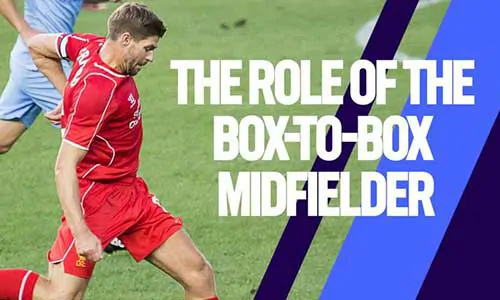
In modern football, tactical flexibility is often the defining factor between championship glory and early tournament exit. As national teams begin finalizing their tactical blueprints for the highly anticipated FIFA World Cup 2026, coaches are searching for versatile players who can dominate both ends of the pitch. Among these, the box-to-box midfielder is arguably the most demanding yet crucial role in contemporary tactical setups.
Known traditionally as the “number eight,” this player acts as the team’s engine room, seamlessly connecting defense and attack. In this comprehensive guide, we will analyze the duties, essential skills, and tactical importance of the box-to-box midfielder. Furthermore, we will examine how this tireless position is set to shape the strategies of elite nations competing in the FIFA World Cup 2026.
Table of Contents
- What is a Box-to-Box Midfielder?
- The Historical Evolution of the Number Eight
- Core Duties: Defensive vs. Offensive Responsibilities
- Key Technical and Physical Skills Required
- Why Box-to-Box Midfielders are Crucial for the FIFA World Cup 2026
- The Demands of the FIFA World Cup 2026
- Top Box-to-Box Midfielders to Watch at the FIFA World Cup 2026
- Tactical Formations: Where the No. 8 Thrives
- How to Train as a Box-to-Box Midfielder
- Frequently Asked Questions (FAQs)
What is a Box-to-Box Midfielder?
At its core, a box-to-box midfielder is a player whose responsibilities span from their own defensive penalty box to the opponent’s attacking penalty box. Unlike specialized holding midfielders who focus primarily on shielding the defense, or creative playmakers who operate strictly in the final third, the box-to-box midfielder must do both.
This dual responsibility requires a rare combination of physical endurance, tactical discipline, and technical proficiency. Consequently, these players are highly valued by modern managers who favor high-intensity, fluid transition play. On the pitch, they provide numerical superiority during defensive phases and create vital overloads during attacking transitions.
According to tactical experts, the presence of a world-class box-to-box player allows a team to dominate the midfield battle. By acting as a bridge, they ensure the team remains balanced, preventing the tactical disconnect that often occurs between defense and attack.
The Historical Evolution of the Number Eight
Historically, the box-to-box midfielder was defined by sheer physical power and relentless running. Legendary figures such as Lothar Matthäus, Bryan Robson, Roy Keane, and Patrick Vieira set the gold standard in previous decades. They were followed by iconic Premier League stars like Steven Gerrard, Frank Lampard, and Yaya Touré, who added a clinical scoring touch to their defensive duties.
In the modern era, however, the role has evolved significantly. While physical power remains highly important, tactical intelligence, spatial awareness, and press-resistance are now equally vital. Modern tactical systems rely heavily on counter-pressing and rapid build-up play, which forces the contemporary box-to-box midfielder to make split-second decisions under intense pressure.
Additionally, modern coaching philosophies favor players who can occupy multiple zones. The traditional “lung-busting” runs are now augmented with precise positional play, where midfielders exploit half-spaces and create passing angles to break down organized low blocks.
Core Duties: Defensive vs. Offensive Responsibilities
To fully appreciate this position, it is useful to divide the player’s responsibilities into defensive and offensive categories. A true box-to-box midfielder must balance these roles without leaving their team structurally vulnerable.
Defensive Duties
- Pressing and Ball Recovery: They are often the first line of defense in the middle third, tasked with closing down opponents and forcing turnovers.
- Tracking Back: When the opponent counters, they must sprint back to support the defensive line and cover open spaces.
- Interceptions and Tackles: Disrupting passing lanes and winning physical duels to regain possession of the ball.
Offensive Duties
- Ball Progression: Carrying the ball forward from deep positions or executing progressive passes through opposition lines.
- Late Runs into the Penalty Box: Arriving late to exploit spaces left open by forwards, often leading to crucial goalscoring opportunities.
- Creating Overloads: Supporting wingers and strikers to create numerical advantages in the final third of the pitch.
To summarize these duties, let us look at how these roles balance out during a standard 90-minute match:
| Defensive Phase | Transition Phase | Attacking Phase |
|---|---|---|
| Intercepting passes | Progressive ball carrying | Late runs into the box |
| Pressuring holding midfielders | Breaking defensive lines | Supporting the front line |
| Securing second balls | Escaping high presses | Shooting from distance |
Key Technical and Physical Skills Required
Playing this position requires a highly balanced skill set. Without these core attributes, a midfielder can easily become a liability, leaving gaps in defense or failing to contribute during attack.
1. Elite Stamina and Work Rate: This is the foundation of the position. A box-to-box midfielder must consistently cover 11 to 13 kilometers per match. Consequently, high aerobic capacity is mandatory to maintain intensity from the first minute to the last.
2. Tactical Awareness and Decision-Making: Understanding when to commit forward and when to stay deep is critical. If a midfielder pushes up at the wrong time, they leave the defense exposed to counter-attacks.
3. Passing Range and Vision: They must possess the ability to play short, quick combinations as well as long, sweeping diagonal passes. This versatility allows them to dictate the tempo of the game effectively.
4. Press Resistance: In modern football, midfielders are constantly pressured by opposing defenders. Therefore, excellent first touch, body control, and composure under pressure are highly necessary.
Why Box-to-Box Midfielders are Crucial for the FIFA World Cup 2026
The upcoming FIFA World Cup 2026 will be a historic tournament, featuring an expanded format with 48 teams competing across three host nations. This expansion means more matches, higher stakes, and an even greater demand on player durability.
Moreover, the extreme travel distances across Canada, Mexico, and the USA during the FIFA World Cup 2026 will test squad depth to its absolute limits. In such conditions, players who can fulfill multiple tactical roles will be highly valuable to national team managers.
A squad that features elite box-to-box midfielders can manage match tempos more effectively, saving energy during grueling group stages. Consequently, squad depth and physical preparation for the FIFA World Cup 2026 will require versatile players who can operate as defensive shields in one game and attacking playmakers in the next.
The Demands of the FIFA World Cup 2026
Playing in varied climates—from the high altitudes of Mexico City to the humid coastal areas of the United States—will impact player performance. Competing at the highest level in the FIFA World Cup 2026 demands midfielders who can maintain high work rates despite these environmental challenges.
Therefore, managers are prioritizing players who exhibit exceptional recovery rates. A team with a dynamic engine room will be much better equipped to handle the high-pressing tactical setups favored by modern international teams.
Top Box-to-Box Midfielders to Watch at the FIFA World Cup 2026
As international squads prepare, several world-class players will take the stage at the FIFA World Cup 2026 to showcase their tactical and physical excellence. Here are three players who exemplify the modern box-to-box role:
Jude Bellingham (England)
Bellingham has emerged as one of the most complete midfielders in world football. Combining physical power, exceptional dribbling, and an eye for goal, he transition seamlessly between defense and attack. He will undoubtedly be a vital component of England’s pursuit of glory at the FIFA World Cup 2026.
Federico Valverde (Uruguay)
Known for his incredible speed and endless stamina, Valverde is the modern prototype of the tireless midfielder. His ability to recover possession deep in his own half and sprint forward to support the attack makes him the driving force behind Uruguay’s success during the FIFA World Cup 2026.
Nicolò Barella (Italy)
Barella provides a perfect blend of technical Italian playmaking and relentless work ethic. His quick movement and ability to unlock compact defenses with precise passing will be central to the tactical setups expected from Italy during the FIFA World Cup 2026.
Tactical Formations: Where the No. 8 Thrives
The system a team deploys heavily influences how a box-to-box midfielder operates. While they can adapt to various setups, they are most effective in formations that offer central support.
In a classic 4-3-3 formation, they operate as one of the two advanced central midfielders. This system allows them the freedom to make late forward runs, knowing that a dedicated defensive midfielder is positioned behind them to sweep up opposition counters. This system will be a popular choice at the FIFA World Cup 2026 due to its natural balance.
Alternatively, in a 3-5-2 system, the box-to-box player is responsible for controlling the half-spaces. They work in tandem with the wingbacks, shifting wide to provide cover or moving inward to overload the central areas during attacking transitions.
How to Train as a Box-to-Box Midfielder
Developing the capabilities required for this position takes dedication and structured training. Aspiring players must prioritize both physical conditioning and tactical intelligence.
- High-Intensity Interval Training (HIIT): To replicate the demands of a match, training should include short, explosive sprints followed by brief recovery periods.
- Continuous Spatial Scanning: Practicing scanning the field before receiving the ball helps improve decision-making under intense pressure.
- Defensive Positioning Drills: Working on shadow play and understanding when to press or drop helps develop defensive discipline.
Ultimately, consistent practice of these elements is crucial for aspiring players who dream of competing on stages like the FIFA World Cup 2026.
Frequently Asked Questions (FAQs)
1. What is the difference between a box-to-box midfielder and a holding midfielder?
A holding midfielder focuses primarily on defensive duties, protecting the backline, and distributing simple passes. In contrast, a box-to-box midfielder operates across the entire pitch, contributing actively to both defensive recovery and attacking plays.
2. What shirt number is typically associated with a box-to-box midfielder?
This role is traditionally associated with the number 8, representing a player who balances defensive duties (associated with number 6) and creative attacking play (associated with number 10).
3. Why are box-to-box midfielders considered vital for the FIFA World Cup 2026?
The challenging climate and expanded format of the FIFA World Cup 2026 make versatility essential. These players allow managers to modify their strategies during a match without needing to use valuable substitutions.
4. Can a box-to-box midfielder also play as a defensive midfielder?
Yes, many box-to-box players possess the defensive skills and physical attributes necessary to play as a defensive midfielder, though doing so can limit their offensive contributions.
5. What is the average distance covered by a box-to-box midfielder in a match?
On average, elite players in this position cover between 11 and 13 kilometers per match, which is typically higher than players in almost any other position on the field.
6. Which young players are expected to break out as box-to-box midfielders at the FIFA World Cup 2026?
Fans and analysts should keep an eye on rising talents during the FIFA World Cup 2026 as they establish themselves as the next generation of complete central players.
Conclusion
The box-to-box midfielder remains one of the most demanding yet rewarding roles in modern football. By balancing defensive grit with offensive creativity, these players serve as the engine that drives their teams forward, especially in the modern eras like the upcoming FIFA World Cup 2026.
As tactics continue to evolve, the demand for versatile, highly fit, and intelligent number eights will only grow. To read more about tactical developments and team preparations, visit the official FIFA website or explore detailed tactical analyses on The Coaches’ Voice.
We would love to hear your thoughts. Which box-to-box player do you think will make the biggest impact on the tactical setups we will see at the FIFA World Cup 2026? Leave your comment below and share this article with fellow football fans!