Estadio Azteca and FIFA World Cup 2026: A Historic Stadium’s New Chapter
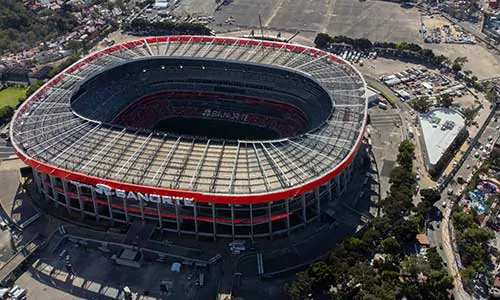
Few sporting arenas in the world command the same reverence and architectural awe as Mexico City’s legendary Estadio Azteca. As the global football community converges on North America for the FIFA World Cup 2026, no single venue carries the weight of history quite like this iconic coliseum.
Historically known as the “Coloso de Santa Úrsula,” this cathedral of football has witnessed the greatest legends of the sport reach the pinnacle of their careers. Now, having undergone extensive modernizations, the stadium is preparing to write yet another chapter under the banner of the FIFA World Cup 2026.
Table of Contents
- The Eternal Legacy: Why Estadio Azteca Stands Alone in Football History
- A Record-Breaking Third Act: The Opening Ceremony and Match of the FIFA World Cup 2026
- The Renovation Blueprint: Modernizing a Legend for the FIFA World Cup 2026
- Why the FIFA World Cup 2026 Demands Modern Upgrades
- Complete Match Schedule for Estadio Azteca in the FIFA World Cup 2026
- Fan Experience and Tourism in Mexico City During the FIFA World Cup 2026
- The Economic and Social Impact of the Tournament on Mexico City
- Conclusion: The Awakening of a Giant
- Frequently Asked Questions About the FIFA World Cup 2026 at Estadio Azteca
The Eternal Legacy: Why Estadio Azteca Stands Alone in Football History
To understand the excitement surrounding the upcoming tournament, one must first look back at the ground’s remarkable past. Opened in 1966, Estadio Azteca quickly became the heartbeat of Mexican sports culture, boasting a design that amplified the passion of over a hundred thousand spectators.
No other venue has captured the imagination of football purists quite like this one. It served as the grand stage for two of the most memorable tournaments in international sports history, first in 1970 and later in 1986.
In 1970, the world watched in awe as Pelé led a legendary Brazilian national team to glory, cementing his status as one of the greatest to ever play the game. The stadium’s sun-drenched pitch became the canvas for Brazil’s beautiful game, culminating in a historic 4-1 victory over Italy.
Sixteen years later, the stadium belonged to Diego Maradona. During the 1986 tournament, the Argentine maestro scored both the controversial “Hand of God” and the mesmerizing “Goal of the Century” against England on this very pitch, before lifting the coveted trophy.
Pedro Ramírez Vázquez, the iconic Mexican architect, designed the stadium to stand the test of time. He utilized local volcanic stone to ground the massive concrete amphitheater to its geological surroundings. Over sixty years later, his structural vision remains firm.
Furthermore, the stadium’s signature cantilevered roof creates a natural acoustic chamber, trapping the roaring cheers of fans and reflecting them back onto the pitch with terrifying intensity. Consequently, this psychological pressure has made the Coloso de Santa Úrsula one of the most formidable atmospheres in sports.
A Record-Breaking Third Act: The Opening Ceremony and Match of the FIFA World Cup 2026
The upcoming tournament marks an unprecedented milestone in sports history. Estadio Azteca will officially become the first stadium ever to host three separate opening matches of the World Cup, a record that highlights its enduring quality.
When the opening whistle blows for the FIFA World Cup 2026 on June 11, 2026, the world’s eyes will once again turn to Mexico City. The host nation of Mexico will have the distinct honor of kicking off the record-breaking tournament in front of its passionate home crowd.
This match is set to be more than just a game; it is part of a synchronized celebration of North American football culture. The opening ceremonies will feature interconnected celebrations across the three host nations: Mexico, Canada, and the United States.
Each host nation’s opening ceremony is designed to highlight its unique cultural heritage while celebrating a shared love for the game. At Estadio Azteca, fans can expect a vibrant display of Mexican history, music, and art that honors the country’s rich sporting tradition.
Following the festivities, Mexico will face South Africa in the opening match, a nostalgic throwback to their memorable opening fixture during the 2010 tournament. It promises to be an electric evening, setting a high standard for the rest of the matches to follow.
The Renovation Blueprint: Modernizing a Legend for the FIFA World Cup 2026
While the history of the stadium is undisputed, hosting a modern tournament of this scale required substantial updates. To meet strict international standards, Estadio Azteca underwent a major multi-million-dollar renovation project.
The goal of the renovation was straightforward yet delicate: modernize the infrastructure without stripping away the historic soul of the venue. The developers focused heavily on improving spectator comfort, technological integration, and player facilities.
To keep this concrete giant functional, modern commercial strategies were integrated. The stadium secured a naming sponsorship locally, temporarily rebranding as Estadio Banorte for domestic operations. However, for international tournaments, FIFA’s strict policies preserve its original and iconic identity as Estadio Azteca.
The financial scope of this undertaking was substantial, representing an investment of roughly 2 billion Mexican pesos (approximately €110 million). Architects worked closely with engineers to ensure that structural reinforcements did not alter the famous layout of the stands.
One of the most noticeable upgrades is the installation of a state-of-the-art hybrid playing surface, combining natural grass with synthetic fibers. This ensures the pitch remains in pristine condition despite the intense schedule of matches and varying weather conditions.
Inside the bowl, spectators will benefit from upgraded, high-resolution LED screens and a completely redesigned sound system featuring over 340 individual speakers. This guarantees that every fan, regardless of where they sit, feels fully immersed in the action.
Additionally, the venue has modernized its internal infrastructure. Upgrades include newly designed dressing rooms, a redesigned player tunnel, and improved hospitality suites to accommodate VIP guests and international media crews.
Why the FIFA World Cup 2026 Demands Modern Upgrades
The expansion of the tournament to a record-breaking 48-team format has fundamentally shifted the logistical requirements for host cities. With 104 matches scheduled across three massive nations, stadiums must be equipped to handle unprecedented numbers of fans and media personnel.
For Estadio Azteca, this meant upgrading its digital infrastructure to handle massive broadcast data loads. High-speed Wi-Fi systems and advanced fiber-optic networks have been integrated throughout the venue to support thousands of journalists and millions of streaming fans worldwide.
Furthermore, security protocols have been enhanced to meet modern standards. This includes improved spectator flow management systems, updated access gates, and advanced surveillance technologies designed to ensure a safe environment for everyone in attendance.
These modifications are vital to ensuring the stadium remains competitive with newly built arenas in the United States and Canada. By upgrading these facilities, the historic venue remains a viable, world-class option for major international events long after this tournament concludes.
Complete Match Schedule for Estadio Azteca in the FIFA World Cup 2026
A total of five matches will be hosted at this majestic venue during the FIFA World Cup 2026. This includes three highly anticipated group stage games, followed by two critical knockout stage fixtures that will test the mettle of the world’s best teams.
The local kick-off times are designed to maximize global viewership, allowing fans across Europe, South America, and Asia to tune in at reasonable hours. The table below outlines the matches scheduled for Mexico City’s crown jewel:
| Date | Match Stage | Matchup / Teams | Kick-off Time (Local) |
|---|---|---|---|
| June 11, 2026 | Opening Match (Group A) | Mexico vs. South Africa | 3:00 PM CST |
| June 17, 2026 | Group Stage (Group K) | Uzbekistan vs. Colombia | 8:00 PM CST |
| June 24, 2026 | Group Stage (Group A) | Czechia vs. Mexico | 9:00 PM CST |
| June 30, 2026 | Round of 32 (Match 79) | Group A Winner vs. Group B Runner-Up | 7:00 PM CST |
| July 5, 2026 | Round of 16 (Match 92) | TBD vs. TBD | 6:00 PM CST |
This balanced schedule ensures that Estadio Azteca remains a focal point of the tournament from the opening day through the high-stakes knockout rounds. Fans visiting the city will have multiple opportunities to experience the legendary stadium’s unique atmosphere.
Fan Experience and Tourism in Mexico City During the FIFA World Cup 2026
For fans traveling to Mexico City, the experience extending outside the stadium boundaries is just as thrilling as the matches inside. Mexico City is a sprawling, vibrant metropolis that blends deep Mesoamerican roots with contemporary urban life.
When planning your trip, choosing the right neighborhood is essential for a smooth experience. Popular districts such as Coyoacán, Roma, and Condesa offer excellent dining, safe accommodations, and convenient transit links to the stadium area.
Reaching Estadio Azteca (located in the southern suburb of Santa Úrsula) is best accomplished using public transportation. The city’s light rail system (Tren Ligero) connects directly to the Tasqueña metro station, providing a direct route to the stadium’s entrance.
On matchdays, the atmosphere around the stadium is festive and highly energetic. Local vendors line the streets selling traditional street foods like tacos al pastor, tlayudas, and elotes, offering visitors an authentic taste of Mexican culinary culture.
Moreover, it is important for traveling fans to prepare for the local climate and geography. Mexico City sits at an altitude of over 2,200 meters above sea level, which can cause mild fatigue for unaccustomed visitors; staying hydrated and taking it easy during the first few days is highly recommended.
The Economic and Social Impact of the Tournament on Mexico City
Hosting an event of this magnitude brings significant economic opportunities but also raises important questions about long-term urban sustainability. The massive influx of international tourists is projected to generate substantial revenue for local hospitality businesses, hotels, and restaurants.
According to tourism reports, the economic boost will help revitalize local businesses that rely heavily on travel and event-based commerce. The investments made in public transit and local infrastructure will continue to benefit residents long after the final match is played.
However, the rapid development has also raised valid concerns among local community members. Residents in the neighborhoods surrounding Santa Úrsula have raised concerns regarding the rising costs of living and potential gentrification spurred by the stadium’s modernization.
Consequently, balancing the economic benefits of international tourism with the social welfare of local communities remains a key challenge for local authorities. Ensuring that the legacy of the tournament is equitable and positive for all residents is a central goal of the city’s hosting plan.
Conclusion: The Awakening of a Giant
As the FIFA World Cup 2026 begins, Estadio Azteca stands ready to remind the world why it is considered one of the true cathedrals of global sport. Its modernized infrastructure ensures a comfortable and technologically advanced experience, while its historic walls continue to echo the achievements of Pelé and Maradona.
This tournament is not just another event; it is a celebration of football’s past, present, and future. For the millions of fans watching around the globe and the thousands cheering in the stands, Mexico City’s legendary stadium is ready to deliver another collection of unforgettable moments.
Are you planning to watch the matches at this iconic venue? Share your score predictions for the opening match or let us know which stadium you are most excited to see in the comments below! For more details on tickets and travel guides, check out the official FIFA Website or read the latest tournament updates on AP News.
Frequently Asked Questions About the FIFA World Cup 2026 at Estadio Azteca
Q1: How many matches will Estadio Azteca host during the FIFA World Cup 2026?
A1: Estadio Azteca is scheduled to host a total of five matches during the tournament. This includes three group stage matches (including the opening game), one Round of 32 match, and one Round of 16 match.
Q2: What is the official date of the opening match of the FIFA World Cup 2026?
A2: The opening match will take place on Thursday, June 11, 2026, featuring the host country, Mexico, playing against South Africa.
Q3: Why is Estadio Azteca historically significant to the FIFA World Cup?
A3: It is the only stadium in history to host three different World Cup opening matches (1970, 1986, and 2026). It is also the ground where Pelé won his final World Cup in 1970 and where Diego Maradona scored his historic goals against England in 1986.
Q4: What major renovations were completed for the FIFA World Cup 2026?
A4: Major upgrades include a state-of-the-art hybrid playing surface, high-resolution LED screens, a new sound system with over 340 speakers, modern LED lighting for the facade, and completely redesigned locker rooms and player tunnels.
Q5: How can fans reach Estadio Azteca via public transport?
A5: Fans can take the city’s Metro line to the Tasqueña station, and then transfer to the Tren Ligero (light rail) system, which drops passengers off directly outside the stadium’s main entrance gates.
Q6: Is Estadio Azteca’s capacity being increased for the tournament?
A6: While the stadium previously held up to 100,000 spectators, the modern seating reconfigurations and FIFA requirements have adjusted the official tournament capacity to approximately 83,000 to 87,000 spectators to improve comfort and safety.
Q7: What is the elevation of Estadio Azteca, and how does it affect the games?
A7: Estadio Azteca is situated at an elevation of approximately 2,237 meters (7,339 feet) above sea level. This high altitude can cause players to fatigue faster and makes the ball travel faster through the air, affecting passing and shooting dynamics.