False 9 Explained: Role, Tactical Impact and Legendary Players
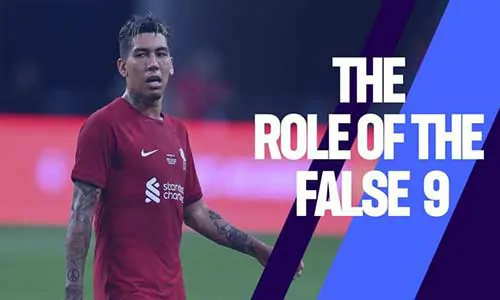
As football tactics continue to evolve, the role of the deep-lying playmaker-forward remains one of the most intellectually fascinating positions on the pitch. With national teams gearing up for the highly anticipated FIFA World Cup 2026, tactical innovators are searching for solutions to dismantle stubborn, highly organized low blocks. Consequently, understanding the modern False 9 is essential for anyone analyzing how international managers might structure their attacking setups.
Historically, the center-forward was expected to act as a physical focal point, pinning opposition defenders back. However, the modern era has seen a massive shift toward fluidity, spatial manipulation, and numerical superiority. In this comprehensive guide, we will break down the mechanics of this famous role, look at the historical figures who shaped it, and project how the system will impact the teams competing in the FIFA World Cup 2026.
Table of Contents
- What is a False 9? The Fundamental Definition
- The Evolution of the False 9 and Its Relevance in the FIFA World Cup 2026
- The Tactical Mechanics: How It Disrupts Opponents
- How the False 9 Could Define Tactical Systems at the FIFA World Cup 2026
- Legendary Players Who Mastered the False 9 Role
- Key Players to Watch Using the False 9 System in the FIFA World Cup 2026
- The Pros and Cons of Playing with a False 9
- Tactical Comparison: Traditional No. 9 vs. False 9
- Conclusion and Tactical Outlook
- Frequently Asked Questions (FAQ)
What is a False 9? The Fundamental Definition
At its core, a False 9 is an unconventional lone striker who routinely drops deep into the midfield area rather than staying high up the pitch. Traditional strikers, often referred to as number 9s, play right on the shoulder of the last defender, aiming to stretch the opponent’s backline. In contrast, the False 9 deliberately vacates the center-forward space, operating in the pocket of space between the opposition’s midfield and defensive lines.
By moving into these deeper areas, the player forces the opposing center-backs into a major tactical dilemma. Should a defender follow the dropping forward, they leave a massive gap behind them for inverted wingers or late-running midfielders to exploit. Alternatively, if the defenders choose to stay in their zone, the False 9 is granted time and space to turn, pick a pass, and orchestrate the attack like a traditional playmaker.
To operate in this role, a player must possess unique characteristics. They require the technical skills of an elite midfielder—such as close control, quick passing, and superb spatial awareness—alongside the goal-scoring instincts of a natural forward. This hybrid nature makes the position exceptionally difficult to defend against, offering teams a versatile tool to control possession and break down stubborn defensive lines.
The Evolution of the False 9 and Its Relevance in the FIFA World Cup 2026
While many modern fans associate this role with Pep Guardiola’s era-defining Barcelona side, the tactical concept actually dates back to the early 20th century. In the 1930s, the Austrian “Wunderteam” utilized Matthias Sindelar, a forward who preferred to drop deep and link up play rather than physically battle rugged defenders. Later, in the 1950s, Hungary’s legendary “Mighty Magyars” dismantled defenses using Nándor Hidegkuti, whose deep movement famously confused the English national team during a historic 6-3 victory at Wembley Stadium.
In the mid-2000s, Luciano Spalletti revived the concept at Roma with Francesco Totti, paving the way for modern international managers preparing for the FIFA World Cup 2026. When Guardiola moved Lionel Messi into the center of the pitch in 2009, the False 9 became a household term, proving that a team could dominate global football without relying on a physical target man. This evolution has shown that as defensive structures become tighter, the demand for intellectual movement off the ball only increases.
As we approach the premier international stage, national team managers face a distinct set of challenges. Unlike club football, international teams have limited training time to establish complex attacking sequences. Therefore, deploying a highly intelligent playmaker in a fluid forward role is a practical way to break down organized national defenses. The tactical legacy of past masters will heavily influence how coaching staff configure their rosters ahead of the FIFA World Cup 2026.
The Tactical Mechanics: How It Disrupts Opponents
To understand why this system is so effective, we must analyze the spatial dynamics of the football pitch. Typically, defensive lines aim to maintain vertical and horizontal compactness. When an attacking team utilizes a False 9, they intentionally disrupt this compactness. The movement patterns create a series of mechanical problems for the defending team:
- Midfield Overloads: By dropping deep, the forward creates a numerical advantage (e.g., a 4v3 or 3v2) in the center of the park. This allows the attacking team to retain possession under pressure and move the ball vertically with ease.
- Decoupling Center-Backs: Center-backs are trained to mark specific zones or players. When their primary target wanders into midfield, it creates confusion. If a defender breaks rank to follow, they dismantle their own defensive line, leaving empty lanes for inside forwards.
- Creating Space in Zone 14: Zone 14 is the crucial area just outside the penalty box. A False 9 operates directly in this area, linking play and opening up shooting opportunities for themselves or late-running central midfielders.
Furthermore, this tactical setup shifts the primary goal-scoring burden away from a single focal point. Instead of relying on one target man, the goals are distributed among dynamic wingers and attacking midfielders. This unpredictability makes defensive preparation incredibly difficult, which will be crucial for matches in the highly competitive environment of the FIFA World Cup 2026.
For more detailed tactical analyses and coaching resources, you can explore the insights on the Coaches’ Voice platform, which offers deep dives into various tactical systems.
How the False 9 Could Define Tactical Systems at the FIFA World Cup 2026
With 48 teams competing across North America, the FIFA World Cup 2026 is set to showcase a vast array of tactical ideas. Because national teams often encounter compact defensive blocks, a fluid forward system could act as a crucial tactical blueprint at the FIFA World Cup 2026. Teams that lack an elite, world-class physical striker may find that a False 9 system offers their most viable path to deep tournament runs.
Additionally, many of the smaller nations competing in the FIFA World Cup 2026 will likely encounter defensive low blocks, where space behind the defense is practically non-existent. In such scenarios, a physical striker can easily find themselves isolated and marked out of the game. A deep-dropping playmaker, on the other hand, can pull those compact lines apart, forcing the opposition to step out of their comfortable defensive shape.
Another key factor to consider is the importance of high-intensity counter-pressing, which will define the physical demands of the FIFA World Cup 2026. A forward who is comfortable in midfield can immediately transition into a defensive screen when possession is lost, helping to choke opposition counter-attacks at the source. This defensive utility makes the system highly attractive to managers who prioritize control and quick transitions.
Legendary Players Who Mastered the False 9 Role
Over the years, several iconic players have defined and redefined this complex position. Their performances provide valuable reference points for modern coaches looking to implement similar strategies:
Lionel Messi
Under the guidance of Pep Guardiola at Barcelona, Messi transformed the False 9 into an art form. His historic performance in the 6-2 El Clásico victory over Real Madrid in 2009 remains the ultimate exhibition of the role. By dropping deep, Messi dragged the opposition center-backs out of position, allowing wingers like Thierry Henry and Samuel Eto’o to exploit the space behind. Messi’s unparalleled dribbling and vision made him virtually unmarkable in this zone.
Cesc Fàbregas
During Spain’s victorious Euro 2012 campaign, manager Vicente del Bosque faced a dilemma due to David Villa’s injury and Fernando Torres’ inconsistent form. He chose to deploy midfielder Cesc Fàbregas as a False 9. Consequently, Spain dominated matches through possession, utilizing a midfield-heavy setup that choked opponents out of the game. Fàbregas used his natural playmaking instincts to link up with Andres Iniesta and David Silva, showcasing that a natural striker isn’t always necessary to win major international trophies.
Roberto Firmino
In Jurgen Klopp’s highly successful Liverpool teams, Roberto Firmino re-engineered the role for the modern, high-pressing era. While he did not register the goal tallies of traditional forwards, his defensive work rate and intelligent movement allowed Mohamed Salah and Sadio Mané to thrive as highly productive inside-forwards. Firmino’s selflessness highlighted how a modern deep-lying forward can serve as the tactical engine of an entire team.
These classic examples provide a masterclass that tactical coordinators in the FIFA World Cup 2026 will draw inspiration from as they formulate their squads.
Key Players to Watch Using the False 9 System in the FIFA World Cup 2026
As we project forward, several nations boast highly technical players who are capable of executing this difficult role on the global stage. Here are some of the key names to keep an eye on during the tournament:
Kai Havertz (Germany)
Germany has frequently struggled to replace legendary natural strikers like Miroslav Klose. In response, German managers have often utilized Kai Havertz in a fluid, deep-lying forward role. Havertz possesses the physical stature to compete aerially, yet his natural instincts are those of a creative playmaker. His ability to link midfield runs and time his arrivals into the box makes him a modern hybrid profile that could be deployed creatively during the FIFA World Cup 2026.
Antoine Griezmann (France)
Though often deployed in midfield or as a second striker, Griezmann’s tactical intelligence allows him to slide into a fluid forward position effortlessly. He is a master of finding space between the lines, picking out runners, and organizing transitions. If France decides to play a more fluid, control-oriented style, Griezmann could use these fluid mechanics to exploit defenses at the FIFA World Cup 2026.
Dani Olmo (Spain)
Spain’s football philosophy is built entirely on possession, rapid passing, and positional rotations. Dani Olmo has frequently operated in this role for both club and country. His dynamic movement, direct dribbling, and quick decision-making allow Spain to overload midfield zones, allowing them to dominate midfield battles in the FIFA World Cup 2026.
The Pros and Cons of Playing with a False 9
Like any tactical system, playing with a deep-lying forward comes with specific trade-offs. It is not a magic solution that guarantees victory; rather, it requires a highly synchronized team structure to work effectively.
The Advantages:
- Unmatched Midfield Control: By adding an extra body to the midfield, teams can comfortably retain possession and dictate the tempo of the game.
- Unpredictability: Without a fixed target to mark, defenders are forced to make continuous decisions, increasing the likelihood of positioning errors.
- Empowered Wingers: Inside-forwards are given the space and freedom to run into central areas and act as primary goal scorers.
The Disadvantages:
- Lack of Box Presence: Without a physical focal point, crossing can become ineffective, and the team may struggle to score scrappy goals inside the six-yard box.
- Tactical Complexity: The system requires highly intelligent players with excellent chemistry. A single misaligned run can clog the midfield and render the attack stagnant.
- Physical Vulnerability: If the opposition midblock successfully disrupts the passing lanes, the False 9 can find themselves completely cut off from the rest of the team.
National team managers will weigh these critical trade-offs before committing to this setup in the FIFA World Cup 2026, balanced against the specific strengths of their available player pool.
Tactical Comparison: Traditional No. 9 vs. False 9
The table below provides a concise comparison of how these two contrasting forward styles function on the pitch:
Primary PositionOff-the-Ball MovementMidfield InteractionKey Physical AttributesPrimary Goal Source
| Tactical Aspect | Traditional Number 9 | False 9 |
|---|---|---|
| Stays high, pinning opposition center-backs near their own penalty box. | Drops deep into midfield zones and half-spaces. | |
| Runs in behind the defense, looking to stretch play vertically. | Pulls defenders out of their structure, creating passing lanes. | |
| Minimal; relies on service from wingers and playmakers. | Heavily involved in possession, linking play and creating overloads. | |
| Strength, aerial power, physical presence, and explosive speed. | Superb close control, balance, agility, and elite passing vision. | |
| The forward themselves (high individual goal tally). | Shared among inverted wingers, midfielders, and late runners. |
Conclusion and Tactical Outlook
The False 9 remains one of football’s most sophisticated tactical innovations. By trading physical presence for spatial intelligence and midfield control, teams can break down even the most stubborn defensive blocks. As international football continues to grow more tactically organized, the use of fluid, deep-lying forwards will undoubtedly be one of the most anticipated tactical subplots of the FIFA World Cup 2026.
Whether you are a casual fan trying to understand the movements on your screen or an aspiring tactical analyst, keeping an eye on how coaches deploy their creative forwards will give you deep insight into the games. To keep up with modern trends, team preparations, and official schedules, make sure to visit the official FIFA website as the tournament draws closer.
What are your thoughts on this tactical role? Do you think we will see a resurgence of fluid forward play at the next tournament, or will traditional physical target men dominate? Let us know in the comments below!
Frequently Asked Questions (FAQ)
Are teams likely to use a False 9 in the FIFA World Cup 2026?
Yes, it is highly likely that several elite squads at the FIFA World Cup 2026 will employ variations of this role. Teams like Spain and Germany, which boast incredibly talented midfielders but sometimes lack natural clinical strikers, frequently utilize fluid attacking systems to control games.
How does a False 9 differ from an Attacking Midfielder (No. 10)?
While both operate in similar spaces between the lines, their starting positions differ. An attacking midfielder starts behind a striker and moves forward into space. Conversely, a False 9 starts as the designated center-forward on the team sheet and drops backward, dragging defenders out of position with them.
Can any striker play as a False 9?
Not necessarily. The role requires an incredibly specific skillset. Traditional physical target men who rely on aerial duels and strength may lack the technical passing ability, quick-turn capability, and elite vision required to link play in congested midfield areas.
How do modern defenses counter a False 9?
Defenses typically counter this system by utilizing disciplined zonal marking rather than following the forward. Defensive midfielders can drop deeper to cover the space, or center-backs can step up aggressively while the rest of the backline narrows to cover the vacated space behind.
How will the False 9 alter the physical demands on players in the FIFA World Cup 2026?
Playing this role demands exceptional stamina and spatial awareness. The forward must continuously press from the front while dropping deep to support the build-up. Consequently, the upcoming FIFA World Cup 2026 will showcase highly athletic, modern playmakers who can meet these grueling physical demands over a long tournament format.