FIFA 2026: Complete Guide to the International Football Calendar
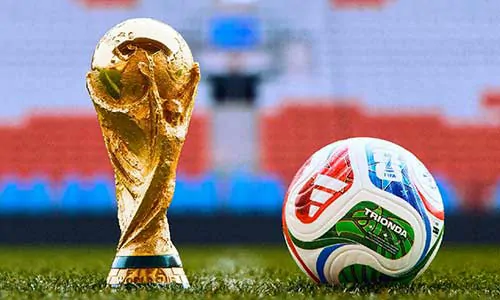
Because the upcoming year integrates an expanded tournament format, FIFA has re-engineered its International Match Calendar to balance player welfare, club commitments, and international team training. In this guide, we provide a detailed breakdown of all the essential dates, tournament formats, and calendar shifts you need to know.
Table of Contents
- 1. Understanding the 2026 International Match Calendar
- 2. The FIFA World Cup 2026: A Landmark Tournament
- 3. Crucial Dates and Match Schedules
- 4. Complete 2026 Football Calendar Windows
- 5. Player Welfare, Rest, and Release Regulations
- 6. Strategic Implications of the 48-Team Expansion
- 7. Frequently Asked Questions (FAQ)
- 8. Conclusion and Next Steps
1. Understanding the 2026 International Match Calendar
The FIFA International Match Calendar serves as the framework that regulates when players must be released by their domestic clubs to represent their national teams. It is a carefully negotiated agreement involving FIFA, regional confederations like UEFA and CONMEBOL, the European Club Association (ECA), and FIFPro. These designated periods are commonly referred to as “international breaks” or “FIFA windows.”
In 2026, the structure of these windows is uniquely tailored around the summer showpiece. Typically, the calendar balances five distinct windows throughout the year. However, because of the expansion of the summer tournament, the timing and release periods of the late spring and summer windows have been substantially modified.
Additionally, the integration of regional tournaments and qualifiers remains critical. National teams rely on these calendar blocks to secure their places in international competitions, making the efficiency of each window essential to the global football ecosystem.
2. The FIFA World Cup 2026: A Landmark Tournament
The tournament taking place in the summer of 2026 will go down in history for several major milestones. The FIFA World Cup 2026 marks the first time that the competition is co-hosted by three distinct nations: Canada, Mexico, and the United States. This joint collaboration brings unique logistical opportunities and challenges, spanning across multiple time zones and climates.
Furthermore, this edition represents a historic expansion in the number of participating teams, growing from the traditional 32-team format to a massive 48-team roster. This expansion aims to give more nations from Africa, Asia, North America, and other regions the opportunity to compete on the global stage, broadening the tournament’s cultural and competitive diversity.
Instead of the originally proposed three-team groups, FIFA opted for a more balanced structure containing 12 groups of four teams each. This decision preserves the traditional competitive tension of the final group-stage matchday, ensuring that fair play is maintained and every match carries high stakes.
A New Knockout Stage Dimension
Under the new 48-team framework, the top two teams from each of the 12 groups, alongside the eight best third-place finishers, will advance to a brand-new stage: the Round of 32. This adds an extra round of single-elimination matches, increasing the total number of tournament games from 64 to 104.
Consequently, the overall duration of the tournament will span 39 days. While this represents a longer schedule, the design is structured to ensure that the eventual finalists still play a maximum of eight matches, only one more than in previous 32-team iterations.
3. Crucial Dates and Match Schedules
Planning your viewing schedule around the FIFA World Cup 2026 requires a clear understanding of the key tournament milestones. The action officially begins on June 11, 2026, with the opening ceremony and inaugural match hosted at the historic Mexico City Stadium (Estadio Azteca), a legendary venue that previously hosted the finals of 1970 and 1986.
Over the subsequent weeks, the group stage and early knockout rounds will be played across 16 designated host cities in Canada, Mexico, and the United States. The tournament will reach its peak on Sunday, July 19, 2026, when the final match is played at the New York New Jersey Stadium in East Rutherford, New Jersey.
Overview of Host Cities and Stadiums
The selection of venues ensures that matches are distributed evenly to minimize travel weariness for teams. The 16 host cities are grouped into West, Central, and East regions:
- Western Region: Vancouver, Seattle, San Francisco Bay Area, Los Angeles, Guadalajara.
- Central Region: Kansas City, Dallas, Houston, Atlanta, Monterrey, Mexico City.
- Eastern Region: Toronto, Boston, New York/New Jersey, Philadelphia, Miami.
This regional grouping allows teams to play their group stage fixtures within a specific geographic zone, reducing long-distance flights and helping players adjust to local environments more effectively.
4. Complete 2026 Football Calendar Windows
To understand how the entire year unfolds, we must look at the official schedule set by FIFA. Below is a comprehensive breakdown of the men’s international match windows scheduled for the year 2026, mapping out the progression from the early-year qualifiers to the post-tournament autumn fixtures.
| Window Dates (2026) | Type of Window | Number of Matches / Purpose |
|---|---|---|
| March 23 – March 31 | Official International Window | 2 matches (Qualifiers & FIFA Series friendlies) |
| May 25 – June 9 | Rest & Preparation Window | National team preparation and official warm-up friendlies |
| June 11 – July 19 | FIFA World Cup 2026 | Main tournament (104 matches across 3 countries) |
| September 21 – October 6 | Extended Autumn Window | 4 matches (Continental tournaments & qualifiers) |
| November 9 – November 17 | Standard Autumn Window | 2 matches (Continental matches & qualifiers) |
The March window is particularly crucial for teams wrapping up their continental qualification campaigns or participating in the FIFA Series, which matches teams from different confederations to promote development. Additionally, the autumn windows in September and November will mark the start of new cycles, including the UEFA Nations League and various continental qualifiers.
5. Player Welfare, Rest, and Release Regulations
With an expanded tournament and an increased number of matches, player health and recovery have become prominent topics of discussion among managers, club owners, and player unions. To address these concerns, FIFA has implemented strict mandates regarding the rest and release periods preceding the summer tournament.
The official club release period for the FIFA World Cup 2026 is set to begin on May 25, 2026. This means clubs are obligated to release their selected players to their respective national teams by this date. FIFA has established this window to ensure that players have sufficient time to recover from grueling domestic seasons before beginning intensive training camps.
Exceptions to this rule are carefully controlled. Players involved in major continental club finals—such as the UEFA Champions League final—may have their release deferred up to May 30, 2026, subject to formal approval. This regulatory framework balances the needs of elite club competitions with the preparation requirements of national squads.
6. Strategic Implications of the 48-Team Expansion
The shift to a 48-team format alters the competitive dynamics of international football. Historically, qualifying for the World Cup was an extremely exclusive achievement, particularly for smaller nations in Africa and Asia. By allocating more slots to these regions, the global game becomes more inclusive, which in turn stimulates grassroots football investment worldwide.
However, from a tactical and preparation standpoint, national team managers must now adapt to a longer tournament trajectory. Going all the way to the final requires maintaining peak physical conditioning over nearly six weeks. Squad depth will be a defining factor in determining who lifts the trophy in East Rutherford.
Furthermore, the physical travel demands across the three host nations require smart logistical execution. Teams that manage their recovery routines, nutrition, and sleep cycles while traversing multiple time zones will likely hold a competitive advantage during the knockout rounds.
For more details on international regulations, you can check official updates on FIFA or read about continental adjustments on UEFA.
7. Frequently Asked Questions (FAQ)
When does the FIFA World Cup 2026 start and end?
The tournament officially begins with the opening match on Thursday, June 11, 2026, and concludes with the final match on Sunday, July 19, 2026.
How many teams are participating in the 2026 tournament?
A record-setting 48 national teams will participate in the tournament, expanding from the previous 32-team format used since 1998.
Where will the opening match and the final match take place?
The opening match will be held at the Estadio Azteca in Mexico City, while the final will take place at the New York New Jersey Stadium in East Rutherford, New Jersey.
What are the host countries for the FIFA World Cup 2026?
The tournament is being jointly co-hosted by three nations: Canada, Mexico, and the United States.
How many matches will be played in total under the new format?
With the expansion to 48 teams and the addition of a Round of 32 knockout stage, a total of 104 matches will be played over the course of the 39-day tournament.
When must clubs release their players for the tournament?
The official rest and release period begins on Monday, May 25, 2026, allowing players time to recover and prepare with their national squads.
8. Conclusion and Next Steps
The 2026 football calendar is a historic milestone that reshapes the international game. From the innovative 48-team expansion of the summer tournament to the strategically scheduled preparation and rest windows, every element of this year’s schedule has been planned to deliver high-quality competition while respecting player limits.
As the international windows approach, staying updated on qualifiers, squad announcements, and schedule changes is key to enjoying this unprecedented football journey. Be sure to bookmark this guide, share it with fellow football enthusiasts, and sign up for official ticket and match notifications to stay ahead of the action!