FIFA Calendar Explained: Key Changes Leading to World Cup 2026
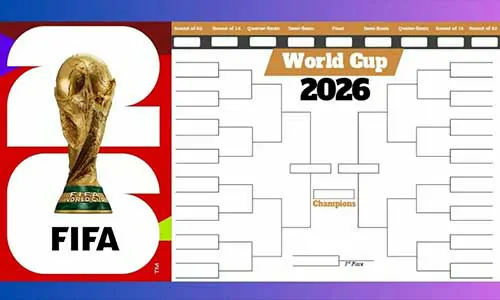
The global football landscape is currently on the cusp of an era-defining moment. With the highly anticipated kickoff of the FIFA World Cup 2026 just days away, starting on June 11, 2026, fans, players, and club managers are preparing for a massive restructuring of the sport. The 23rd edition of the tournament, hosted across Canada, Mexico, and the United States, represents a historical first on many fronts. However, organizing a tournament of this magnitude required a fundamental overhaul of how global football schedules are designed. The newly adopted Men’s International Match Calendar (2025–2030) addresses player fatigue and qualification structures, creating a balanced pathway to this summer’s grand tournament.
Consequently, analyzing the key changes to the FIFA International Match Calendar that have paved the way for the historic FIFA World Cup 2026 is essential. From consolidated international breaks to modified player release rules, understanding these technical adjustments is crucial to appreciating the modern scheduling of elite professional football. In this comprehensive guide, we will break down the essential calendar shifts and explain how they impact national teams, domestic leagues, and player welfare.
Table of Contents
- 1. The Evolution of the Men’s International Match Calendar
- 2. Major Restructuring of International Breaks (2025–2030)
- 3. Key Scheduling Milestones for the FIFA World Cup 2026
- 4. Understanding the Expanded Format of the FIFA World Cup 2026
- 5. Evaluating Player Welfare Standards for the FIFA World Cup 2026
- 6. The Impact on Club Football Schedules and Domestic Leagues
- 7. The Introduction and Role of the FIFA Series
- 8. Comparison of the Old and New FIFA Calendar Windows
- 9. Conclusion and Final Thoughts
- 10. Frequently Asked Questions Regarding the FIFA World Cup 2026
1. The Evolution of the Men’s International Match Calendar
The FIFA Men’s International Match Calendar (IMC) acts as the backbone of global football. It is an outline agreement between FIFA, continental confederations (such as UEFA, CONMEBOL, CAF, and CONCACAF), the European Club Association (ECA), and FIFPro. This regulatory calendar dictates when national team matches take precedence over domestic club matches, creating mandatory “international breaks.” Historically, finding a balance between domestic league schedules and international duty has been a point of contention.
Furthermore, as football has grown commercially, the physical demands on elite players have escalated dramatically. For this reason, a structural re-evaluation of the calendar was deemed absolutely necessary. The primary goal of the revised Men’s International Match Calendar 2025-2030 is to make international fixtures “fit-for-purpose” for modern needs. By restructuring qualifying phases and consolidating travel schedules, the calendar aims to reduce long-haul flights for elite players while still giving developing nations outside the traditional powerhouses a fair opportunity to play high-quality competitive football.
Ultimately, these strategic changes to the calendar serve as the engine driving the transition into the modern era of the sport. Without these adjustments, organizing the highly anticipated FIFA World Cup 2026 qualification matches across multiple continents would have been an administrative and physiological impossibility.
2. Major Restructuring of International Breaks (2025–2030)
One of the most radical adjustments to the modern football schedule is the reorganization of the international windows. Traditionally, players would leave their club teams for international breaks five times a year: in March, June, September, October, and November. Each break generally lasted nine days, during which national teams played a maximum of two matches. While this traditional layout worked well in previous decades, it created significant disruption for club managers who struggled to build domestic momentum.
Specifically, players representing national teams in South America, Africa, or Asia while playing their club football in Europe were forced to undertake frequent, grueling transcontinental flights within a short span of time. To address this issue, FIFA introduced a major consolidated window starting in late September and early October. Instead of two separate nine-day windows in September and October, the new calendar introduces a single 16-day, four-match window starting in the autumn of 2026. This consolidated autumn break offers several distinct advantages:
- Reduced Travel Disruption: Players will only need to make one round-trip transcontinental flight instead of two within a five-week period, significantly decreasing travel fatigue.
- Enhanced Team Synergy: National team managers can spend more continuous time with their squads, allowing for better tactical preparation and team building during crucial preparation for the FIFA World Cup 2026.
- Consistent Club Schedules: Domestic leagues can run for longer, uninterrupted stretches during the critical autumn period, providing a more stable product for fans and television broadcasters.
In addition to this major adjustment, the remaining international windows have been streamlined. The March, June, and November windows will retain their nine-day, two-match structure. However, the strategic timing of these windows has been carefully calibrated to ensure that they lead seamlessly into major continental tournaments and eventually the final qualification stages.
3. Key Scheduling Milestones for the FIFA World Cup 2026
Planning the lead-up to the FIFA World Cup 2026 required meticulous synchronization between domestic league calendars and FIFA’s official release periods. Unlike the 2022 edition in Qatar, which disrupted the European winter schedule, the 2026 tournament returns to its traditional summer slot. However, because of the massive scale of this tournament, the logistics of player preparation had to be strictly managed.
To ensure that players are sufficiently rested and prepared, FIFA established a rigid timeline for the end of the 2025–2026 domestic season and the beginning of the tournament. The key scheduling milestones leading into the tournament include:
- May 24, 2026: The final day for official club matches worldwide. All domestic leagues must conclude their fixtures by this date to allow players ample recovery time.
- May 25, 2026: The official mandatory rest and release period begins. Clubs must release their selected players to their respective national team training camps on this date.
- May 30, 2026: The absolute deadline for any exceptions. Exceptions are granted only to players participating in major confederation club finals (such as the UEFA Champions League Final).
- June 1–9, 2026: A dedicated international match window designed specifically for friendly warm-up games. This window is uniquely positioned before the FIFA World Cup 2026 warm-up fixtures.
- June 11, 2026: The official opening match of the FIFA World Cup 2026, marking a historic moment. The opening game features co-host Mexico taking on South Africa at the legendary Estadio Azteca in Mexico City.
- July 19, 2026: The grand final in New York, marking the culmination of a historic tournament.
Consequently, this structured ramp-up ensures that players receive a minimum preparation period alongside necessary rest, balancing commercial demands with sporting integrity.
4. Understanding the Expanded Format of the FIFA World Cup 2026
The FIFA World Cup 2026 is not just another tournament; it is a historic expansion of the world’s most popular sporting event. Since 1998, the tournament has featured 32 teams competing in a 64-match format. However, starting this summer, the tournament will expand to feature 48 participating nations. This dramatic increase of 16 teams has had a profound impact on how the entire match calendar was structured.
Initially, FIFA proposed a format consisting of 16 groups of three teams. However, after careful analysis and a thorough review of sporting integrity and fan experience, the FIFA Council unanimously revised the structure in March 2023. The final approved format consists of:
- 12 Groups of Four Teams: This classical four-team group structure preserves the excitement of the final group-stage matchday, mitigating the risk of collusion between teams playing in three-team groups.
- Introduction of the Round of 32: The top two teams from each group, along with the eight best third-placed teams, will advance to a newly introduced Round of 32 knockout stage.
- An Unprecedented Number of Matches: A total of 104 matches will be played over the course of the tournament, compared to the 64 matches of previous editions.
- 39-Day Tournament Window: Because of the larger field, the tournament’s active duration will last 39 days. This is an increase from the typical 32-day tournament window seen in past editions.
By comparison, the competitive architecture of the FIFA World Cup 2026 will challenge teams to demonstrate deep squad depth. By expanding to 48 teams, FIFA has unlocked opportunities for many emerging football nations to qualify for their first-ever tournament. For example, nations like Uzbekistan, Jordan, and Cape Verde are making their historical debuts this summer, injecting new narratives and global viewership into the competition.
5. Evaluating Player Welfare Standards for the FIFA World Cup 2026
While the expansion of the FIFA World Cup 2026 brings immense joy to fans around the world, it also raised immediate concerns regarding player burnout and physical exhaustion. The modern football schedule is incredibly demanding, with elite players often playing up to 60 or 70 competitive matches a season for both club and country.
To mitigate player fatigue, FIFA established a dedicated player welfare task force. This committee was tasked with ensuring that the expanded tournament structure did not result in an increased burden of preparation and play time. Through rigorous analysis, the task force arrived at a crucial compromise:
The 56-Day Principle: Although the tournament itself has expanded to 39 days, the combined total number of rest, player release, and tournament days is set at exactly 56 days. This is mathematically identical to the player-commitment windows utilized for the 2010, 2014, and 2018 editions of the tournament.
By strictly capping the preparation and tournament window at 56 days, FIFA has ensured that players do not spend more time away from their personal recovery periods than they did in previous decades. As a result, players competing in the FIFA World Cup 2026 will enjoy structured recovery intervals. Additionally, the maximum number of games a team can play to reach the final has only increased from seven to eight, meaning the overall physical strain on individual squads remains relatively controlled.
Furthermore, the rest time between matches has been balanced carefully. Organizers have prioritized travel efficiency, dividing the host cities in the United States, Canada, and Mexico into regional clusters (East, Central, and West zones) to minimize transcontinental travel during the group stages. Through this clustered system, players participating in the FIFA World Cup 2026 can optimize performance and minimize fatigue.
6. The Impact on Club Football Schedules and Domestic Leagues
The changes implemented in the FIFA calendar do not exist in a vacuum; they have a massive trickle-down effect on domestic club football worldwide. Elite leagues, including the English Premier League, Spain’s La Liga, and Italy’s Serie A, have had to restructure their yearly campaigns to accommodate these international adjustments. For instance, domestic leagues have had to conclude their operations earlier in May to meet the strict May 24 deadline.
This compression of the domestic season means leagues have to start slightly earlier in August or utilize more mid-week matchdays to fit in all 38 fixtures. Moreover, the introduction of the consolidated 16-day international break in late September and October starting in the 2026–2027 season will alter how club managers plan their training cycles. Instead of dealing with multiple disjointed breaks where players leave for ten days and return fatigued, managers will have a singular, extended period to work with the remaining squad members.
Conversely, players who are called up will face a highly concentrated sequence of four international fixtures, which will require careful squad rotation by national team coaches. Ultimately, these changes represent a delicate compromise. While clubs lose access to their marquee players for longer single blocks, they benefit from fewer mid-season disruptions, allowing for better tactical continuity when domestic play resumes for teams preparing for the FIFA World Cup 2026 group stage.
7. The Introduction and Role of the FIFA Series
In addition to rewriting qualification timelines, FIFA introduced a brand-new initiative known as the FIFA Series. First trialed in 2024 and officially expanded in March 2026, the FIFA Series consists of friendly tournament brackets played during the March international window. The primary objective of the FIFA Series is to facilitate international matches between national teams from different confederations that would not normally have the opportunity to play each other.
For instance, a European team might play against an African or Asian team in a neutral host country. During the March 2026 window, the tournament featured nine different series hosted across eight countries, involving 34 national teams from all six confederations. This served as a vital preparatory platform for teams heading into the FIFA World Cup 2026 tournament. It provided coaches with high-stakes preparation matches against diverse playing styles, simulating the international environment they will face in North America this summer.
By exposing teams to a wider variety of tactical philosophies, the FIFA Series has bridged the competitive gap between confederations. As a result, smaller nations have entered the final qualification stages with increased tactical maturity, making the overall field of competitors more robust.
8. Comparison of the Old and New FIFA Calendar Windows
To help visualize how the professional football schedule has shifted to prepare for the modern era, the table below outlines the core differences between the traditional FIFA calendar layout and the updated 2025–2030 structure.
| Feature | Traditional Layout (Pre-2025) | Updated Layout (2025–2030) |
|---|---|---|
| Autumn Windows | Two separate 9-day windows (September & October) | One consolidated 16-day window (September/October) starting 2026 |
| Matches Per Autumn Break | 2 matches per window (4 total over two trips) | 4 matches in a single window (1 trip) |
| World Cup Preparation Window | Varies (often compressed, e.g., 2022 winter window) | Strict 56-day combined rest, release, and tournament block |
| Total World Cup Teams | 32 Teams (8 groups of 4) | 48 Teams (12 groups of 4) |
| Total World Cup Matches | 64 Matches | 104 Matches |
9. Conclusion and Final Thoughts
The restructuring of the FIFA International Match Calendar represents a major evolution in the management of elite sports. By introducing consolidated windows and codifying a strict 56-day player welfare timeline, football’s governing bodies have successfully adapted to the massive expansion of the FIFA World Cup 2026. While the transition has required compromises from domestic leagues and club managers, it ultimately establishes a more sustainable framework for players and fans alike.
As we stand on the threshold of this summer’s groundbreaking tournament in North America, the stage is set for an unforgettable display of global football talent. The meticulous planning behind the calendar ensures that teams can compete at the highest level while preserving player health. The historical legacy of the FIFA World Cup 2026 is already being written, and these structural scheduling choices are the silent foundation of its success.
What are your thoughts on these historic calendar updates? Do you believe the new consolidated autumn break will solve the travel fatigue issues for international stars? Let us know your thoughts in the comments below, and don’t forget to share this guide with your fellow football fans!
10. Frequently Asked Questions Regarding the FIFA World Cup 2026
Q1: What are the main changes to the FIFA International Match Calendar for the FIFA World Cup 2026?
A1: The primary update is the consolidation of the September and October international breaks into a single, extended 16-day, four-match window starting in autumn 2026. This change significantly reduces long-haul travel fatigue for international players.
Q2: How many teams will participate in the FIFA World Cup 2026?
A2: The tournament features an expanded field of 48 teams instead of the traditional 32. This expansion results in 12 groups of four teams, with a total of 104 matches played over a 39-day tournament window.
Q3: How does the new calendar protect player welfare?
A3: FIFA established a mandatory 56-day combined rest, release, and tournament timeline. This duration is identical to the timelines utilized in 2010, 2014, and 2018, ensuring players receive adequate rest despite the expanded match card.
Q4: When does the FIFA World Cup 2026 start and end?
A4: The tournament officially kicks off with the opening match on June 11, 2026, in Mexico City and concludes with the grand final on Sunday, July 19, 2026, in New York.
Q5: What is the FIFA Series and how does it assist national teams?
A5: The FIFA Series consists of friendly tournament brackets played during the March window. It enables national teams from different confederations to play warm-up matches against each other, aiding their tactical preparation for major international tournaments.
Q6: How does the revised calendar affect the FIFA World Cup 2026 preparations of domestic club leagues?
A6: Domestic club leagues like the Premier League and La Liga had to conclude their fixtures by May 24, 2026, to accommodate the mandatory player release period starting May 25. This compression required leagues to start earlier or schedule more midweek matches.