FIFA World Cup 2026 Explained: Expansion Format and New Regulations
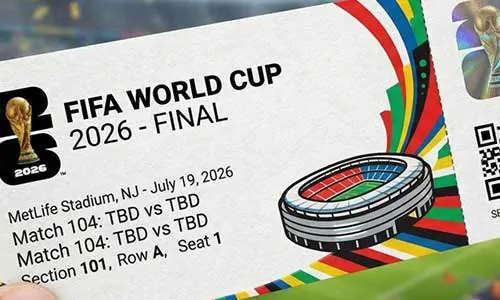
The global landscape of international football is on the verge of its most significant transformation in decades. The FIFA World Cup 2026 is set to make history as the largest, most inclusive, and logistically ambitious tournament ever organized. Jointly hosted by the United States, Canada, and Mexico, this tournament represents a bold leap forward from previous editions. By bringing together nations from across the globe in a celebration of sport, the FIFA World Cup 2026 promises to deliver unparalleled drama, showcasing both elite footballing talent and newly introduced competitive structures.
Historically, the World Cup has been hosted by a single country, with the sole exception of the 2002 tournament co-hosted by South Korea and Japan. However, the sheer scale of modern sporting events makes solo hosting an immense financial and logistical challenge. By dividing hosting responsibilities among three North American nations, the organizers aim to leverage existing world-class infrastructure without putting undue strain on a single country’s economy. This collaborative hosting model could very well define the future of global sports tournaments.
Table of Contents
- A Historic Expansion: How the FIFA World Cup 2026 Changes Everything
- The Group Stage Structure of the FIFA World Cup 2026
- The Rise of the Round of 32 in the FIFA World Cup 2026
- Host Cities and Venues of the FIFA World Cup 2026
- New Rule Changes and On-Pitch Regulations for the FIFA World Cup 2026
- Yellow Card Cancellations in the FIFA World Cup 2026
- The Impact on Player Workload and the Football Calendar
- Frequently Asked Questions (FAQ)
- Conclusion & Looking Ahead
A Historic Expansion: How the FIFA World Cup 2026 Changes Everything
For decades, the men’s World Cup has adhered to a familiar 32-team format, which was first established in 1998. However, the game of football has grown exponentially on a global scale. To reflect this global growth, the FIFA Council approved an expansion to a 48-team tournament, ensuring greater representation for continental confederations that have historically had limited qualifying slots. Consequently, when the FIFA World Cup 2026 begins, it will welcome several debutants and provide a grander platform for emerging football nations.
This expansion dramatically increases the representation of various continental confederations. For instance, Africa (CAF) and Asia (AFC) are among the biggest beneficiaries of this restructuring. The updated allocation ensures that more nations have a realistic pathway to qualify, thus fostering football development in previously underrepresented regions. The breakdown of the slot expansion is distributed as follows:
- AFC (Asia): 8 direct slots (plus 1 inter-confederation playoff spot).
- CAF (Africa): 9 direct slots (plus 1 inter-confederation playoff spot).
- CONCACAF (North/Central America): 6 direct slots (including the three hosts: USA, Canada, and Mexico) plus 2 playoff spots.
- CONMEBOL (South America): 6 direct slots (plus 1 inter-confederation playoff spot).
- OFC (Oceania): 1 guaranteed direct slot for the first time in history.
- UEFA (Europe): 16 direct slots.
By increasing the diversity of participating nations, the tournament hopes to unite a broader global audience. While some purists argue that the expansion might dilute the quality of the group-stage matches, others believe it offers a crucial opportunity for development. It allows smaller nations to gain invaluable experience on the world’s grandest stage, fostering long-term interest and investment in the sport locally.
The Group Stage Structure of the FIFA World Cup 2026
Managing 48 teams required a complete overhaul of the tournament’s initial phase. Originally, FIFA contemplated dividing the teams into 16 groups of three. However, after intense deliberation and analyzing the potential for collusive play in the final group matches, the governing body reverted to a more traditional four-team setup. This change preserves the dramatic tension that fans expect during the final round of group fixtures.
Thus, the FIFA World Cup 2026 will feature 12 groups of four teams. Each team will play three matches in a round-robin format. This ensures that every participating country receives at least three high-profile games, preserving the excitement of concurrent final group fixtures. To qualify for the next stage, the path is competitive yet forgiving. The top two teams from each group will qualify automatically. Additionally, to round out the knockout bracket, the eight best third-placed teams across all 12 groups will also advance to the next phase under the new rules implemented for the FIFA World Cup 2026.
In the event that teams finish level on points at the conclusion of the group stage, FIFA applies strict tiebreaker criteria to prioritize sporting merit:
- Points obtained in head-to-head matches between the tied teams.
- Goal difference resulting from the head-to-head matches.
- Goals scored in head-to-head matches.
- Overall goal difference in all group matches.
- Overall goals scored in all group matches.
- Fair play points (based on yellow and red cards accumulated throughout the group stage).
- Drawing of lots by the FIFA Organizing Committee.
The introduction of the ‘eight best third-placed teams’ rule dramatically alters the competitive dynamics of the group stage. In a standard format where only the top two teams advance, teams are forced to play offensively to secure wins. However, when third place offers a viable pathway to the knockout rounds, some teams may adopt highly defensive tactics. For instance, securing three draws and finishing with three points might be sufficient to slip into the next round, shifting the tactical focus toward risk avoidance.
The Rise of the Round of 32 in the FIFA World Cup 2026
The expanded format introduces a brand-new phase to the knockout bracket: the Round of 32. Previously, the group stage led directly to the Round of 16. With 32 teams advancing under the new format, the knockout phase becomes longer and more intense, altering the competitive architecture of the FIFA World Cup 2026.
This means that the eventual tournament champions will have to play a total of eight matches instead of the traditional seven. This additional game adds a layer of physical and strategic difficulty, requiring squads to manage fatigue and depth effectively. The single-elimination bracket begins in late June, escalating the stakes immediately. Each match must produce a winner; if a tie persists after 90 minutes of regulation time, extra time (two 15-minute periods) will be played, followed by a penalty shootout if necessary.
From the Round of 32, the winning teams advance to the Round of 16, followed by the Quarterfinals, Semifinals, and the Final on July 19, 2026. This grueling path ensures that only the most resilient and tactically versatile squad will lift the iconic trophy. For fans, it means more knockout-stage drama than ever before, with a total of 104 matches scheduled throughout the tournament—up from the 64 matches played in Qatar in 2022.
Host Cities and Venues of the FIFA World Cup 2026
To accommodate 104 matches, the tournament will utilize 16 world-class stadiums across the United States, Mexico, and Canada. This represents the first time the men’s tournament will be played in Canada, while Mexico makes history by hosting matches in a third separate World Cup tournament (having previously hosted in 1970 and 1986). The majority of the matches, including all fixtures from the quarterfinals onward, will take place in the United States, highlighting the massive footprint of the FIFA World Cup 2026.
Below is a comprehensive breakdown of the host cities and their designated venues:
| Country | Host City | Venue | Capacity |
|---|---|---|---|
| United States | New York / New Jersey | MetLife Stadium | 82,500 |
| United States | Dallas | AT&T Stadium | 80,000 |
| United States | Kansas City | Arrowhead Stadium | 76,416 |
| United States | Houston | NRG Stadium | 72,220 |
| United States | Atlanta | Mercedes-Benz Stadium | 71,000 |
| United States | Los Angeles | SoFi Stadium | 70,240 |
| United States | Philadelphia | Lincoln Financial Field | 69,796 |
| United States | Seattle | Lumen Field | 69,000 |
| United States | San Francisco | Levi’s Stadium | 68,500 |
| United States | Boston | Gillette Stadium | 65,878 |
| United States | Miami | Hard Rock Stadium | 64,767 |
| Mexico | Mexico City | Estadio Azteca | 87,523 |
| Mexico | Monterrey | Estadio BBVA | 53,500 |
| Mexico | Guadalajara | Estadio Akron | 48,071 |
| Canada | Vancouver | BC Place | 54,500 |
| Canada | Toronto | BMO Field | 45,736 |
Travel logistics will play a defining role in team performance. Given the vast geographic span of North America, teams could potentially face matches in Vancouver, travel thousands of miles to Mexico City, and then play a knockout match in Boston. To mitigate travel fatigue, FIFA has divided the host cities into three distinct regional zones: West, Central, and East. Teams will play their group-stage matches within their respective zones to minimize travel distances and adjust to consistent time zones. This regionalized grouping is a critical measure to protect player health and maintain the high quality of on-pitch action.
New Rule Changes and On-Pitch Regulations for the FIFA World Cup 2026
In addition to the structural expansion, the International Football Association Board (IFAB) has introduced landmark rule changes that will be implemented during the tournament. These rules aim to protect the integrity of the sport, reduce time-wasting, and prevent unsporting conduct. Understanding these rules is crucial for fans wanting to fully grasp the dynamics of the FIFA World Cup 2026.
According to updates released by the official FIFA website, several measures will be strictly monitored by referees under the guidance of FIFA Referees Committee Chairman, Pierluigi Collina. The goal is to clean up the game and ensure that active playing time is maximized. Below are the key regulations implemented to govern matches in the FIFA World Cup 2026:
1. Prohibition of Goalkeeper ‘Tactical Timeouts’
A controversial tactic in recent years involved goalkeepers going to the ground pretending to be injured. This allowed their outfield teammates to rush to the touchline to receive detailed tactical advice from their coaching staff. To combat this form of disguised time-wasting, Pierluigi Collina announced that outfield players are strictly forbidden from gathering at the technical area for tactical instructions while a goalkeeper is receiving treatment. If a goalkeeper goes down, play is halted, but players must remain on the pitch away from the sidelines.
2. Strict Red Cards for Mouth-Covering During Confrontations
To tackle the issue of players directing offensive, discriminatory, or racist remarks toward opponents or match officials, a strict new protocol has been established. If a player covers their mouth with their shirt or hand during a confrontation with an opponent or referee, they risk receiving a straight red card. This measure ensures transparency and allows broadcast cameras and lip-readers to verify that sporting values are maintained on the pitch.
3. Protests and Pitch Abandonment Penalties
In the wake of incidents where entire teams walked off the pitch to protest refereeing decisions, IFAB has introduced zero-tolerance rules. Referees have been instructed to show direct red cards to any player or team official who leaves the field of play in protest. Furthermore, if a team refuses to return to the field, causing the match to be abandoned, they will immediately forfeit the match, resulting in an automatic 3-0 defeat and potential further disciplinary actions.
4. Expanded Video Assistant Referee (VAR) Interventions
The role of VAR has been expanded to cover three additional, highly critical match scenarios:
- Assisting referees in identifying “clearly incorrect” second yellow cards, preventing unjust player expulsions.
- Resolving cases of mistaken identity where a card is shown to the wrong player.
- Verifying decisions on incorrectly awarded corner kicks or free kicks that lead directly to scoring opportunities, specifically where a foul occurred prior to the restart.
5. Speeding Up Play: Throw-Ins, Substitutions, and Medical Treatment
To keep the FIFA World Cup 2026 moving swiftly and maximize active playing time, strict time limits will be enforced on three specific set-pieces and scenarios:
- Substituted Players: Outgoing players will have exactly 10 seconds to leave the field of play. Failure to do so will result in disciplinary warnings.
- Throw-Ins: Throw-ins must be taken within 5 seconds of the player acquiring the ball. If they delay past this limit, possession of the ball will be awarded to the opposing team.
- Medical Treatment: Outfield players who receive medical treatment on the pitch must leave the field and wait a mandatory one minute before being permitted to re-enter the game. This discourages players from exaggeratedly staying down to halt momentum.
Yellow Card Cancellations in the FIFA World Cup 2026
Another crucial modification approved by the FIFA Council is the regulation surrounding yellow card accumulation. To ensure that the best players are not suspended for the highly anticipated final matches due to minor infractions, single yellow cards will be cancelled at two specific milestones: after the group stage and again after the quarter-finals.
Consequently, players entering the semi-finals will do so with a clean disciplinary slate, minimizing the risk of missing the final due to a single booking during the preceding rounds of the FIFA World Cup 2026. This adjustment has been widely praised by coaches and pundits alike, as it keeps the focus on high-quality competition rather than administrative exclusions.
The Impact on Player Workload and the Football Calendar
While the expansion brings excitement to fans globally, it also introduces substantial logistical and physical challenges. The extended 39-day duration means that elite players will face an unprecedented physical burden. Playing up to eight high-intensity international matches at the end of a grueling domestic season raises valid concerns regarding injury risks and physical exhaustion.
Furthermore, because the tournament is scheduled to run from June 11 to July 19, 2026, the post-tournament recovery window for athletes will be exceptionally narrow. Many of the top European leagues are scheduled to commence their domestic seasons just a month after the final in New York/New Jersey. This tight turnaround places immense pressure on club managers and sports science staff to manage player rehabilitation. Consequently, squads with deeper benches and superior rotation strategies are expected to hold a distinct advantage during the timeline of the FIFA World Cup 2026.
Frequently Asked Questions (FAQ)
Q1: How many teams will compete in the FIFA World Cup 2026?
A1: A record 48 teams will participate in the tournament, representing a significant increase from the 32-team format utilized since 1998.
Q2: What is the new group stage format for the tournament?
A2: The 48 teams are divided into 12 groups of four. The top two teams from each group, along with the eight best third-placed teams across all groups, will advance to the Round of 32.
Q3: How many matches will each team play to reach the final?
A3: The finalists will play a total of eight matches (three in the group stage and five in the knockout phase), compared to the seven matches required in previous tournaments.
Q4: What happens if a player covers their mouth during a confrontation?
A4: Under new IFAB rules, if a player covers their mouth during a confrontation with an opponent or match official, they face a straight red card to ensure transparency and prevent discriminatory language.
Q5: When and where is the final match of the FIFA World Cup 2026 being held?
A5: The final is scheduled to take place on Sunday, July 19, 2026, at MetLife Stadium in East Rutherford, New Jersey (New York/New Jersey area).
Q6: How does the new yellow card wipeout rule work?
A6: Single yellow cards are cancelled twice: first at the end of the group stage, and second after the quarter-finals. This prevents players from missing the final due to card accumulation.
Conclusion & Looking Ahead
The upcoming tournament represents a highly anticipated milestone in the history of international sports. With 48 teams competing across three massive nations, the tournament is poised to captivate audiences on an unprecedented scale. While the structural legacy of the FIFA World Cup 2026 will be felt for generations, the newly implemented on-pitch rules will immediately reshape how the game is played, ensuring more active play, greater transparency, and strict adherence to fair play.
As the countdown to kick-off continues, teams are finalizing their preparations to navigate this long, grueling, yet historic journey. Whether you are a casual observer or a dedicated supporter, this historic edition promises to deliver memorable moments that will live on in footballing folklore. For more analytical updates on team preparations and historical breakdowns, check out the comprehensive coverage on Wikipedia.
What are your expectations for the FIFA World Cup 2026? Which dark horse team do you think will benefit the most from the expanded 48-team format? Let us know your thoughts in the comments section below!