FIFA World Cup 2026 Location and Viewing Guide
FIFA World Cup 2026 Location and Viewing Guide
The global football community is buzzing with excitement as the highly anticipated FIFA World Cup 2026 draws near. For the first time in history, the tournament will expand to feature an incredible 48-team format, increasing the total match count to 104 matches. Consequently, fans worldwide are eager to understand how this massive expansion affects tournament logistics. Navigating the continent-wide tournament requires careful planning. This comprehensive FIFA World Cup 2026 location and viewing guide provides all the vital details regarding the host nations, stadium venues, match schedules, and official broadcasting networks to ensure you do not miss a single historic moment.
Table of Contents
- 1. Why the FIFA World Cup 2026 is Historically Unique
- 2. Host Cities and Stadiums for the FIFA World Cup 2026
- 3. Tournament Schedule and Match Dates for the FIFA World Cup 2026
- 4. How to Buy Tickets for the FIFA World Cup 2026
- 5. Official Broadcasting and Viewing Guide for the FIFA World Cup 2026
- 6. Streaming Options and VPN Guide for the FIFA World Cup 2026
- 7. Frequently Asked Questions About the FIFA World Cup 2026
Why the FIFA World Cup 2026 is Historically Unique
The upcoming tournament marks several major milestones in the history of international sports. First, this is the first tournament jointly co-hosted by three separate nations: Canada, Mexico, and the United States. This unique layout presents an expansive sporting footprint spanning multiple time zones, climates, and cultures. While previous editions have featured co-hosting—such as the 2002 tournament in South Korea and Japan—the sheer scale of the North American landscape introduces unprecedented geographical dynamics.
Additionally, the transition from a 32-team to a 48-team format means more countries have qualified than ever before. This change enables smaller, developing footballing nations to showcase their talent on the global stage. Rather than the traditional eight groups of four, the tournament features twelve groups of four teams. Consequently, a brand-new knockout round—the Round of 32—has been introduced to the tournament path. Because of this format change, teams must now navigate an extra knockout game to reach the final, placing a high premium on squad depth and physical endurance.
Finally, each host country brings its own unique footballing legacy to the table. Mexico becomes the first nation to host matches across three different editions of the tournament, having previously hosted in 1970 and 1986. On the other hand, the United States will host matches for the first time since their record-setting 1994 tournament. Canada is hosting men’s matches for the very first time, building on their successful experience hosting the FIFA Women’s World Cup in 2015. Therefore, the historical significance of this event cannot be understated.
Host Cities and Stadiums for the FIFA World Cup 2026
The tournament organizers selected 16 outstanding stadiums across North America to accommodate millions of traveling supporters. The stadiums slated to host the FIFA World Cup 2026 are categorized into three distinct geographical regions: West, Central, and East. This regional clustering was carefully designed by organizers to minimize travel times and reduce player fatigue during the busy group stage.
In the United States, eleven world-class venues have been chosen. Many of these structures are primary homes to NFL franchises, meaning they already possess state-of-the-art infrastructure, massive seating capacities, and advanced media broadcasting capabilities. For instance, AT&T Stadium in Dallas, Texas, features a retractable roof and one of the largest indoor video boards in the world, making it an ideal hub for high-stakes matches.
Meanwhile, Mexico boasts three historic stadiums, and Canada steps up with two key venues to complete the tournament map. To help you understand the scale of these arenas, the table below compiles the 16 official venues for the FIFA World Cup 2026, detailing their city, capacity, and notable highlights:
| Country | Host City | Stadium Name | Capacity | Key Highlights |
|---|---|---|---|---|
| United States | New York / New Jersey | MetLife Stadium | 82,500 | Selected to host the Grand Final on July 19, 2026. |
| United States | Dallas | AT&T Stadium | 70,122 | Hosting 9 matches, the most of any venue in the tournament. |
| United States | Los Angeles | SoFi Stadium | 70,240 | Ultra-modern indoor-outdoor design with a translucent canopy. |
| United States | Atlanta | Mercedes-Benz Stadium | 67,382 | Retractable roof, hosting semi-final matches. |
| United States | Miami | Hard Rock Stadium | 64,767 | Open-air venue hosting the Third-Place Play-off. |
| United States | Kansas City | Arrowhead Stadium | 76,000 | Guinness record holder for the loudest stadium crowd. |
| United States | Seattle | Lumen Field | 69,000 | Famous for its electric local MLS soccer support. |
| United States | San Francisco Bay | Levi’s Stadium | 68,500 | Silicon Valley-adjacent smart arena. |
| United States | Boston | Gillette Stadium | 63,815 | Historic sports location in Foxborough. |
| United States | Philadelphia | Lincoln Financial Field | 69,796 | Centrally situated along the US Northeast corridor. |
| United States | Houston | NRG Stadium | 72,220 | Fully air-conditioned indoor facility. |
| Mexico | Mexico City | Estadio Azteca | 72,766 | Hosting the opening match on June 11, 2026. |
| Mexico | Guadalajara | Estadio Akron | 44,330 | Highly unique architectural grass slope design. |
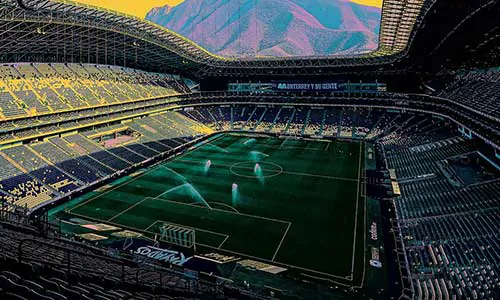
| Mexico | Monterrey | Estadio BBVA | 50,113 | Famous for its spectacular panoramic view of Cerro de la Silla. |
| Canada | Toronto | BMO Field | 44,315 | Expanding its seating footprint for the tournament. |
| Canada | Vancouver | BC Place | 48,821 | Beautiful waterfront location and retractable roof. |
Tournament Schedule and Match Dates for the FIFA World Cup 2026
To follow the month-long tournament properly, fans must familiarize themselves with the schedule’s structure. The expanded match schedule of the FIFA World Cup 2026 spans over five thrilling weeks. Specifically, it kicks off on June 11, 2026, and concludes with the crowning of the world champion on July 19, 2026.
Because there are 48 teams competing, the group stage features 72 matches in total. This means multiple matches will be played on a daily basis, offering spectators continuous, action-packed soccer viewing. Below is a breakdown of the key stages of the tournament:
- Group Stage (June 11 – June 27, 2026): Commences with the opening match in Mexico City. Teams will fight to finish in the top two spots of their respective groups, or be among the best eight third-placed teams to secure a place in the next phase.
- Round of 32 (June 28 – July 3, 2026): This represents the newly introduced elimination stage. It raises the tension, as a single defeat sends teams packing home early.
- Round of 16 (July 4 – July 7, 2026): The classic knockout matches begin. These will be played across several iconic host cities, falling over the US Independence Day weekend, which will generate a festive atmosphere.
- Quarter-finals (July 8 – July 11, 2026): The final eight teams battle for supremacy in Los Angeles, Kansas City, Miami, and Boston.
- Semi-finals (July 14 – July 15, 2026): The final four contenders face off in Dallas and Atlanta to earn a spot in the most prestigious game in world sport.
- Third-Place Play-off (July 18, 2026): Hosted at the Hard Rock Stadium in Miami, deciding the bronze medalist of the tournament.
- The Grand Final (July 19, 2026): The pinnacle event of the FIFA World Cup 2026 will take place at MetLife Stadium in East Rutherford, New Jersey, in front of a capacity crowd.
How to Buy Tickets for the FIFA World Cup 2026
If you wish to purchase tickets to experience the FIFA World Cup 2026 in person, you must follow the official channels established by soccer’s governing body. Demand is expected to be extremely high. Therefore, fans are urged to plan as early as possible to secure seats.
To avoid fraud and astronomical pricing from scalpers, the safest route is to register through the official FIFA ticketing portal. Ticket sales occur in distinct, regulated phases. This typically includes a random selection draw phase followed by a first-come, first-served sale period.
In addition, think about booking your regional transport and accommodations alongside your ticket applications. Because cities like Seattle, Boston, and Toronto feature highly active local tourism sectors, hotel rates are expected to rise closer to the matches. Consequently, securing lodging well in advance will protect your travel budget and ensure a smoother trip.
Official Broadcasting and Viewing Guide for the FIFA World Cup 2026
Not everyone will have the opportunity to sit in the stands in New York, Toronto, or Mexico City. Fortunately, broadcasting rights agreements for the FIFA World Cup 2026 ensure that fans across the globe can access comprehensive live coverage of every single matchup. Different networks have secured broadcasting rights depending on your home country or region.
Where to Watch the FIFA World Cup 2026 in the United States
For fans watching in the United States, television coverage is divided between English and Spanish-language networks. Fox Sports holds the exclusive English-language broadcasting rights. Accordingly, they will distribute matches across the main local FOX broadcast network and their cable channel, FS1.
If you prefer to watch the tournament without a traditional cable bundle, there are several convenient digital avenues available:
- FOX One: A dedicated, affordable standalone service carrying Fox and FS1 feeds for approximately $19.99 per month, allowing viewers to stream the entire tournament legally.
- Peacock: Provides extensive Spanish-language live streaming coverage of the matches broadcast by Telemundo and Universo.
- Over-the-Air (OTA) Antenna: A digital antenna lets you catch matches airing on local FOX and Telemundo affiliate channels for free after a one-time equipment purchase.
- Live TV Streaming Services: Services such as FuboTV, Sling TV, and YouTube TV carry both FOX and FS1, offering flexible monthly subscription plans.
Where to Watch the FIFA World Cup 2026 in Canada and Australia
In Canada, Bell Media retains the exclusive broadcasting rights. They will broadcast matches across TSN (The Sports Network) in English and RDS (Réseau des sports) in French. Canadian viewers can access digital livestreams of the games using the TSN and RDS dedicated web portals and mobile applications.
On the other hand, Australian football fans are in for an incredible treat. SBS has acquired the exclusive Australian broadcasting rights for the entire tournament. Remarkably, SBS will show all 104 matches of the FIFA World Cup 2026 live and completely free of charge across SBS, SBS VICELAND, and the digital SBS On Demand streaming service. Therefore, Australian fans only need to set up a free account to watch the tournament unfold.
Where to Watch the FIFA World Cup 2026 in the United Kingdom and Europe
In the United Kingdom, terrestrial giants BBC and ITV will share the broadcasting rights. They will divide the live coverage of the 104 matches. This means UK residents can watch every match free of charge on BBC One, ITV1, and their respective digital streaming platforms, BBC iPlayer and ITVX.
Throughout the rest of Europe, state public broadcasters and premium networks will carry local coverage. Because of strict European broadcasting laws, many matches are categorized as events of major public importance, guaranteeing that they remain available on free-to-air television networks across most nations.
Streaming Options and VPN Guide for the FIFA World Cup 2026
With matches spread across North American time zones, you may occasionally find yourself away from your home TV when a critical kickoff occurs. Consequently, knowing how to configure your mobile devices for secure streaming is highly important.
Streaming applications use geographic tracking (geo-blocking) to restrict their broadcast feeds. If you travel outside your home country during the tournament, you might find that your subscription apps or free local platforms—like SBS On Demand or BBC iPlayer—block your access due to licensing boundaries. To circumvent this issue and access your legitimate subscriptions from abroad, you can utilize a Virtual Private Network (VPN).
A high-quality VPN encrypts your connection and securely routes it through a server in your home country. This enables you to stream the matches safely and legally. Here is a brief, step-by-step setup guide:
- Select a reliable VPN provider: Services like ExpressVPN, NordVPN, or Norton VPN are highly recommended for high-speed streaming without buffering issues.
- Install the application: Download the VPN client onto your preferred streaming device, whether it is a laptop, mobile phone, or Smart TV.
- Connect to a server: Choose a server located in your home country (for example, connect to an Australian server to access SBS On Demand, or a UK server for BBC iPlayer).
- Open your streaming platform: Launch your home streaming app or visit the website. You should now be able to watch live match coverage as if you were sitting on your own living room sofa.
Frequently Asked Questions About the FIFA World Cup 2026
Q1: Where is the FIFA World Cup 2026 being held?
A: The tournament is jointly co-hosted by the United States, Canada, and Mexico. Matches will take place across 16 different host cities in these three nations.
Q2: How can I buy tickets for the FIFA World Cup 2026?
A: Tickets must be purchased through the official FIFA ticketing portal. Interested buyers should register on the portal as early as possible to receive updates on ticket draws and sales phases.
Q3: What are the key dates for the FIFA World Cup 2026?
A: The tournament kicks off on June 11, 2026, with the opening match in Mexico City. The Grand Final will be played on July 19, 2026, at MetLife Stadium in East Rutherford, New Jersey.
Q4: How many teams are competing in this edition of the tournament?
A: A record-breaking 48 nations will compete in the tournament. This is an expansion from the previous 32-team format, resulting in a total of 104 matches.
Q5: Can I watch the matches for free in the UK and Australia?
A: Yes. In the UK, BBC and ITV share free-to-air broadcasting rights. In Australia, SBS will broadcast all 104 games live and free of charge via television and the SBS On Demand platform.
Q6: How can I legally watch the tournament while traveling abroad?
A: You can use a reliable, encrypted VPN service to connect to a server in your home country. This allows you to bypass geographic restrictions and securely log into your regular, local streaming subscriptions.
Preparing for a Historic Footballing Spectacle
The upcoming FIFA World Cup 2026 is set to write a brand-new chapter in the history of international sports. With more teams, more stadium locations, and more dramatic match opportunities, it promises to be a global celebration unlike any other. By planning your travel early, securing your tickets through official channels, and mapping out your viewing options, you can guarantee a premium, stress-free fan experience.
Do you plan on traveling to North America to support your national team, or are you planning an elaborate viewing setup at home? Let us know your thoughts and match predictions in the comments section below! Do not forget to bookmark this guide and share it with your fellow football enthusiasts to keep them informed as kickoff approaches.