FIFA World Cup 2026 Predictions: Favorites, Dark Horses and Key Teams
The wait is officially over. Football is returning to the grandest stage of them all, and this time, it is bigger, bolder, and more unpredictable than ever before. As fans from every corner of the globe prepare for the spectacular kickoff across North America, predictions and debates are reaching a fever pitch. The FIFA World Cup 2026 marks a historic milestone in sports history. With an expanded format featuring 48 nations, the tournament will challenge squads with a grueling schedule, varied climates, and unprecedented travel distances. Consequently, predicting who will lift the trophy requires a deep look into tactical setups, squad depth, and current form.
This comprehensive preview breaks down the frontrunners, the quiet threats, and the critical storylines shaping this momentous competition. Whether you are a casual fan or a dedicated sports bettor looking for an edge, this ultimate guide covers everything you need to know about the upcoming tournament.
Table of Contents
- A Brand New Era: The Expanded Format of the FIFA World Cup 2026
- The Elite Favorites to Win the FIFA World Cup 2026
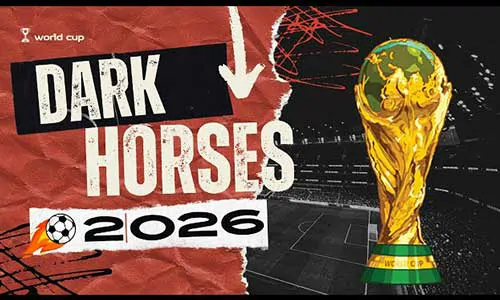
- The Ultimate Dark Horses of the FIFA World Cup 2026
- Host Nation Dynamics and Key Teams to Watch
- Statistical Comparison of Key Contenders
- Tactical Trends Set to Define the FIFA World Cup 2026
- Conclusion: The Stage Is Set
- FAQ: Everything You Need to Know About the FIFA World Cup 2026
A Brand New Era: The Expanded Format of the FIFA World Cup 2026
For the first time in history, the tournament expands from 32 to 48 teams. This historic shift means fans will witness a massive 104 matches played across 16 host cities in the United States, Canada, and Mexico. Under the new format, teams are divided into 12 groups of four. The top two teams from each group, along with the eight best third-place finishers, will advance to a newly introduced Round of 32.
Furthermore, this expansion alters how teams must approach the tournament. With an additional knockout round, squads must play eight matches instead of seven to win the championship. Consequently, squad depth and physiological recovery will be more critical than ever. On the other hand, the introduction of more third-place pathways gives smaller nations a realistic chance of surviving the group stage. This setup creates the perfect storm for major upsets and dramatic bracket shifts early in the knockout rounds.
For the latest schedules, ticketing information, and official announcements, make sure to visit the official FIFA website. Additionally, comprehensive tournament reporting can be tracked via Al Jazeera’s football coverage.
The Elite Favorites to Win the FIFA World Cup 2026
While the expanded format opens the door to surprises, the traditional powerhouses remain the most likely candidates to lift the trophy on July 19. These elite favorites possess the ideal blend of world-class talent, tournament experience, and tactical stability required to navigate a grueling summer schedule.
Below is a detailed analysis of the primary contenders poised to dominate the global stage.
France: Unmatched Squad Depth
Les Bleus enter the tournament with arguably the most complete pool of talent in world football. Under the long-term guidance of Didier Deschamps, France has established a ruthless tournament identity built on defensive solidity and devastating counter-attacks. Led by global superstar Kylian Mbappé, their attacking front is terrifyingly potent.
Additionally, the emergence of younger talents like Michael Olise and Bradley Barcola provides France with diverse attacking angles. In midfield, the physical dominance of Eduardo Camavinga and Aurélien Tchouaméni ensures they can control the tempo against any opponent, making them a primary contender for the FIFA World Cup 2026 title. However, their primary challenge will be avoiding the complacency that has occasionally plagued them in past tournaments.
Portugal: A New Era of Abundance
Portugal’s national team is currently experiencing an embarrassment of riches. Under manager Roberto Martínez, the squad has transitioned into a highly fluid, possession-dominant side. While the legendary Cristiano Ronaldo remains a key focal point, the team’s true strength lies in its incredible supporting cast.
Specifically, the midfield duo of Vitinha and João Neves offers elite ball retention and creative vision. Combined with the defensive leadership of Rúben Dias and the explosive pace of left-back Nuno Mendes, Portugal possesses no obvious weaknesses. Consequently, Portugal stands out as a balanced juggernaut ahead of the FIFA World Cup 2026, fully capable of going all the way if they can maintain their tactical cohesion under pressure.
Spain: The Reigning Kings of Europe
Following their sensational triumph at Euro 2024, Spain has re-established itself at the absolute peak of international football. Under Luis de la Fuente, La Roja has evolved from a side that kept possession for its own sake into a direct, vertical, and highly dangerous attacking machine.
The wing partnership of Lamine Yamal and Nico Williams provides a level of dynamism and flair that few defenses can contain. Supported by the tactical intelligence of Rodri in midfield, Spain can dictate the tempo of any game. Their high-pressing system and fluid positional play could propel them to glory in the FIFA World Cup 2026. Nevertheless, their success will rely heavily on keeping their key young stars fit throughout the demanding North American summer.
Argentina: Defending the Crown
As the defending champions, Argentina cannot be overlooked. While Lionel Messi is in the twilight of his historic career, the supporting cast surrounding him is stronger and more experienced than it was in Qatar. Players like Alexis Mac Allister, Enzo Fernández, and Julián Álvarez have matured into elite world-class performers.
Lionel Scaloni has fostered an extraordinary team chemistry characterized by tactical flexibility and a relentless work ethic. The squad knows how to win ugly and manage high-pressure situations. However, transitioning the tactical focus away from Messi as a 90-minute runner while maintaining their elite attacking threat will be Scaloni’s greatest test while defending their crown at the FIFA World Cup 2026.
Brazil: Searching for the Sixth Star
Brazil’s quest for an elusive sixth World Cup title continues. The Seleção boast an incredibly exciting front line featuring Vinícius Júnior, Rodrygo, and the teenage sensation Endrick. When firing on all cylinders, their Samba style of play is virtually unstoppable.
In contrast, Brazil has struggled with consistency and midfield balance in recent qualifying cycles. If they can solve their defensive transitions and find a stable midfield partnership to feed their explosive wingers, their sheer individual quality can overwhelm any opponent, which makes Brazil a formidable threat at the FIFA World Cup 2026.
England: Overcoming the Final Hurdle
England enters the tournament with one of the most valuable squads on paper. With generational talents such as Jude Bellingham, Phil Foden, Bukayo Saka, and the clinical Harry Kane leading the line, the Three Lions possess the offensive firepower to dismantle any defensive low block.
Therefore, the question for England is not about talent, but rather about tactical execution and mental resilience in the deep knockout stages. If their defensive line can hold up against elite opposition, England could finally break their trophy drought in the FIFA World Cup 2026.
The Ultimate Dark Horses of the FIFA World Cup 2026
Every tournament produces surprise packages that disrupt the status quo. The expanded format of the FIFA World Cup 2026 provides the perfect landscape for unheralded teams to make deep runs. These dark horses possess the tactical organization, individual quality, and momentum to shock the world’s elite.
Uruguay: Bielsa’s High-Pressing Machine
Under the iconic Marcelo Bielsa, Uruguay has transformed into one of the most physically demanding and entertaining teams in international football. Utilizing a relentless, high-octane pressing system, they aim to suffocate opponents in their own half and transition rapidly.
With a midfield engine powered by Federico Valverde and Manuel Ugarte, Uruguay has the stamina to outlast opponents in warm conditions. While there are questions regarding the clinical nature of their attacking line post-Luis Suárez, their aggressive tactical setup will be fascinating to watch in the FIFA World Cup 2026.
Norway: The Golden Generation
Norway makes their highly anticipated return to the global stage, boasting a squad capable of hurting any elite defense. In Erling Haaland, they possess arguably the most lethal and clinical striker in world football. Alongside playmaker Martin Ødegaard, Norway has the star power to unlock any backline.
Moreover, their success will depend heavily on their defensive structure and ability to avoid conceding soft goals on the counter. If they can remain compact, the Haaland-Ødegaard connection is expected to elevate Norway as a primary dark horse in the FIFA World Cup 2026.
Colombia: High-Octane Momentum
Colombia has quietly built an impressive run of form, combining structural discipline with explosive attacking flair. Led by the dynamic Luis Díaz and a rejuvenated James Rodríguez, Los Cafeteros play with a level of intensity and tactical cohesion that makes them incredibly difficult to beat.
Additionally, their familiarity with playing in humid conditions and highly charged atmospheres will serve them well in venues across the United States and Mexico. Ultimately, this tournament offers Colombia a unique platform during the FIFA World Cup 2026 to prove they belong among the global elite.
Morocco: The Atlas Lions Seeking More History
After their historic semi-final run in 2022, Morocco is no longer a team that opponents will take lightly. Walid Regragui’s squad has only grown stronger, integrating elite creative talents like Brahim Díaz alongside established superstars Achraf Hakimi and Sofyan Amrabat.
Morocco combines a rock-solid defensive shape with rapid, technically precise counter-attacks. Because of this balanced approach, they are uniquely equipped to frustrate possession-heavy European sides. They remain a massive threat as they aim to replicate their previous heroism in the FIFA World Cup 2026.
Japan: Tactical Discipline and Speed
Japan has consistently proven to be a giant-killer on the international stage. Their squad is packed with technically gifted players performing at the highest levels in Europe, including Kaoru Mitoma and Takefusa Kubo. Japan’s primary strength lies in their collective organization, tireless work ethic, and rapid transitions.
They are comfortable defending in a mid-block for long stretches before executing precise, high-speed counter-attacks. Consequently, any elite favorite that underestimates Japan’s tactical discipline will find themselves in immense trouble.
Host Nation Dynamics and Key Teams to Watch
The host nations—the United States, Mexico, and Canada—enjoy a distinct advantage. Playing in front of passionate home crowds can provide a massive psychological boost, helping these teams punch above their weight class.
However, host nation status also brings immense pressure and unique challenges:
- The United States (USMNT): Boasting a talented generation of players competing in Europe’s top leagues, the USMNT aims to reach the quarter-finals or beyond. Their young core must channel the energy of the home crowd without letting the pressure stifle their tactical composure.
- Mexico: Playing at the iconic Estadio Azteca provides El Tri with one of the most intimidating home advantages in sports. Their passionate fan base will expect a deep run, but they must find tactical consistency to match their emotional intensity.
- Canada: Boasting world-class pace with Alphonso Davies, Canada looks to establish itself as a respected footballing nation on the global stage. Surmounting the group stage will be their initial benchmark.
Ultimately, the vast geographical scale of this tournament means that teams will face extreme travel schedules. Flying between cool coastal cities in Canada to the high altitude of Mexico City and the humid heat of Miami will test the squads’ physical preparation. Teams that manage their logistics and recovery protocols most effectively will enjoy a massive advantage during the FIFA World Cup 2026.
Statistical Comparison of Key Contenders
To provide a clearer picture of how the top teams stack up against each other, the table below highlights key statistical metrics and team profiles heading into the tournament.
| Team | Primary Tactical Style | Key Player | Tournament Strength | Potential Vulnerability |
|---|---|---|---|---|
| France | Pragmatic Counter-Attack | Kylian Mbappé | Elite squad depth | Complacency in possession |
| Spain | High-Pressing Possession | Rodri | Fluid attacking wings | Vulnerability to long balls |
| Portugal | Fluid Attacking / Possession | Vitinha | Balanced roster | Managing big-game pressure |
| Argentina | Compact Positional Play | Lionel Messi | Exceptional team unity | Aging core players |
| Uruguay | Relentless High Press | Federico Valverde | Incredible physical stamina | Finishing clinical chances |
| Colombia | Intense Counter-Attack | Luis Díaz | Unbeaten momentum | Over-reliance on key wingers |
Tactical Trends Set to Define the FIFA World Cup 2026
Modern international football is evolving rapidly, and several tactical trends are expected to dominate the pitch during the summer of 2026. Understanding these trends provides valuable insight into how games will be won and lost.
Firstly, the rise of hybrid pressing systems has changed how teams build from the back. Rather than pressing constantly for 90 minutes, elite teams now utilize triggered presses, choosing specific moments to trap opponents. Secondly, the role of inverted full-backs continues to influence midfield control, allowing teams to transition from defensive structures to possession overloads seamlessly. Finally, because of the expansion to 48 teams, we will likely see more teams utilizing defensive low blocks in the group stage to frustrate superior opponents and play for draws or counter-attacking opportunities. Teams that lack vertical speed and creative wingers to break down these compact structures will struggle to progress deep into the tournament.
Conclusion: The Stage Is Set
The FIFA World Cup 2026 promises to be a historic celebration of football. With 48 teams competing across three massive nations, the tournament will test the physical, mental, and tactical limits of every squad. While traditional giants like France, Spain, and Portugal enter as the deserved favorites, the unique travel demands and expanded knockout bracket leave the door wide open for ambitious dark horses like Uruguay, Norway, and Colombia to make history.
As the countdown ticks away and the world prepares to focus its attention on North America, one thing is certain: we are about to witness an unforgettable tournament filled with drama, heartbreak, and triumph.
What do you think? Who is your favorite to lift the trophy, and which underdog do you think will shock the world? Share your predictions in the comments section below and join the global football conversation!
FAQ: Everything You Need to Know About the FIFA World Cup 2026
When does the FIFA World Cup 2026 begin?
The tournament officially kicks off with the opening match on June 11, 2026, and concludes with the grand final on July 19, 2026.
Which countries are hosting the FIFA World Cup 2026?
The tournament is co-hosted by three North American nations: the United States, Mexico, and Canada. Matches will be played across 16 iconic host cities.
How many teams are participating in the 2026 edition?
For the first time in history, the tournament has expanded to feature 48 teams, up from the traditional 32-team format used in previous editions.
What is the new tournament format?
The 48 teams are divided into 12 groups of four. The top two teams from each group, along with the eight best third-place finishers, advance to the newly introduced Round of 32 knockout stage.
Who are the top favorites to win the tournament?
The leading favorites to lift the trophy include France, Spain, Portugal, Argentina, Brazil, and England, due to their world-class squad depth and international pedigree.
Which teams are considered the biggest dark horses?
Teams like Uruguay, Colombia, Norway, Morocco, and Japan are highly touted as dangerous dark horses capable of pulling off major upsets and making deep tournament runs.