FIFA World Cup 2026 Schedule: Match Dates, Groups and Kick-Off Times
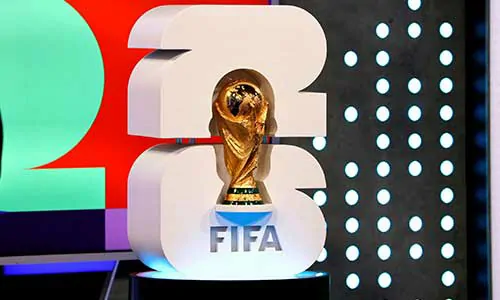
The anticipation is finally over as the greatest sports show on Earth returns with unprecedented scale and ambition. The FIFA World Cup 2026 is set to redefine international football, bringing together 48 nations in a massive celebration of the beautiful game. Co-hosted by three powerhouse nations—the United States, Canada, and Mexico—this tournament marks the very first time that 16 host cities across North America unite to stage the global event. Stretching from Vancouver to Mexico City, the championship will run from June 11 to July 19, 2026, featuring a record-breaking 104 matches.
For football fans worldwide, keeping track of match dates, group dynamics, and kick-off times is essential. Consequently, this comprehensive guide offers everything you need to know about the tournament’s timeline, the newly structured group stages, and the key venues hosting the action. Whether you are planning to attend in person or watching the matches of the FIFA World Cup 2026 live from home, this article has you covered.
Table of Contents
- 1. The Expanded Format of the FIFA World Cup 2026
- 2. Official FIFA World Cup 2026 Groups and Teams
- 3. Key Matchups to Watch in the FIFA World Cup 2026 Group Stage
- 4. Full FIFA World Cup 2026 Match Schedule and Timeline
- 5. Understanding FIFA World Cup 2026 Kick-Off Times and Time Zones
- 6. Legendary Venues Hosting the FIFA World Cup 2026
- 7. Frequently Asked Questions About the FIFA World Cup 2026
- 8. Conclusion and Final Thoughts
1. The Expanded Format of the FIFA World Cup 2026
In 2017, the FIFA Council made a historic decision to expand the tournament’s size. Therefore, the expansion of the FIFA World Cup 2026 to 48 teams marks a significant departure from the traditional 32-team format that was in place since 1998. While some critics initially expressed concerns over fixture congestion, the new format ensures more global representation, allowing emerging football nations to showcase their talent on the grandest stage.
Under this new structure, the 48 qualified nations are divided into 12 groups of four teams each. To accommodate the extra teams, the knockout phase has also been expanded. Specifically, the top two teams from each group, alongside the eight best third-placed finishers, will advance to a newly introduced Round of 32. This change adds an extra layer of drama to the group stage, as almost every match remains critical until the final whistle.
Furthermore, this format increases the total number of matches from 64 to 104. Consequently, the tournament will span 39 days, making it the longest and largest World Cup in history. To manage player fatigue, FIFA has designed the schedule to ensure adequate rest windows between matches, while grouping games geographically to minimize travel across North America.
2. Official FIFA World Cup 2026 Groups and Teams
The final draw for the tournament established 12 highly competitive groups. This distribution balances established football giants with ambitious debutants, promising unpredictable outcomes across the board. Below is the complete overview of all twelve groups of the FIFA World Cup 2026:
| Group | Team 1 (Pot 1) | Team 2 | Team 3 | Team 4 |
|---|---|---|---|---|
| Group A | Mexico | South Africa | South Korea | Czechia |
| Group B | Canada | Bosnia & Herzegovina | Qatar | Switzerland |
| Group C | Brazil | Morocco | Haiti | Scotland |
| Group D | United States | Paraguay | Australia | Türkiye |
| Group E | Germany | Curaçao | Ivory Coast | Ecuador |
| Group F | Netherlands | Japan | Sweden | Tunisia |
| Group G | Belgium | Egypt | Iran | New Zealand |
| Group H | Spain | Cabo Verde | Saudi Arabia | Uruguay |
| Group I | France | Senegal | Iraq | Norway |
| Group J | Argentina | Algeria | Austria | Jordan |
| Group K | Portugal | DR Congo | Uzbekistan | Colombia |
| Group L | England | Croatia | Ghana | Panama |
Among these, we see intriguing matchups of football styles. For example, Group H pairs European masters Spain with the physical prowess of Uruguay, alongside Saudi Arabia and Cabo Verde. On the other hand, Group C presents an exciting clash as Brazil faces off against Morocco, a team that captured global hearts during their historic semi-final run in Qatar.
3. Key Matchups to Watch in the FIFA World Cup 2026 Group Stage
While every fixture in the tournament carries immense weight, a few standalone matches in the group stage of the FIFA World Cup 2026 will undoubtedly command global attention. These games are expected to set the tactical tone for the rest of the championship.
- Mexico vs. South Africa (June 11, 2026): The highly anticipated opening match of the tournament at the Estadio Azteca. With a passionate home crowd behind them, El Tri will look to start their campaign on a high note against a dangerous South African side.
- Canada vs. Bosnia & Herzegovina (June 12, 2026): Canada’s first match on home turf at Toronto Stadium. It represents a massive milestone for Canadian soccer as they look to assert themselves early in Group B.
- USA vs. Paraguay (June 12, 2026): Playing in front of a energetic crowd at Los Angeles Stadium, the USMNT will face a robust Paraguayan defense in their Group D opener.
- Netherlands vs. Japan (June 14, 2026): A tactical masterclass in the making, taking place at Dallas Stadium. Japan’s disciplined high-press will test the possession-heavy approach of the Dutch.
- England vs. Croatia (June 17, 2026): A rematch of the classic 2018 World Cup semi-final, hosted in Dallas. This marquee game could decide who finishes at the top of Group L.
In addition to these fixtures, fans are eagerly looking forward to Group J, where defending champions Argentina, led by their talismanic veterans, begin their title defense. These matchups make the opening fortnight of the tournament an absolute treat for football purists.
4. Full FIFA World Cup 2026 Match Schedule and Timeline
To keep track of the tournament’s progression, understanding the timeline of the FIFA World Cup 2026 is highly beneficial. The tournament is structured logically to transition smoothly from the group phase to the intense single-elimination knockout matches.
The group stage begins on June 11, 2026, and concludes on June 27, 2026. Over these 17 days, fans will experience high-intensity football with up to four matches played daily. This packed schedule ensures continuous momentum, keeping viewers highly engaged from morning until night.
Following the group stage, the knockout stages of the FIFA World Cup 2026 commence. The schedule for each round is outlined below:
- Group Stage: June 11 – June 27, 2026
- Round of 32: June 28 – July 3, 2026
- Round of 16: July 4 – July 7, 2026
- Quarter-finals: July 9 – July 11, 2026
- Semi-finals: July 14 and July 15, 2026
- Third-place Play-off: July 18, 2026 (Hosted at Hard Rock Stadium in Miami, Florida)
- The Final Match: July 19, 2026 (Hosted at MetLife Stadium in East Rutherford, New Jersey)
This timeline ensures that the tournament maintains a rapid pace while avoiding unnecessary delays. The single-elimination format starting from the Round of 32 means there is no room for error, guaranteeing dramatic moments, extra-time tension, and penalty shootout heroics.
5. Understanding FIFA World Cup 2026 Kick-Off Times and Time Zones
One of the unique logistical hurdles of hosting a tournament across an entire continent is managing multiple time zones. The three host nations span across four major time zones. Specifically, these are Pacific Time (PT), Mountain Time (MT), Central Time (CT), and Eastern Time (ET). Consequently, broadcasting the FIFA World Cup 2026 globally requires strategic scheduling to suit both local stadium attendees and international TV audiences.
To simplify the schedule, FIFA has established standardized kick-off windows for the group stage matches. These windows are generally scheduled as follows:
- Early Matches: 12:00 PM Eastern Time / 9:00 AM Pacific Time
- Mid-day Matches: 3:00 PM Eastern Time / 12:00 PM Pacific Time
- Late Afternoon Matches: 6:00 PM Eastern Time / 3:00 PM Pacific Time
- Primetime Matches: 9:00 PM Eastern Time / 6:00 PM Pacific Time
For international viewers, these times are designed to align reasonably well with afternoon and evening schedules in Europe, South America, and Africa. However, fans in East Asia and Oceania will need to prepare for early morning viewings. Therefore, keeping a localized time-zone conversion tool handy during June and July 2026 is highly recommended to avoid missing any live action.
Furthermore, local kick-off times will impact how fans experience the FIFA World Cup 2026 from home. Afternoon matches in hot summer climates like Monterrey or Dallas will see stadiums utilizing state-of-the-art climate control technology to keep both players and fans safe and comfortable.
6. Legendary Venues Hosting the FIFA World Cup 2026
The stadium selection for the FIFA World Cup 2026 highlights the incredible infrastructure present across North America. Matches will be hosted in 16 world-class venues, with 11 located in the United States, 3 in Mexico, and 2 in Canada. Each stadium brings its own distinct cultural flavor and architectural marvel to the tournament.
In Mexico, the legendary Estadio Azteca in Mexico City makes history by becoming the first stadium to host matches in three separate World Cups (1970, 1986, and 2026). This historic venue, which witnessed the genius of Pelé and Diego Maradona, will host the opening match of the tournament. Meanwhile, Canada’s BC Place in Vancouver and Toronto’s BMO Field offer fantastic, modern atmospheres for the northern fixtures.
The United States boasts several architectural masterpieces. For instance, SoFi Stadium in Los Angeles and AT&T Stadium in Dallas represent the absolute pinnacle of modern stadium design, featuring massive video screens and retractable roofs. Ultimately, the crown jewel of the FIFA World Cup 2026 will be MetLife Stadium in East Rutherford, New Jersey, which will host the grand final on July 19, 2026, in front of more than 80,000 spectators.
For more detailed stadium histories and ticketing updates, fans can refer directly to the official FIFA website or explore the detailed 2026 FIFA World Cup Wikipedia page.
7. Frequently Asked Questions About the FIFA World Cup 2026
To provide quick answers to the most common queries, here is an organized FAQ section regarding the tournament.
Q1: When does the FIFA World Cup 2026 start and end?
A1: The tournament kicks off on Thursday, June 11, 2026, with the opening match in Mexico City, and concludes with the final match on Sunday, July 19, 2026.
Q2: Where will the FIFA World Cup 2026 final be played?
A2: The final will be held at MetLife Stadium in East Rutherford, New Jersey, near New York City, on July 19, 2026.
Q3: How many teams are participating in this edition?
A3: For the first time, 48 teams are participating, an expansion from the previous 32-team format.
Q4: How does the new knockout format work?
A4: The top two teams from each of the 12 groups, plus the eight best third-placed teams, qualify for the Round of 32. From there, it is a single-elimination tournament.
Q5: How many matches are played in total?
A5: There are 104 matches played over a span of 39 days, compared to the 64 matches played in previous tournaments.
Q6: How can I buy tickets for the matches?
A6: Tickets are sold in distinct application phases directly through the official FIFA ticketing portal. Fans are encouraged to register early to participate in the ticket draws.
8. Conclusion and Final Thoughts
The 2026 edition of the World Cup is set to be a milestone event in sports history. With 48 teams, 16 host cities, and 104 matches, this summer tournament promises to deliver unforgettable sporting drama. The expanded format not only gives more nations a chance to shine but also gives fans a more extensive, thrilling tournament experience.
As the countdown draws to a close, make sure your calendar is marked for the opening matches on June 11, 2026. Whether you are rooting for the co-hosts, an established football powerhouse, or a fresh underdog, this tournament will certainly unite the globe in a shared passion for football.
How do you think your favorite team will perform? Share your predictions in the comments section below, and subscribe to our newsletter for the latest squads, live match analyses, and exclusive tactical breakdowns as we celebrate the historic FIFA World Cup 2026 together!