FIFA World Cup 2026 Stadium Rules: Parking, Transport and Entry Policies
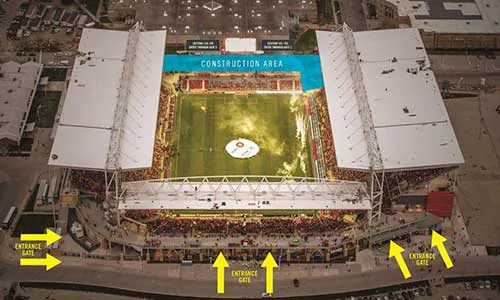
As sports enthusiasts prepare for the historic FIFA World Cup 2026, understanding the event’s comprehensive logistics is key to ensuring a smooth matchday experience. Spanning 16 iconic host cities across three North American nations—the United States, Canada, and Mexico—the tournament is set to be the largest and most widely attended in football history. Consequently, navigating the various stadium entry policies, finding reliable stadium parking, and utilizing public transportation networks require meticulous preparation. Whether you are traveling across borders or attending a game in your local metropolitan area, being well-informed about the unified regulations and regional variations is highly important. Therefore, getting accustomed to the official FIFA World Cup 2026 guidelines well in advance will keep your focus where it belongs: on the exciting pitch action.
Table of Contents
- 1. Official Ticket and App Requirements for FIFA World Cup 2026
- 2. Security Screening and the Strict Clear Bag Policy for FIFA World Cup 2026
- 3. Prohibited Items: What to Leave at Home
- 4. FIFA World Cup 2026 Stadium Parking Guidelines
- 5. Public Transportation and Shuttle Services for FIFA World Cup 2026
- 6. Accessibility and Inclusion Services
- 7. Frequently Asked Questions (FAQs)
- 8. Conclusion & Matchday Checklist
Official Ticket and App Requirements for FIFA World Cup 2026
To begin with, gaining access to any of the stadiums during the FIFA World Cup 2026 requires strict adherence to digital ticketing guidelines. FIFA has phased out traditional paper tickets and simple PDF printouts. Instead, all ticket holders must download the official mobile ticketing application associated with the tournament. This technological shift is designed to prevent counterfeiting and streamline entry lines.
Specifically, tickets will feature dynamically refreshing barcodes. Consequently, static screenshots, printouts, or third-party digital wallets will not be accepted at the gate checkpoints. If you are traveling as a group, it is highly recommended to transfer individual tickets to each group member’s mobile device well before reaching the stadium perimeter. This precaution prevents unnecessary bottlenecks at the outer security checkpoints and ensures everyone enters the turnstiles smoothly.
Furthermore, ensure that your smartphone is fully charged before departing for the match. Because digital scanning relies on high screen brightness, bringing a compact portable power bank is highly advisable, provided it complies with stadium size restrictions.
For matches played in Mexico—such as those at the iconic Estadio Azteca—fans must also comply with the local FAN ID registration system. This mandatory security check requires uploading a valid passport or government ID, completing a facial verification process, and generating a unique QR code on your mobile device. Therefore, having both your digital ticket and FAN ID ready will significantly streamline your entrance.
Security Screening and the Strict Clear Bag Policy for FIFA World Cup 2026
To ensure a safe environment for all spectators, a strict clear bag policy will be enforced across all match venues. Security checkpoints are designed to process large crowds efficiently; therefore, minimizing the time spent inspecting personal belongings is paramount.
Under the official tournament guidelines, fans are permitted to bring only specific types of bags inside. Specifically, the approved bag must be a fully transparent plastic, vinyl, or PVC bag that does not exceed 12 inches by 6 inches by 12 inches (30 cm x 30 cm x 15 cm). This clear bag policy allows security personnel to inspect the bag’s contents visually at a glance, preventing line delays.
Alternatively, you may carry a small, non-transparent clutch bag, wristlet, or wallet, provided it does not exceed 6.5 inches by 4.5 inches (approximately the size of an adult hand). Any bag larger than this size limit that is not transparent will be rejected at the gate, forcing fans to either walk back to distant vehicles or pay for expensive offsite bag lockers.
There are limited exceptions to this rule. Specifically, bags containing essential medical equipment or childcare necessities (such as diaper bags) are allowed. However, these items must enter through designated accessibility lanes and are subject to thorough physical inspection.
It is also vital to note that local venue regulations might impose minor variances. For instance, stadiums like BC Place in Vancouver or Gillette Stadium in Boston must align with local fire safety codes and provincial laws. Consequently, certain types of semi-opaque PVC materials or internal organizational pouches within a clear bag may face stricter scrutiny. Traveling light is consistently the safest strategy.
Prohibited Items: What to Leave at Home
In addition to the clear bag policy, venue management has established a comprehensive list of prohibited items to ensure public safety. Bringing any of these items may result in denied entry or confiscation, with no options for retrieval post-match.
Most notably, FIFA recently announced a strict ban on reusable water bottles inside all stadium bowls, citing safety and security risks. Consequently, fans are not allowed to bring personal metal, glass, or hard plastic flasks. To mitigate dehydration during hot summer matchdays, stadiums will provide dedicated drinking fountains, and concession stands will sell beverages that must be poured into recyclable cups or served without caps.
Furthermore, the following items are strictly prohibited inside the venues:
- Professional Camera Equipment: Detachable lenses, tripods, monopods, and professional lighting rigs are restricted. Only standard smartphones and compact personal cameras are permitted.
- Drones and UAVs: Unmanned aerial vehicles and any remote-controlled flying devices are strictly banned from stadium airspace.
- Noisemakers: Air horns, vuvuzelas, megaphones, and whistles are prohibited to prevent interference with match officials and safety announcements.
- Banners and Signs: Banners larger than 6.5 feet by 5 feet (2 meters by 1.5 meters) are not allowed. Additionally, commercial, offensive, or political messages are strictly banned.
- Umbrellas: Large or small umbrellas are prohibited as they block the view of other spectators and pose safety hazards. Rain ponchos are recommended instead.
- Baby Strollers and Carriers: Strollers and bulky infant carriers are not allowed in the seating bowls. Most stadiums provide a stroller valet service outside the gates.
- Unapproved Cushions: Seat cushions containing zippers, pockets, or metal frames are prohibited.
FIFA World Cup 2026 Stadium Parking Guidelines
Securing stadium parking during the FIFA World Cup 2026 represents one of the most complex aspects of matchday logistics. Due to the massive scale of the tournament, parking spaces near the venues are extremely scarce and must be planned with meticulous care.
To begin with, all official stadium parking passes must be purchased online prior to matchday. Crucially, these parking reservations are only available to verified ticket holders. When purchasing, you must use the exact email address linked to your match tickets. Driving to the stadium area on matchday hoping to purchase parking at the gate is a futile effort, as drive-up cash parking will not be available.
Furthermore, host cities are implementing a strict three-tier security perimeter around each venue. This means that only vehicles with official, pre-verified parking decals or passes will be allowed to cross the outer boundary lines. Rideshare vehicles and taxis will have dedicated, remote drop-off zones located outside the security perimeters, requiring fans to walk the remaining distance.
For fans interested in tailgating, rules are highly restrictive. Traditional open-flame cooking and “Bring Your Own Beverage” (BYOB) activities are prohibited within the security perimeters. Security patrols will strictly enforce these measures to prevent safety hazards and maintain orderly parking lots.
Additionally, parking fees are exceptionally high, reflecting the massive demand. Below is an analytical table detailing approximate parking rates and primary public transportation alternatives across several prominent host cities:
| Host City / Stadium | Parking Cost (Pre-Booked) | Primary Public Transit | Transit Cost (Approx. Round-Trip) |
|---|---|---|---|
| New York/NJ (MetLife Stadium) | Zero on-site public parking | NJ Transit (Train via Secaucus) | $10.50 (Capped) |
| Los Angeles (SoFi Stadium) | $300.00 | LA Metro + Express Shuttle | $3.50 |
| Miami (Hard Rock Stadium) | $175.00 – $250.00 | Brightline / Metorail + Free Shuttle | $20.00+ / Free Shuttles |
| Dallas (AT&T Stadium) | $125.00 – $175.00 | TRE Train + Shuttle Bus | $12.00 |
| Vancouver (BC Place) | Highly limited / None | SkyTrain (Expo / Canada Line) | $6.50 – $10.00 |
Public Transportation and Shuttle Services for FIFA World Cup 2026
Given the high cost of stadium parking and the extensive road closures surrounding match venues, utilizing public transportation is highly recommended as the most logical, affordable, and stress-free transit option. Every host city is coordinating with regional transit authorities to provide specialized services tailored to the needs of international fans.
In New York and New Jersey, for instance, MetLife Stadium will feature zero on-site parking for the general public on matchdays. Therefore, the NJ Transit rail corridor will serve as the primary lifeline for fans, offering direct rail links from Secaucus Junction to the stadium gates.
On the other hand, for matches in Los Angeles at SoFi Stadium, on-site parking can cost as much as $300. Consequently, transit authorities urge fans to “Go Metro” via the C Line or take advantage of the high-frequency shuttle buses departing every ten minutes from major park-and-ride hubs.
Similarly, Miami’s Hard Rock Stadium is introducing a robust network of free express shuttle buses. These shuttles will transport ticketed fans directly from three major rail stations: the Tri-Rail Golden Glades Station, the Metorail MLK Station, and the Brightline Aventura Station. This service commences 3.5 hours before kickoff and runs until 1.5 hours after the final whistle.
Moreover, municipal rail networks in major cities like Mexico City (the Metro and Tren Ligero) and Toronto (GO Transit and TTC) offer inexpensive, direct routes that bypass heavy traffic. Utilizing these public systems not only reduces the carbon footprint of the event but also significantly decreases your travel time.
Accessibility and Inclusion Services
The organizing committees are deeply committed to providing an accessible and inclusive experience for every guest during the FIFA World Cup 2026. Consequently, extensive measures are in place to support spectators with diverse mobility and sensory needs.
All official public transportation options, including municipal trains, light rail lines, and dedicated park-and-ride shuttles, are fully wheelchair and mobility device accessible. For those who require ADA-compliant parking at the stadium, accessible parking passes must be pre-purchased online through the official portal, and a valid match ticket is strictly required.
Inside the stadiums, fans will find dedicated accessibility service desks, wheelchair-accessible seating areas, and sensory rooms designed for individuals who may experience sensory overload. Assistive listening devices and service animal accommodations are also widely available at each host venue.
Frequently Asked Questions (FAQs) About FIFA World Cup 2026 Stadium Rules
Q1: Can I bring a reusable water bottle into the stadium during the FIFA World Cup 2026?
A: No. FIFA has implemented a strict ban on reusable water bottles, including metal and hard plastic flasks, due to safety and security guidelines. To stay hydrated, fans can use the stadium’s drinking fountains or purchase soft drinks/water at concession stands.
Q2: Are paper tickets or screenshots accepted for entry?
A: No. Only digital tickets displayed through the official mobile ticketing application are valid. Because the barcodes refresh dynamically to prevent fraud, printed sheets and screenshots will fail at the scanning turnstiles.
Q3: Is tailgating permitted in the stadium parking lots?
A: Tailgating is highly restricted. Traditional setups involving open flames, large grills, and outside alcohol (BYOB) are prohibited within the official security perimeters. Parking areas are strictly monitored for safety.
Q4: What is the maximum allowed bag size?
A: Spectators are allowed to bring clear bags made of plastic, vinyl, or PVC that do not exceed 12” x 6” x 12” (30 cm x 30 cm x 15 cm). Small clutch purses or wallets no larger than 6.5” x 4.5” are also permitted without being transparent.
Q5: How early should I arrive at the stadium on matchday?
A: It is highly recommended to arrive at the outer security checkpoints at least 2 to 3 hours before kickoff. Processing times at security lanes and ticket scanners will be longer than standard club matches due to larger crowds.
Q6: Is a FAN ID required for all FIFA World Cup 2026 matches?
A: No, a FAN ID is only mandatory for matches hosted in Mexico (Mexico City, Guadalajara, and Monterrey). Games played in the United States and Canada do not require a FAN ID, though standard digital ticketing is mandatory across all 16 venues.
Conclusion & Matchday Checklist
Attending a match during the historic FIFA World Cup 2026 is a lifetime opportunity, but a smooth experience requires proactive planning. From downloading the correct digital ticketing application to booking your stadium parking months in advance, staying organized is the best defense against gate delays. Prioritizing public transportation will not only save you money but will also bypass the severe traffic congestion expected around the venues.
Before leaving for the stadium, make sure to review this essential checklist:
- Charge your mobile phone completely and carry a compatible portable charger.
- Download and log into the official mobile ticketing app to access your live tickets.
- Pack your belongings in a compliant transparent bag measuring under 12″ x 6″ x 12″.
- Leave reusable bottles, umbrellas, and professional cameras at home to avoid confiscation.
- Map out your transit route and utilize public shuttle services wherever possible.
For real-time transport schedules, localized venue maps, and ticketing support, visit the official FIFA World Cup 2026 Hub. Additionally, to secure official parking reservations, make sure to access the pre-sale portal via the FIFA Tickets Page as soon as your match ticket is confirmed. Enjoy the matches and travel safely!