FIFA World Cup 2026 Venues: Iconic Stadiums Hosting the Tournament
The highly anticipated FIFA World Cup 2026 is finally here, marking a monumental milestone in the history of international soccer. As the first-ever edition to feature 48 teams competing across 104 matches, this historic tournament is set to showcase unparalleled athletic talent. To accommodate this massive expansion, three host nations—the United States, Mexico, and Canada—have joined forces to deliver a football spectacle like no other. At the heart of this excitement are the 16 spectacular host venues chosen to set the stage for these dramatic matches. From legendary historic temples of football to state-of-the-art modern architectural marvels, these stadiums are ready to welcome millions of fans from across the globe.
Understanding where these matches will take place, the unique characteristics of each arena, and the travel logistics is essential for fans. In this comprehensive guide, we provide a deep dive into the iconic arenas selected for the tournament, highlighting their historic significance, capacities, and what makes each venue special.
Table of Contents
- 1. The Historic Scale of the FIFA World Cup 2026
- 2. Complete List of FIFA World Cup 2026 Host Venues
- 3. The Iconic United States Stadiums
- 4. Legendary and Historic Stadiums in Mexico
- 5. Premier Canadian Stadiums
- 6. Innovative Technologies and Sustainability in 2026 Venues
- 7. Frequently Asked Questions (FAQ)
- 8. Conclusion and Final Thoughts
1. The Historic Scale of the FIFA World Cup 2026
The upcoming tournament represents a massive evolution in how the beautiful game is celebrated. Consequently, the organizers have structured the tournament across three broad geographic regions: East, Central, and West. This strategy was designed to minimize overall travel distances for both teams and fans, grouping host cities based on timezone and proximity. Because the FIFA World Cup 2026 is expanding its roster to 48 nations, the chosen venues must meet strict standards for safety, media infrastructure, accessibility, and spectator comfort.
In addition to these structural demands, each venue brings its own unique culture and energy. From the coastal views of Vancouver to the bustling metropolis of Mexico City, the sheer diversity of climates and elevations will play a major role in how the tournament unfolds. Therefore, understanding the venue specifics gives us a clearer picture of what the world’s best athletes will experience on the pitch.
2. Complete List of FIFA World Cup 2026 Host Venues
To provide a clear, bird’s-eye view of where the tournament action will happen, we have compiled the essential data for all 16 designated host stadiums. These venues are distributed across the United States, Mexico, and Canada, combining historical legacy with cutting-edge sporting infrastructure.
| Official FIFA Venue Name | Sponsor / Common Name | Host City | Country | Tournament Net Capacity |
|---|---|---|---|---|
| New York New Jersey Stadium | MetLife Stadium | East Rutherford (NY Metro) | United States | ~78,576 |
| Los Angeles Stadium | SoFi Stadium | Inglewood (LA Metro) | United States | ~69,650 |
| Dallas Stadium | AT&T Stadium | Arlington (Dallas Metro) | United States | ~70,122 |
| Atlanta Stadium | Mercedes-Benz Stadium | Atlanta | United States | ~67,382 |
| Miami Stadium | Hard Rock Stadium | Miami Gardens | United States | ~64,091 |
| San Francisco Bay Area Stadium | Levi’s Stadium | Santa Clara | United States | ~69,391 |
| Houston Stadium | NRG Stadium | Houston | United States | ~68,311 |
| Kansas City Stadium | Arrowhead Stadium | Kansas City | United States | ~67,513 |
| Seattle Stadium | Lumen Field | Seattle | United States | ~65,123 |
| Philadelphia Stadium | Lincoln Financial Field | Philadelphia | United States | ~65,827 |
| Boston Stadium | Gillette Stadium | Foxborough (Boston Metro) | United States | ~63,815 |
| Mexico City Stadium | Estadio Azteca | Mexico City | Mexico | ~72,766 |
| Monterrey Stadium | Estadio BBVA | Guadalupe (Monterrey Metro) | Mexico | ~50,113 |
| Guadalajara Stadium | Estadio Akron | Zapopan (Guadalajara Metro) | Mexico | ~44,330 |
| Vancouver Stadium | BC Place | Vancouver | Canada | ~48,821 |
| Toronto Stadium | BMO Field | Toronto | Canada | ~44,315 |
3. The Iconic United States Stadiums
The United States boasts 11 world-class soccer stadiums selected to host the majority of the tournament’s fixtures, including the knockout rounds and the final match. These massive arenas represent some of the most lucrative and popular sports facilities globally.
MetLife Stadium (New York New Jersey Stadium)
Located in East Rutherford, New Jersey, just minutes away from New York City, MetLife Stadium has officially been chosen to host the final match of the FIFA World Cup 2026. Opened in 2010, this open-air venue typically serves as the home ground for both the New York Giants and the New York Jets NFL teams. It has a proven track record of hosting massive international events, including the Copa América Centenario Final in 2016 and legendary stadium concert tours. Its proximity to one of the world’s most vibrant metropolitan areas ensures a cosmopolitan atmosphere when the tournament champion is crowned here.
SoFi Stadium (Los Angeles Stadium)
SoFi Stadium in Inglewood, California, is arguably the most futuristic sports venue in North America. Designed as an indoor-outdoor masterpiece, it features an advanced translucent ETFE canopy roof that shields fans from the elements while allowing natural California sunshine to light the pitch. It features the “Infinity Screen by Samsung,” an enormous double-sided 4K video board suspended from the roof structure. Consequently, fans are treated to a visual experience like no other. It serves as an ideal stage for high-profile group stages and knockout matches during the FIFA World Cup 2026.
AT&T Stadium (Dallas Stadium)
Renowned for its sheer size and grand design, AT&T Stadium in Arlington, Texas, is affectionately known as “Jerry World.” This retractable-roof stadium will host a highly impressive nine matches during the FIFA World Cup 2026—more than any other individual venue in the tournament. Featuring a colossal center-hung video board stretching almost from one 20-yard line to the other, AT&T Stadium offers incredible lines of sight. To meet the demanding pitch requirements of FIFA, the venue will convert its usual synthetic turf to natural grass, setting up an exceptional surface for elite athletes.
Mercedes-Benz Stadium (Atlanta Stadium)
Atlanta’s Mercedes-Benz Stadium is highly celebrated for its modern engineering, highlighted by an eight-panel retractable roof that opens and closes like a camera aperture. It also features a massive 360-degree halo display, wrapping around the interior roofline. Having hosted the MLS Cup, the Super Bowl, and multiple national college championships, the stadium’s energetic, fan-centric atmosphere makes it a fitting location for one of the crucial semi-final matchups.
Hard Rock Stadium (Miami Stadium)
With its vibrant, sun-drenched coastal environment, Hard Rock Stadium in Miami Gardens, Florida, has a long history of staging major international friendlies and competitive soccer tournaments. Featuring a distinctive open canopy structure that shades 90% of the spectator seats, this open-air stadium is perfectly adapted to the hot Florida summer. Given Miami’s diverse, soccer-loving population, matches here are expected to draw incredibly energetic and passionate crowds from Central and South America.
Other Key US Host Arenues
- San Francisco Bay Area Stadium (Levi’s Stadium): Situated in Santa Clara, California, this LEED Gold-certified stadium is one of the most environmentally sustainable sports structures in the world. Its open design makes it highly inviting for summer matches.
- Houston Stadium (NRG Stadium): A massive venue equipped with a retractable fabric roof and robust climate control systems. It is highly experienced in organizing international football fixtures and has hosted several Copa América games.
- Kansas City Stadium (Arrowhead Stadium): Officially recognized as one of the loudest outdoor sports arenas in the world, Arrowhead brings a legendary tailgating culture and deep-rooted soccer passion to the tournament.
- Seattle Stadium (Lumen Field): Known for its vertical design and iconic partial canopy roof, Lumen Field offers breathtaking views of the Seattle skyline. Home to the Seattle Sounders, its fans are widely regarded as some of the most passionate in North American soccer.
- Philadelphia Stadium (Lincoln Financial Field): Positioned in a historic American sporting hub, this stadium utilizes advanced green energy, including solar panels and wind turbines, to power its operations.
- Boston Stadium (Gillette Stadium): Located in Foxborough, Massachusetts, this venue features a newly constructed signature lighthouse and an expansive outdoor plaza, creating a modern and highly scenic environment for matchdays.
4. Legendary and Historic Stadiums in Mexico
Mexico brings an unmatched heritage to the FIFA World Cup 2026. It is the only nation to have hosted the tournament on three separate occasions (1970, 1986, and 2026), presenting three stunning stadiums that blend historic legacy with modern architecture.
Estadio Azteca (Mexico City Stadium)
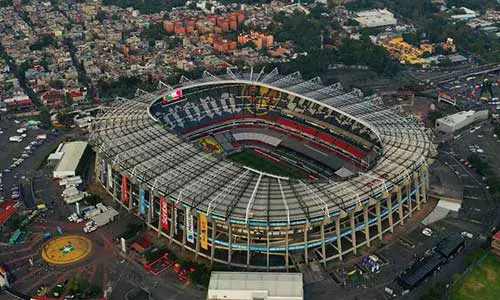
There are very few sports venues on the planet that command as much respect as the legendary Estadio Azteca in Mexico City. It is the very ground where Pelé lifted the trophy in 1970 and Diego Maradona scored his iconic “Hand of God” and “Goal of the Century” goals in 1986. For the FIFA World Cup 2026, Estadio Azteca will host the opening match of the tournament on June 11, 2026. Having undergone extensive modernizations, the stadium retains its historic soul while providing updated seating, lighting, and hospitality options for fans making the pilgrimage to this temple of football.
Estadio BBVA (Monterrey Stadium)
Often referred to as the “Steel Giant” (El Gigante de Acero) due to its striking metal structure, Estadio BBVA in Monterrey is one of the most visually stunning venues in international sport. Nestled closely against the backdrop of the iconic Cumbres de Monterrey National Park and the Cerro de la Silla mountain, it offers fans a breathtaking panoramic view. It is also highly celebrated for its environmental consciousness, being the first stadium in North America to achieve the prestigious LEED Silver certification.
Estadio Akron (Guadalajara Stadium)
Designed to resemble a green volcano with a white cloud hovering above it, Estadio Akron in Zapopan, Guadalajara, is an architectural marvel. The grass slopes surrounding the exterior mimic natural topography, integrating the stadium cleanly into the local environment. Home to the historic Club Deportivo Guadalajara (Chivas), this stadium delivers an incredibly passionate, pure Mexican soccer atmosphere that will leave a lasting impression on visiting fans.
5. Premier Canadian Stadiums
Canada is proud to host its first-ever men’s World Cup matches, utilizing two premier sporting structures that highlight the nation’s growing love for the beautiful game.
BC Place (Vancouver Stadium)
Overlooking the picturesque False Creek waterfront in Vancouver, British Columbia, BC Place is a true West Coast landmark. It features a state-of-the-art cable-supported retractable roof and a massive center-hung scoreboard. Having successfully hosted the FIFA Women’s World Cup Final in 2015, the venue is highly experienced in executing top-tier global tournaments. Its close proximity to downtown Vancouver makes it highly accessible and popular for international visitors.
BMO Field (Toronto Stadium)
Located on the scenic shoreline of Lake Ontario within Toronto’s Exhibition Place, Toronto Stadium is a highly intimate and dedicated soccer-specific stadium. To prepare for the FIFA World Cup 2026, the venue has undergone temporary expansions to boost its capacity to over 40,000. This provides a focused, high-energy environment where fans sit close to the pitch, creating an incredible atmosphere for Canada’s historic home fixtures.
6. Innovative Technologies and Sustainability in 2026 Venues
The scale of the FIFA World Cup 2026 demands a forward-thinking approach to sports venue management. Consequently, sustainability and technical innovation have taken center stage in the preparation of all 16 host stadiums.
One of the most complex technological challenges has been the pitch surfaces. While several of the NFL stadiums in the United States typically use synthetic turf, FIFA regulations strictly require natural grass for tournament matches. Consequently, stadium engineers have implemented advanced turf management systems. These include modular grass installation, grow lights, and advanced vacuum-powered drainage systems to maintain pristine playing conditions regardless of the weather.
Furthermore, green energy and environmental conservation are key highlights. Venues like Levi’s Stadium and Estadio BBVA utilize advanced water recycling systems, solar energy grids, and localized waste reduction programs. By prioritizing eco-friendly infrastructure, the tournament aims to leave a positive, sustainable legacy for future sports stadium developments worldwide.
7. Frequently Asked Questions (FAQ)
Q1: How many stadiums will host the FIFA World Cup 2026?
A total of 16 stadiums will host matches during the tournament. These are divided across three host nations: 11 in the United States, 3 in Mexico, and 2 in Canada.
Q2: Where will the final match of the FIFA World Cup 2026 be played?
The final match will be played at MetLife Stadium (officially designated as the New York New Jersey Stadium) in East Rutherford, New Jersey, on July 19, 2026.
Q3: Which venue will host the opening match of the tournament?
The historic Estadio Azteca (Mexico City Stadium) in Mexico City will host the opening match of the tournament on June 11, 2026, marking its historic third time hosting a World Cup opening fixture.
Q4: Are all the stadiums using natural grass pitches?
Yes, under FIFA’s strict guidelines, all venues hosting matches must install high-quality natural grass pitches. Venues that normally use artificial turf are temporarily converting to natural grass using advanced agronomic technologies.
Q5: How were the host cities grouped to reduce travel?
The 16 host cities have been grouped into three distinct geographic regions: the Western Region (Vancouver, Seattle, San Francisco Bay Area, Los Angeles), the Central Region (Guadalajara, Mexico City, Monterrey, Houston, Dallas, Kansas City), and the Eastern Region (Atlanta, Miami, Toronto, Boston, Philadelphia, New York/New Jersey).
Q6: Which stadium will host the most matches?
Dallas Stadium (AT&T Stadium) in Arlington, Texas, will host the most matches during the tournament, with nine fixtures scheduled, including a semi-final matchup.
8. Conclusion and Final Thoughts
The FIFA World Cup 2026 represents a monumental step forward for global football. By utilizing a diverse array of 16 iconic stadiums across the USA, Mexico, and Canada, the tournament is poised to offer fans and players a truly unforgettable experience. From the historic turf of Estadio Azteca to the futuristic designs of SoFi and MetLife Stadiums, each arena brings its own culture, history, and technological innovations to the world stage.
Whether you are planning to travel to the venues in person or follow the drama from home, this is a tournament that will reshape the landscape of sports entertainment forever. For more official updates, ticketing details, and match schedules, be sure to visit the Official FIFA Website and keep up with detailed tournament coverage on the 2026 FIFA World Cup Wikipedia Page.
Be Part of Football History!
The stadiums are ready, the pitches are green, and the world is watching. Join the global celebration of unity, athletic excellence, and passion in the FIFA World Cup 2026!