FIFA World Cup Trophy History: Who Owns and Keeps the Original Cup?
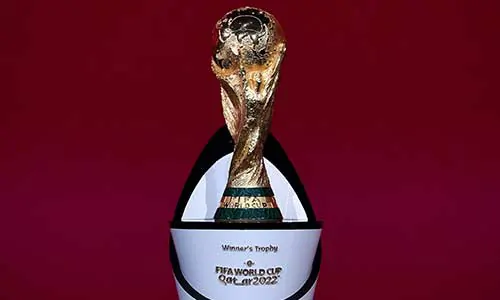
The quest for global football dominance is defined by a single, shimmering object: the FIFA World Cup Trophy. As the sports world shifts its focus toward the historic, expanded FIFA World Cup 2026, which will be co-hosted by Canada, Mexico, and the United States, the allure of this iconic prize has never been greater. It is the ultimate symbol of athletic achievement, watched by billions and chased by the world’s most elite athletes.
However, behind the golden luster of the modern cup lies a dramatic history filled with high-stakes thefts, wartime hiding spots, design revolutions, and extremely strict security protocols. Many fans wonder: who actually keeps the original trophy? Does the winning nation take the real gold home, or do they settle for a copy? To understand the destiny of the prize at the FIFA World Cup 2026, we must look deep into the legacy of football’s ultimate treasure.
“The lines spring out from the base, rising in spirals, stretching out to receive the world. From the remarkable dynamic tensions of the compact body of the sculpture rise the figures of two athletes at the stirring moment of victory.”
— Silvio Gazzaniga, Designer of the FIFA World Cup Trophy
Table of Contents
- 1. The Fascinating Origins: The Jules Rimet Trophy
- 2. Miraculous Escapes, Dog Heroes, and Tragic Thefts
- 3. The Modern Masterpiece: Gazzaniga’s Golden Triumph
- 4. Who Owns and Keeps the Original Cup?
- 5. The Road to the FIFA World Cup 2026: Trophy Security and Global Logistics
- 6. Comparing the Trophies: Jules Rimet vs. Modern FIFA Trophy
- 7. Frequently Asked Questions (FAQ)
1. The Fascinating Origins: The Jules Rimet Trophy
Long before the current trophy became a household symbol, the champions of the world hoisted a completely different prize. Introduced at the inaugural tournament in Uruguay in 1930, the original trophy was called “Victory”. It was later renamed the Jules Rimet Trophy in 1946 to honor the pioneering FIFA President who helped create the tournament.
Designed by French sculptor Abel Lafleur, the Jules Rimet was an elegant depiction of Nike, the ancient Greek goddess of victory, holding an octagonal cup above her head. It stood 35 centimeters high, weighed approximately 3.8 kilograms, and was crafted from gold-plated sterling silver resting on a blue lapis lazuli base. This iconic artifact represented the birth of modern sports romanticism, but its physical journey proved to be incredibly tumultuous.
2. Miraculous Escapes, Dog Heroes, and Tragic Thefts
The original Jules Rimet Trophy lived a life worthy of an action movie. During World War II, with Europe engulfed in conflict, the Italian Vice President of FIFA, Ottorino Barassi, secretly removed the trophy from a bank vault in Rome. To keep it safe from occupying forces, he hid it inside a humble cardboard shoebox under his bed for several years. Thanks to this daring act of preservation, the trophy survived the war intact.
However, the peace did not last. In March 1966, just months before the tournament was set to kick off in England, the Jules Rimet was stolen while on public display at Westminster Central Hall in London. Scotland Yard was completely baffled by the heist, throwing the host nation into deep embarrassment.
The day was saved not by detectives, but by a mixed-breed collie dog named Pickles. While out for a walk with his owner in South London, Pickles sniffed out a package wrapped in old newspaper under a suburban garden hedge. Inside was the missing trophy. Pickles instantly became a global celebrity, earning a lifetime supply of dog food and an invitation to the England team’s celebratory banquet.
The final chapter of the Jules Rimet Trophy, unfortunately, ended in tragedy. In 1970, after Brazil won their third world title, they were awarded the original trophy permanently under the rules of the time. In 1983, the trophy was stolen from the Brazilian Football Confederation’s headquarters in Rio de Janeiro. Unlike the London heist, this one had no happy ending. It was never recovered, and historians generally believe the thieves melted the precious gold-plated silver down into bullion.
3. The Modern Masterpiece: Gazzaniga’s Golden Triumph
Following Brazil’s permanent acquisition of the Jules Rimet in 1970, FIFA was faced with a blank canvas. They needed a brand-new trophy that would capture the evolution of global football. In preparation for the 1974 tournament in West Germany, FIFA launched a global design competition, inviting sculptors from all over the world to submit their ideas. They received 53 unique submissions from 17 different countries.
The winning design came from Italian artist Silvio Gazzaniga, working for the renowned GDE Bertoni trophy company in Milan. Gazzaniga’s creation was a radical departure from traditional cups. Instead of a goddess holding a chalice, his design featured two dynamic human figures rising in a spiral from the base, triumphantly holding up a spherical representation of the Earth. It visually conveyed the energy, athleticism, and global unity of the beautiful game.
Materials, Weight, and the “Solid Gold” Myth
The modern FIFA World Cup Trophy is a marvel of artistic engineering. It stands 36.8 centimeters tall and officially weighs exactly 6.175 kilograms. It is constructed from 18-karat gold (which translates to 75% chemical purity) and features two striking, dark green bands of semi-precious malachite around its base.
For decades, many assumed the trophy was completely solid gold throughout. However, scientists and jewelers have debunked this claim. If the trophy were entirely solid 18k gold, it would be incredibly heavy—weighing between 70 to 80 kilograms—due to the dense physical properties of gold. It would require a team of people to lift it, making the iconic, joyous gesture of a captain holding it above their head physically impossible. Consequently, the trophy is actually hollow on the inside, though it still contains roughly 4,927 grams of pure gold.
4. Who Owns and Keeps the Original Cup?
The short answer is: FIFA permanently owns and keeps the original trophy. Learning from the loss of the Jules Rimet, FIFA changed its regulations permanently after 1970. No country is ever permitted to win the authentic modern trophy in perpetuity, regardless of how many World Cup titles they accumulate.
Instead, the genuine, solid-gold trophy has a highly restricted and heavily guarded life. It is housed securely at the FIFA Museum in Zürich, Switzerland. It only leaves its secure home under strict escort for official promotional events, the official World Cup draw ceremonies, the global Trophy Tour, and the final match of the tournament itself.
The Post-Match Handover and the Winner’s Replica
The iconic moment you see on television—where ecstatic players hug, kiss, and hoist the golden trophy—does feature the original, authentic cup. However, the champions’ physical contact with this priceless historical artifact is incredibly brief.
Shortly after the stadium celebrations wind down, FIFA officials retrieve the original trophy. Before the team boards their flight back home, they are handed a high-quality substitute: the FIFA World Cup Winners’ Trophy. This replica is carefully crafted from bronze and plated in real gold. While it lacks the sheer material value of the original, it is this gold-plated replica that national football federations display in their home country’s museum cabinets.
The Elite Circle: Who is Allowed to Touch the Original?
To preserve the mystique and physical integrity of the prize, FIFA enforces an incredibly strict protocol regarding who can handle the original trophy with their bare hands. According to FIFA regulations, the list of people authorized to touch the cup without wearing protective gloves is limited strictly to:
- Players who have physically won a FIFA World Cup final.
- The head coaches of winning World Cup squads.
- Active Heads of State (presidents, prime ministers, and reigning monarchs).
Any other person—including presenting staff, security personnel, and football executives—must wear immaculate white gloves whenever they handle the physical piece to prevent oils and sweat from tarnishing the precious 18k gold surface.
5. The Road to the FIFA World Cup 2026: Trophy Security and Global Logistics
As the international football community gears up for the FIFA World Cup 2026, the journey of the trophy is set to enter its most ambitious phase yet. The expansion of the tournament from 32 teams to 48 teams means more matches, more venues, and unprecedented logistical challenges across three host nations. Therefore, the safety, transport, and management of the trophy will be of paramount importance.
The original cup will embark on a massive global promotional tour prior to the tournament kick-off, building anticipation in major cities throughout Canada, Mexico, and the United States. During the FIFA World Cup 2026, security personnel will utilize military-grade armored transport and constant physical escorts to move the trophy between safe vaults and the final presentation venue.
Engraving the Legends: The 2038 Space Limitation
On the bottom plate of the trophy’s base, the names of the winning nations are systematically engraved in their native spellings—for example, “1974 Deutschland”, “1978 Argentina”, or “2010 España”. This acts as a physical timeline of the sport’s ultimate achievements.
However, this plate only has a finite amount of space. Experts estimate that the spiral engraving track on the current base plate will be completely filled by the year 2038 or 2042. Following the conclusion of the FIFA World Cup 2026, another name will be added, chipping away at the remaining empty space. When the base is eventually filled, FIFA will face a decision: redesign the lower base, expand the physical dimensions of the trophy, or commission a brand-new design for the next century of football.
6. Comparing the Trophies: Jules Rimet vs. Modern FIFA Trophy
To easily visualize how the symbol of football supremacy has changed over the generations, examine the historical comparisons in the table below:
| Feature | Jules Rimet Trophy (1930 – 1970) | FIFA World Cup Trophy (1974 – Present) |
|---|---|---|
| Designer | Abel Lafleur (France) | Silvio Gazzaniga (Italy) |
| Primary Material | Gold-plated sterling silver | 18-karat hollow gold |
| Base Material | Lapis Lazuli (Blue) | Malachite (Green bands) |
| Weight | 3.8 Kilograms (8.4 lbs) | 6.175 Kilograms (13.6 lbs) |
| Height | 35 Centimeters | 36.8 Centimeters |
| Current Status | Stolen in 1983; presumed melted down | Kept at the FIFA Museum in Zurich |
7. Frequently Asked Questions (FAQ)
Explore the answers to the most common questions surrounding the history and custody of the world’s most famous sports prize.
Q1: Will the winner of the FIFA World Cup 2026 keep the original trophy?
No, the champions of the FIFA World Cup 2026 will not keep the original solid-gold trophy. They will only lift it briefly during the post-game celebration. Afterward, they will return it to FIFA and receive a gold-plated bronze replica to keep permanently.
Q2: What is the current FIFA World Cup Trophy worth?
While the raw physical value of the gold and malachite in the trophy is valued at roughly $250,000 to $600,000 depending on real-time market trading, its historical and cultural value is astronomical. Insurance and auction experts estimate its total value to be around $20 million USD, making it the most expensive trophy in global sports.
Q3: Why was the Jules Rimet Trophy permanently given to Brazil?
Under the original rules established by FIFA’s founders, any country that managed to win the tournament three times would earn the right to keep the physical trophy permanently. Brazil achieved this historic milestone in Mexico in 1970. However, FIFA abolished this rule shortly after, ensuring that the modern replacement remains in their hands forever.
Q4: Is the current trophy solid gold?
No, the current trophy is not completely solid. If it were, it would weigh approximately 70-80 kg and would be far too heavy for winning players to hold above their heads. It is designed with a hollow center to keep it at a manageable weight of 6.175 kilograms while still using high-purity 18-karat gold.
Q5: Can any football player touch the original trophy?
No, only players who have actually won a World Cup final are permitted to touch the original trophy with their bare hands. Players who have not won the tournament, or those who are still competing in it, are strictly forbidden from touching it without gloves.
Q6: Where is the original trophy kept when the tournament is not active?
The original trophy is permanently housed and exhibited behind high-security glass at the FIFA Museum in Zürich, Switzerland. It is only transported under tight diplomatic and armed security for major global events, such as the official promotional tours or the final match.
8. Conclusion: An Everlasting Legacy
The story of the FIFA World Cup Trophy is a fascinating reflection of football itself: dramatic, historic, and highly coveted. From the cardboard box under Ottorino Barassi’s bed to the heroic nose of Pickles the dog, the physical prizes of world football have captured our imagination for nearly a century.
As we edge closer to the groundbreaking FIFA World Cup 2026, the legendary solid-gold icon remains safe in its Zürich home, waiting to make its grand appearance in North America. It stands as a testament to the pursuit of greatness, ensuring that whoever hoists it next will write their names into the ultimate book of sporting immortality.
Join the Discussion!
Who do you think will hoist the legendary gold trophy at the final of the FIFA World Cup 2026? Leave your predictions in the comments section below and share this article with your fellow football fans!