Football Formations Guide: From 4-4-2 to Today’s Tactical Systems
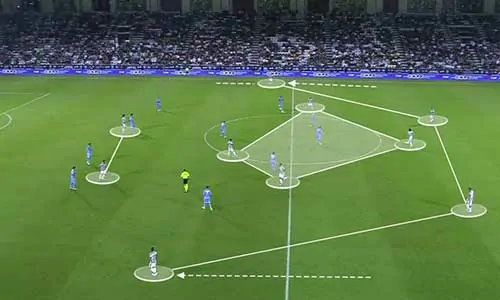
Football is a beautiful, dynamic, and ever-evolving game of space, time, and movement. As the global sports community counts down to the highly anticipated FIFA World Cup 2026, understanding the strategic setups on the pitch is more critical than ever for fans, analysts, and coaches alike. Tactical frameworks have transitioned from rigid, defensive-minded layouts to incredibly fluid, position-swapping systems. Consequently, teams preparing for the global stage must master these structures to secure victory. This comprehensive football formations guide will walk you through the fascinating journey from the classic 4-4-2 to the modern tactical systems that will define the pitches of North America.
Whether you are looking to understand how your favorite national team will line up or simply want to deepen your tactical knowledge, this guide offers an in-depth breakdown of the game’s most influential blueprints. Furthermore, we will explore how these systems are being adapted to meet the extreme physical demands of contemporary international football.
Table of Contents
- The Evolution of Tactics Leading into the FIFA World Cup 2026
- The Classic 4-4-2: The Foundation of Modern Structure
- The Modern Standard: Why the 4-3-3 Remains a Dominant Force for the FIFA World Cup 2026
- The Balanced Engine: Deciphering the 4-2-3-1
- The Resurgence of Three-at-the-Back: 3-5-2 and 3-4-3
- Predicting the Tactical Trends of the FIFA World Cup 2026
- Tactical Formations Comparison Table
- Conclusion and Tactical Outlook
- Frequently Asked Questions (FAQ)
The Evolution of Tactics Leading into the FIFA World Cup 2026
To appreciate where football tactics are today, we must first look back at how we got here. In the early days of structured football, teams favored highly attacking, almost chaotic arrangements like the 1-2-7 or the famous “W-M” formation developed by Herbert Chapman in the 1920s. Over the decades, managers realized that defensive organization was just as important as offensive flair. This realization led to the introduction of the Catenaccio system in Italy, which prioritized a solid defensive block and a sweeper (libero) behind the backline.
However, the true revolution arrived in the 1970s with the birth of “Total Football” pioneered by Rinus Michels and epitomized by Johan Cruyff. This philosophy discarded rigid positional play, allowing outfield players to fluidly swap positions as the game demanded. Today, coaches preparing for the FIFA World Cup 2026 are taking these historic principles and combining them with intense high-pressing and data-driven physical conditioning. Therefore, modern systems are less about static starting positions and more about dynamic phases of play in and out of possession.
According to historical patterns analyzed on the official FIFA website, international tournaments often serve as a melting pot for tactical evolution. As squads prepare to face diverse playing styles from across the globe, the ability to adapt from one tactical layout to another during a single match will be the ultimate competitive advantage during the summer of 2026.
The Classic 4-4-2: The Foundation of Modern Structure
For decades, the flat 4-4-2 was the undisputed king of football formations. Characterized by two banks of four and a strike partnership upfront, this system offered a perfect balance of defensive solidity and attacking straightforwardness. In this setup, the wide midfielders are expected to deliver crosses into the box, while one of the two central midfielders usually sits deep to protect the defense as the other ventures forward.
Strengths of the 4-4-2
- Simplicity and Clarity: Every player has a clearly defined role, making it easy to implement and execute.
- Defensive Compactness: The two banks of four can shift laterally to close down space, frustrating opponents who rely on central corridors.
- Strong Wing Play: Fullbacks and wide midfielders can easily overlap to create 2v1 situations against opposing fullbacks.
Weaknesses of the 4-4-2
Despite its historic success, the flat 4-4-2 has struggled to keep pace with modern developments. Specifically, when facing teams that deploy a three-man midfield, a 4-4-2 can easily find itself outnumbered in the center of the pitch. Consequently, the two central midfielders are often overworked, leading to a loss of possession control. Additionally, the lack of vertical passing lanes between the lines can make the team’s build-up play highly predictable.
Nevertheless, a disciplined low-block 4-4-2 remains a highly viable defensive strategy. Many underdog nations during the FIFA World Cup 2026 may rely on this classic setup to frustrate technically superior opponents before launching rapid, direct counter-attacks.
The Modern Standard: Why the 4-3-3 Remains a Dominant Force for the FIFA World Cup 2026
If you watch any elite domestic league or major tournament today, you will notice that the 4-3-3 is incredibly prevalent. This formation utilizes a back four, a three-man midfield consisting of a defensive anchor (the number 6) and two box-to-box or creative engines (the number 8s), flanked by two wide attackers and a central striker. The fluidity of this system has made it the template for possession-based, high-pressing football across the globe.
Why the 4-3-3 Remains a Dominant Force for the FIFA World Cup 2026
The primary reason the 4-3-3 is favored by modern managers heading into the FIFA World Cup 2026 is its natural ability to create passing triangles. In football, triangles allow players to maintain possession under heavy pressure by always offering at least two passing options to the ball carrier. Moreover, this system accommodates the “inverted winger”—forward-thinking players who start on the flank but cut inside on their stronger foot to shoot or create, leaving the wide channels open for overlapping fullbacks.
Furthermore, the 4-3-3 is highly adaptable in transition. When defending, it can quickly morph into a compact 4-1-4-1 or a mid-block 4-5-1. Conversely, during the attacking phase, it can shift into an aggressive 2-3-5, with the fullbacks pushing high and wide while the wingers occupy the half-spaces. This tactical elasticity is precisely why elite national teams will rely heavily on the 4-3-3 to break down stubborn defensive blocks during the upcoming tournament.
The Balanced Engine: Deciphering the 4-2-3-1
The 4-2-3-1 formation became the dominant tactical trend of the early 2010s, and it remains highly popular today due to its excellent defensive stability and attacking versatility. By deploying two defensive midfielders (often referred to as the “double pivot”), managers can shield their central defenders while granting immense creative freedom to the three attacking midfielders and the lone striker ahead of them.
The Role of the Double Pivot
In a typical 4-2-3-1, the two central defensive midfielders work in tandem. Frequently, one acts as a pure destroyer—breaking up opposition plays and intercepting passes—while the other behaves as a deep-lying playmaker, distributing the ball to the creative players in the final third. This partnership provides a solid safety net, allowing the fullbacks to venture forward without leaving the central defensive corridors exposed.
In addition, the central attacking midfielder (the number 10) in this system plays a pivotal role. Operating in the pocket of space between the opponent’s midfield and defense, this player is responsible for unlocking tight spaces with precise through-balls or late runs into the penalty box. Because international football matches are often decided by small tactical margins, having a highly disciplined 4-2-3-1 setup can provide the stability needed to navigate the high-stakes knockout rounds of the FIFA World Cup 2026.
The Resurgence of Three-at-the-Back: 3-5-2 and 3-4-3
Tactical trends in football operate in cycles, and the recent resurgence of three-at-the-back systems is a testament to this phenomenon. Formations like the 3-5-2 and the 3-4-3 (which often transitions to a 3-4-2-1) have moved from being viewed as overly defensive to being celebrated as highly offensive, dynamic frameworks.
The Vital Role of the Wingback
The success of any three-at-the-back formation depends heavily on the physical and tactical capabilities of the wingbacks. These players must possess elite stamina, as they are solely responsible for patrolling the entire flank. When the team is in possession, they act as traditional wingers, stretching the pitch to create space in the center. Conversely, when defending, they drop back to form a five-man backline, neutralizing the opponent’s wide threats.
Additionally, having three central defenders allows teams to build up play comfortably from the back, even when facing an aggressive high press. One of the wide center-backs can step forward into the midfield to create an overload, while the central defender acts as the sweeper. This defensive flexibility and tactical variety will undoubtedly be put to the test on the grand stage of the FIFA World Cup 2026, where coaches must find creative ways to outmaneuver their opponents.
Predicting the Tactical Trends of the FIFA World Cup 2026
As we look ahead to the tournament, several key tactical trends are expected to dominate. The FIFA World Cup 2026 will feature an expanded format with 48 teams, meaning squads will face a grueling schedule with potentially more matches to reach the final. Consequently, tactical flexibility and physical conservation will be paramount.
1. Rest Defense and Defensive Transitions
With teams committing more players forward to break down low blocks, “rest defense”—the organization of defensive players while their team is actively attacking—has become a major talking point. Coaches will focus heavily on maintaining a structured defensive shape even during sustained possession to prevent devastating counter-attacks.
2. The Rise of “Relationism”
While structured “positional play” (Juego de Posición) remains highly influential, there is a growing trend toward “Relationism.” This philosophy allows players to gather on one side of the pitch, relying on close-range passing, intuitive movements, and individual flair rather than maintaining strict, pre-determined positions. For a deeper look at this shifting landscape, you can read expert tactical analysis on Coaches’ Voice.
3. Flexible Out-of-Possession Shapes
At the FIFA World Cup 2026, we can expect to see teams seamlessly shifting between different defensive shapes. A team might press in a high 4-3-3, drop into a mid-block 4-4-2, and defend their own penalty box in a deep 5-3-2. This level of tactical intelligence requires highly versatile players who can read the game in real-time.
Tactical Formations Comparison Table
The following table summarizes the key characteristics, strengths, and weaknesses of the primary systems expected to dominate the pitch at the FIFA World Cup 2026.
4-4-2
4-3-3
4-2-3-1
3-5-2
| Formation | Core Philosophy | Key Strengths | Primary Weakness | Ideal Player Profile Needed |
|---|---|---|---|---|
| Balance & Compactness | Solid defensive structure; easy to learn. | Can be easily overrun in midfield. | Hard-working central midfielders; crossing wingers. | |
| Possession & Attacking Fluidity | Excellent passing angles; high press capability. | Vulnerable to quick counter-attacks out wide. | A disciplined single pivot (No. 6) and creative No. 8s. | |
| Controlled Transition | Superb defensive shield; strong creative hub. | Striker can become isolated without support. | An elite playmaker (No. 10) and a versatile double pivot. | |
| Midfield Dominance & Width | Central overload; dynamic wingback play. | High physical demands on the flanks. | Stamina-rich wingbacks with excellent crossing skills. |
Conclusion and Tactical Outlook
In conclusion, football is no longer a game played on a static chalkboard. The journey from the rigid, structured 4-4-2 to the highly fluid, positionless systems of today highlights a sport that is constantly searching for new ways to exploit time and space. As we prepare for the historic FIFA World Cup 2026, we will undoubtedly witness a fascinating clash of these diverse tactical philosophies. From disciplined defensive low blocks to breathtaking high-pressing masterpieces, the tournament promises to be a showcase of tactical innovation.
Ultimately, the teams that find the perfect balance between defensive organization, physical endurance, and creative freedom will be the ones lifting the trophy. What formation do you think your national team should deploy to find success at the tournament? Share your thoughts and join the tactical discussion below!
Frequently Asked Questions (FAQ)
Which football formation is expected to be most popular at the FIFA World Cup 2026?
The 4-3-3 and its various fluid iterations (such as the 3-2-4-1 in-possession) are anticipated to be highly popular at the FIFA World Cup 2026. This is due to the formation’s natural ability to dominate midfield possession, create passing triangles, and execute aggressive high-pressing strategies.
How does a “False Nine” work in a 4-3-3 system?
A “False Nine” is a striker who drops deep into the midfield instead of staying high up the pitch against the opposition’s center-backs. Consequently, this movement drags defenders out of position, creating large gaps for inverted wingers to exploit by making diagonal runs into the penalty area.
Will the expanded 48-team format of the FIFA World Cup 2026 affect team tactics?
Yes, the expanded format of the FIFA World Cup 2026 will place a massive premium on squad rotation and physical recovery. Consequently, managers may opt for more compact, energy-conserving defensive shapes (like a mid-block 4-4-2 or 4-2-3-1) during group stage matches to preserve their players’ stamina for the knockout rounds.
What is the difference between a fullback and a wingback?
A fullback plays in a traditional four-back system (like a 4-4-2 or 4-3-3) and has primary defensive responsibilities, though they can still join the attack. On the other hand, a wingback plays in a three-back system (like a 3-5-2) and is expected to cover the entire length of the pitch, acting as both a defender and a winger.
Can a defensive formation like the 4-4-2 still win major international tournaments?
Absolutely. While possession-based systems are highly popular, highly organized defensive blocks utilizing a compact 4-4-2 or 5-4-1 remain incredibly difficult to break down. Therefore, disciplined defensive systems combined with efficient counter-attacks and strong set-piece execution will continue to be a viable path to victory at the FIFA World Cup 2026.