Football Position Numbers Explained: The Meaning of 1 to 11
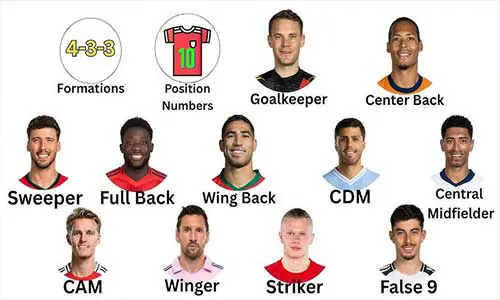
Football is much more than 22 players chasing a ball on a green pitch. It is a highly strategic game of space, timing, and positional awareness. One of the most fascinating aspects of football culture is its numbering system. Historically, jersey numbers from 1 to 11 were not just selected for aesthetic appeal. Instead, they designated very specific tactical roles on the field. As the global excitement builds for the upcoming FIFA World Cup 2026, understanding these positions becomes more crucial than ever for both casual fans and analytical viewers.
Consequently, having a clear grasp of what each number represents allows you to read the pitch like a professional coach. From the safety-first goalkeeper to the creative genius of the playmaker, each jersey carries a rich legacy of tactical duties. In this ultimate guide, we will break down the meaning of numbers 1 through 11. We will also explore how these classic roles are evolving to meet the demands of modern tactical systems. Therefore, whether you are preparing to analyze matches at the FIFA World Cup 2026 or just looking to improve your football IQ, this comprehensive breakdown has you covered.
Table of Contents
- The Tactical Evolution of Squad Numbers in the FIFA World Cup 2026 Era
- Why the FIFA World Cup 2026 Keeps Squad Numbering Traditional
- Deep Dive: Football Position Numbers 1 to 11 Explained
- Number 1: The Modern Goalkeeper
- Number 2: The Right-Back
- Number 3: The Left-Back
- Number 4: The Center-Back / Defensive Midfielder
- Number 5: The Center-Back
- Number 6: Anchoring the Midfield
- Number 7: The Right Winger / Second Striker
- Number 8: The Box-to-Box Midfielder
- Number 9: The Lethal Goalscorer
- Number 10: The Ultimate Playmaker
- Number 11: The Left Winger
- Positional Matrix: 1 to 11 in the FIFA World Cup 2026
- Tactical Systems to Watch at the FIFA World Cup 2026
- Conclusion and Final Takeaways
- Frequently Asked Questions (FAQs)
The Tactical Evolution of Squad Numbers in the FIFA World Cup 2026 Era
To truly appreciate the numbers 1 to 11, we must first look at where they came from. Historically, squad numbers were first used in England in 1928. Back then, teams lined up in a traditional “2-3-5” pyramid formation. In this system, numbers were allocated sequentially from the goalkeeper up to the left winger. Consequently, the goalkeeper wore number 1, the defenders wore 2 and 3, midfielders wore 4, 5, and 6, while the attackers wore 7, 8, 9, 10, and 11.
As tactical systems evolved over the decades, formations shifted to the classic 4-4-2, the modern 4-3-3, and the defensive 3-5-2. Naturally, the exact positioning of these numbers moved as well. Furthermore, club football introduced permanent squad numbers in the 1990s, allowing players to wear high numbers like 99 or 80. However, the rigid 1-11 is less strictly enforced on a weekly basis, except at major tournaments like the FIFA World Cup 2026 where squad list numbering regulations apply. This brings a historic sense of order back to the grandest stage of international football.
Why the FIFA World Cup 2026 Keeps Squad Numbering Traditional
In modern club football, players often choose numbers based on personal preferences, superstitions, or commercial branding. On the other hand, major international tournaments maintain a strict, traditional approach to numbering. FIFA’s rules for the FIFA World Cup 2026 specify that player jerseys must match roster numbers 1 through 26.
As a result, players cannot wear arbitrary numbers like 45 or 99. The squad list is limited strictly to 26 members, meaning every number from 1 to 26 has an actual player assigned to it. This regulatory structure keeps the traditional connection between low jersey numbers and classic pitch positions alive. Consequently, during the FIFA World Cup 2026, spectators can easily identify a player’s primary role simply by glancing at the number on their shirt. To explore the official regulations and tournament details, check the official FIFA website.
Deep Dive: Football Position Numbers 1 to 11 Explained
Number 1: The Modern Goalkeeper at the FIFA World Cup 2026
The number 1 jersey belongs strictly and exclusively to the starting goalkeeper. Historically, the goalkeeper’s main job was simply to stop shots and command their penalty area. Furthermore, they acted as the ultimate defensive safety net. However, the modern goalkeeper is expected to be a “sweeper-keeper” who can distribute the ball with precision and build play from the back.
Specifically, elite modern keepers act as an extra outfield player, comfortable with short passing under pressure. Expect to see sweeper-keepers dominating the tactical play during the FIFA World Cup 2026. Famous examples of classic number ones include Manuel Neuer, Iker Casillas, and Gianluigi Buffon.
Number 2: The Right-Back
The number 2 is traditionally worn by the right-sided full-back. In classic defensive lines, the right-back’s primary responsibility was to mark the opposition’s left winger and defend the flank. In addition, they provided defensive cover during transitions.
In modern tactical setups, however, full-backs are heavily involved in the attack. They overlap with wingers, deliver precise crosses, and sometimes even tuck inside as inverted midfielders. Excellent physical endurance is required for this demanding role. Legendary right-backs like Cafu and Gary Neville set the standard, while modern players like Achraf Hakimi continue to redefine it.
Number 3: The Left-Back
Mirroring the right-back, the number 3 shirt is reserved for the left-back. This player is typically left-footed and manages the left defensive flank. Similarly to the right-back, their job has evolved from purely defensive duties to a highly offensive role.
They must possess high tactical discipline to balance their attacking runs with defensive responsibilities. When watching matches in the FIFA World Cup 2026, observe how critical fullbacks are in creating overloads in wide areas. Famous number threes include Paolo Maldini, Roberto Carlos, and Ashley Cole.
Number 4: The Center-Back / Defensive Midfielder
In many traditional European and South American numbering systems, the number 4 represents a central defender. On the other hand, in British football culture, it was historically assigned to a defensive-minded midfielder.
When playing as a center-back, the number 4 is a powerhouse who organizes the backline, wins aerial duels, and blocks incoming shots. They must be calm under pressure and possess excellent reading of the game, especially as defensive organizational strength wins tournaments like the FIFA World Cup 2026. Legendary examples include Virgil van Dijk and Sergio Ramos.
Number 5: The Center-Back
The number 5 is almost universally recognized as the leader of the central defense. Paired alongside the number 4, the central defender wearing number 5 is often the physical stopper or the ball-playing defender who initiates attacks.
Furthermore, they are crucial during set-pieces, both defensively and offensively. They must have exceptional positioning skills to intercept passes and neutralize opposing strikers. Iconic number fives include Franz Beckenbauer, Fabio Cannavaro, and Carles Puyol.
Number 6: Anchoring the Midfield in the FIFA World Cup 2026
The number 6 shirt belongs to the defensive midfielder, often referred to as the “anchor” or deep-lying playmaker. Their tactical duty is twofold: protecting the center-backs and initiating transition play.
They break up opponent attacks, intercept passes, and quickly distribute the ball to the creative players ahead. The battle for midfield dominance at the FIFA World Cup 2026 will be controlled by elite number sixes. Players like Rodri, Sergio Busquets, and Claude Makélélé have made this position legendary.
Number 7: The Right Winger / Second Striker
Traditionally, the number 7 is associated with the right winger. This player is typically exceptionally fast, highly creative, and capable of delivering deadly crosses into the box.
In modern systems, the number 7 often plays as an “inside forward” who cuts inside to score goals rather than staying wide. Consequently, they are often top goalscorers. This dynamic role makes the right wing a highly explosive zone in the FIFA World Cup 2026. Famous examples of the legendary number 7 include Cristiano Ronaldo, David Beckham, and George Best.
Number 8: The Box-to-Box Midfielder
The number 8 represents the box-to-box midfielder, the true engine room of the squad. This player must have incredible stamina, as they are required to defend deep in their own half and sprint forward to support the attack.
Specifically, they must be adept at tackling, passing, and shooting from distance. No team can hope to lift the trophy at the FIFA World Cup 2026 without a world-class box-to-box midfielder. Legends of the position include Steven Gerrard, Andres Iniesta, and Luka Modrić.
Number 9: The Lethal Goalscorer for the FIFA World Cup 2026
The number 9 is the classic striker or center-forward. Their main objective is straightforward: score goals. They operate primarily inside the opponent’s penalty area, waiting for crosses, through balls, or rebounds.
In addition, they must hold up the ball to allow teammates to join the attack. Having a clinical number nine could decide who qualifies for the knockout stages of the FIFA World Cup 2026. Famous natural goalscorers who wore the number 9 include Ronaldo Nazário, Robert Lewandowski, and Erling Haaland.
Number 10: The Ultimate Playmaker of the FIFA World Cup 2026
The number 10 is the most iconic jersey in football history. It is reserved for the advanced playmaker or attacking midfielder who operates in the “pocket” between the opponent’s midfield and defense.
This player possesses extraordinary vision, dribbling ability, and passing range. Historically, players wearing this shirt have defined tournaments, and the FIFA World Cup 2026 will be no different. The ultimate legends of football, including Pelé, Diego Maradona, and Lionel Messi, have immortalized this number.
Number 11: The Left Winger
The number 11 is traditionally worn by the left winger. Much like the number 7, the left winger relies on pace, dribbling, and trickery to beat defenders on the flank.
They are tasked with stretching the opposing defense and creating goal-scoring opportunities for the striker, whose direct dribbling style will ignite the atmospheres at the FIFA World Cup 2026 host stadiums. Famous examples include Ryan Giggs, Ronaldinho, and Neymar Jr.
Positional Matrix: 1 to 11 in the FIFA World Cup 2026
To help visualize how these numbers fit into a standard team formation, let us look at a breakdown of the roles. This positional matrix shows how standard numbers map onto the lineups we will watch at the FIFA World Cup 2026.
| Number | Traditional Position | Primary Role | Key Attribute |
|---|---|---|---|
| 1 | Goalkeeper | Shot-stopping & sweeping | Reflexes & distribution |
| 2 | Right-Back | Flank defense & overlapping | Stamina & crossing |
| 3 | Left-Back | Flank defense & crossing | Pace & recovery |
| 4 | Center-Back | Central defense & organization | Strength & tackling |
| 5 | Center-Back | Ball recovery & physical presence | Positioning & heading |
| 6 | Defensive Midfielder | Shielding defense & build-up | Tactical discipline |
| 7 | Right Winger | Flank attacking & dribbling | Acceleration & creativity |
| 8 | Box-to-Box Midfielder | Linking defense & attack | Stamina & vision |
| 9 | Striker / Center-Forward | Goalscoring & target play | Finishing & strength |
| 10 | Attacking Midfielder | Playmaking & creating space | Vision & dribbling |
| 11 | Left Winger | Attacking from the left | Pace & agility |
Tactical Systems to Watch at the FIFA World Cup 2026
National managers at the FIFA World Cup 2026 will have to decide whether to stick to classic formations or implement highly fluid tactical frameworks. In a standard 4-3-3 formation, the positional numbers map naturally, with the 6, 8, and 10 forming a balanced midfield triangle.
However, during the tournament, tactical fluidity will mean these numbers might shift roles mid-game. For example, some managers prefer to play with three center-backs (using numbers 3, 4, and 5) and wing-backs (numbers 2 and 11) to control the flanks. Understanding the fundamental meaning of 1 to 11 allows fans to easily decode these modern adjustments. It provides a baseline knowledge of tactical responsibilities, making every tactical shift by a manager highly visible and fascinating to analyze. For deep dives into tactical trends across elite leagues, you can read the latest analyses on UEFA’s official tactical analysis portal.
Conclusion and Final Takeaways
Ultimately, understanding these classic position numbers deepens your tactical appreciation of the FIFA World Cup 2026. While squad sizes have grown and modern shirts display numbers from 1 to 99 in domestic leagues, the traditional 1 to 11 numbering system remains the foundation of football’s tactical language.
What is your favorite positional number on the pitch? Do you prefer the creative genius of the classic number 10 or the work rate of a relentless number 8? Let us know in the comments below, and don’t forget to share this guide with your fellow football fans as we count down to the tournament!
Frequently Asked Questions (FAQs)
1. Will squad numbers at the FIFA World Cup 2026 be restricted?
Yes, during the FIFA World Cup 2026, players must wear numbers 1 through 26, matching their official squad list. Arbitrary numbers outside this range are not allowed.
2. What is the difference between a number 6 and a number 8?
A number 6 is a defensive midfielder who anchors the midfield and shields the defense, whereas a number 8 is a box-to-box midfielder who links defense and attack with high stamina.
3. Why is the number 10 jersey so famous in football?
The number 10 is famous because it has traditionally been worn by the team’s most creative playmaker, including legends like Pelé, Diego Maradona, and Lionel Messi.
4. Can an outfield player wear the number 1 jersey?
According to FIFA tournament rules, the number 1 jersey is strictly reserved for a goalkeeper and cannot be worn by outfield players.
5. How has the role of the number 9 striker changed?
While classic number 9s were purely goalscorers, modern number 9s must press defenses, drop deep to link play, and create space for wingers.
6. What number does a modern inverted full-back wear?
An inverted full-back usually wears number 2 (right-back) or number 3 (left-back) but moves into central midfield areas when their team is in possession to create a numerical advantage.