Gegenpressing Explained: The High-Pressure Football Strategy
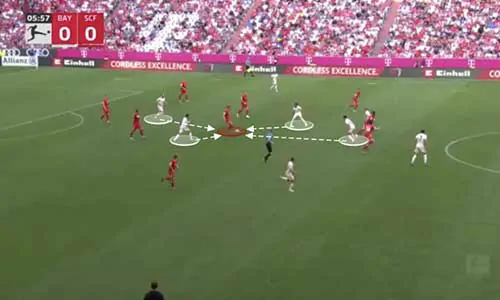
Football is a constantly evolving canvas of tactical innovations, but few strategies have captured the imagination of modern fans and analysts quite like counter-pressing. As tactical preparation intensifies for the historic FIFA World Cup 2026, national team coaches around the globe are actively refining their defensive transitions to gain a competitive edge. At the heart of this tactical evolution is Gegenpressing—a German footballing concept that translates literally to “counter-pressing.” This article provides a comprehensive breakdown of Gegenpressing, exploring its origins, tactical variations, and physical requirements, while analyzing how this high-pressure approach will define the tactical battlegrounds of the upcoming tournament.
Table of Contents
- 1. What is Gegenpressing? Origin and Evolution
- 2. The Core Mechanics of Counter-Pressing
- 3. How National Teams Will Deploy Gegenpressing at the FIFA World Cup 2026
- 4. The Four Main Styles of Counter-Pressing
- 5. Tactical Innovations to Watch During the FIFA World Cup 2026
- 6. The Physical Demands of Counter-Pressing in the FIFA World Cup 2026 Heat
- 7. Advantages and Vulnerabilities of the High Press
- 8. Coaching Drills: How to Train Gegenpressing
- 9. Frequently Asked Questions (FAQ)
1. What is Gegenpressing? Origin and Evolution
Gegenpressing is an active defensive strategy where a team, upon losing possession of the ball, immediately attempts to win it back rather than retreating into a traditional defensive block. The primary objective is to exploit the brief window of disorganization that occurs when an opponent transitions from defending to attacking. When a team wins the ball, their players naturally begin to disperse to open up passing lanes. Consequently, if the losing team attacks immediately at this vulnerable moment, they can recover the ball close to the opponent’s goal, creating highly dangerous attacking opportunities.
While the modern term gained global prominence through German managers like Jürgen Klopp and Ralf Rangnick, the roots of this philosophy run much deeper. Early iterations of high-pressure football can be traced back to Viktor Maslov’s Dynamo Kyiv in the 1960s, Rinus Michels’ “Total Football” with Ajax and the Netherlands in the 1970s, and Arrigo Sacchi’s legendary AC Milan side of the late 1980s. These pioneers understood that spatial control was the ultimate key to dominating a football match.
In the late 1990s and early 2000s, Ralf Rangnick, often dubbed the “Godfather of Gegenpressing,” systematized these concepts in Germany. He popularized the famous “eight-second rule” (recovering the ball within eight seconds of losing it) and the “ten-second rule” (scoring within ten seconds of regaining possession). Jürgen Klopp later refined this approach at Borussia Dortmund and Liverpool, famously stating that a well-executed counter-press is “the best playmaker in the world.” As we look ahead to the tactical landscapes of the FIFA World Cup 2026, these historic principles are being adapted to meet the challenges of the modern, hyper-athletic international game.
2. The Core Mechanics of Counter-Pressing
Executing a successful counter-press requires precise synchronization, highly disciplined positioning, and rapid cognitive transitions. It is not merely about running mindlessly toward the ball carrier; instead, it is a highly calculated team movement based on specific tactical triggers. When possession is lost, the entire team must instantly shift their mentality from attacking to defending, acting as a compact unit to compress the playing space.
The core mechanics of Gegenpressing rely on several fundamental pillars:
- Immediate Proximity: Players must maintain close distances while in possession. If a team is too spread out when they lose the ball, they cannot establish an effective press quickly enough, leaving large gaps for the opponent to exploit.
- Pressuring the Ball Carrier: The player closest to the ball must instantly apply intense physical pressure to the ball carrier, forcing them to look down at the ball and restricting their vision.
- Cutting Off Passing Lanes: Surrounding players must position themselves to block immediate escape routes, forcing the ball carrier into making a rushed clearance or a high-risk pass.
- Compact Defensive Line: The defensive backline must push high up the pitch to compress the space between the midfield and defense, keeping the team compact and preventing the opponent from finding space between the lines.
To understand the tactical depth of these transitions, coaches often refer to analysis from sources like The Coaches’ Voice, which highlights how structural compactness dictates the success of transition play. Without this absolute structural discipline, a high-pressing team risks being completely bypassed by a single well-placed long pass.
3. How National Teams Will Deploy Gegenpressing at the FIFA World Cup 2026
International football has historically been characterized by more conservative, low-block defensive structures compared to the fast-paced club game. This difference is largely due to the limited training time national team managers have with their squads. However, as modern tactical education becomes more standardized, we expect to see a significant shift at the FIFA World Cup 2026. Many national teams are now constructed around highly athletic, tactically versatile players who execute high-pressing systems at the club level week in and week out.
During the FIFA World Cup 2026, elite national sides will likely deploy Gegenpressing as a primary tool to disrupt opposition build-up play and control the tempo of the game. For example, teams with highly energetic midfields—such as the United States, Germany, and England—are well-positioned to implement aggressive counter-pressing schemes. By winning the ball high up the pitch, these teams can bypass the need for elaborate, slow build-up play, which can often be difficult to coordinate during short national team training camps.
Moreover, the expanded 48-team format of the FIFA World Cup 2026 means that top-tier nations will face a wider variety of defensive setups, including deep low-blocks from emerging footballing nations. Against such compact defenses, winning the ball back immediately in the attacking third prevents the opponent from settling into their defensive shape. Consequently, Gegenpressing will serve as a crucial offensive weapon, allowing favorites to unlock stubborn defensive units before they can organize themselves.
4. The Four Main Styles of Counter-Pressing
Not all counter-pressing systems are identical. Depending on a manager’s tactical philosophy and the specific profiles of their players, Gegenpressing can be categorized into four distinct styles. Understanding these variations is essential for analyzing the tactical battles that will unfold during the FIFA World Cup 2026.
Space-Oriented
Passing-Lane-Oriented
Ball-Oriented
| Pressing Style | Primary Focus | Key Mechanism | Famous Proponents |
|---|---|---|---|
| The opponent’s nearest passing options | Each pressing player tightly marks a specific nearby opponent, preventing easy short passes. | Marcelo Bielsa, Jesse Marsch | |
| The zone surrounding the ball | Players compress the space around the ball, trapping the carrier in a tight, congested area. | Ralf Rangnick, Jürgen Klopp (Dortmund era) | |
| The pathways to potential receivers | Pressing players use cover shadows to block passing lanes, forcing long balls or turnovers. | Pep Guardiola, Thomas Tuchel | |
| The ball carrier itself | Multiple players swarm directly toward the ball carrier, prioritizing raw physical pressure. | Jupp Heynckes, Roger Schmidt |
Each style carries its own set of risks and rewards. For instance, while the man-oriented approach can completely isolate opponents, it can be easily disrupted if an opponent wins an individual 1v1 duel. On the other hand, the passing-lane-oriented approach requires exceptional tactical intelligence and spatial awareness, making it highly effective for teams that prioritize positional play and control over chaotic, physical transitions.
5. Tactical Innovations to Watch During the FIFA World Cup 2026
As modern football analytics continue to advance, managers are introducing highly sophisticated variations to counter-pressing. One of the most notable tactical innovations to watch during the FIFA World Cup 2026 is the concept of “rest defense” (Restverteidigung). Rest defense refers to the positioning of a team’s defensive and midfield players while their team is still in possession of the ball. By maintaining a structured defensive shape during possession, a team is already perfectly positioned to initiate an immediate Gegenpress the moment a turnover occurs.
Furthermore, we are seeing the rise of hybrid pressing structures. Instead of committing to a full-intensity press for the entire 90 minutes, elite teams at the FIFA World Cup 2026 are highly likely to alternate between high-intensity counter-pressing and structured mid-blocks. This tactical flexibility allows teams to conserve energy while remaining highly dangerous during transition phases. This approach will be particularly crucial for managing the intense tournament schedule and varying environmental conditions across North America.
Another key innovation is the tactical integration of the goalkeeper in transition phases. Modern goalkeepers are no longer just shot-stoppers; they must act as sweepers who can quickly come out of their box to clear long balls played over a high defensive line. This proactive positioning allows the rest of the team to maintain their compact, high-pressing structure without constantly worrying about simple long balls over the top.
6. The Physical Demands of Counter-Pressing in the FIFA World Cup 2026 Heat
While Gegenpressing is an incredibly effective tactical tool, it places immense physical demands on the players. To sustain a high-intensity press, players must cover massive distances at high sprinting speeds. During the FIFA World Cup 2026, which will be hosted across three vast nations—the United States, Canada, and Mexico—physical conditioning and squad rotation will be more important than ever before.
The extreme summer heat and high humidity levels in several host cities, particularly in the southern United States and Mexico, will present a major challenge for high-pressing teams. Sustaining an aggressive Gegenpress under these taxing environmental conditions can lead to rapid physical exhaustion and increased injury risks. Therefore, national team coaches must carefully manage their rosters and utilize the five-substitution rule strategically to maintain high intensity throughout matches.
Consequently, we may see teams adapting their counter-pressing triggers. Rather than attempting to press every single turnover, teams at the FIFA World Cup 2026 might choose to initiate their press only in specific zones of the pitch, or when certain “triggers” occur—such as a poor first touch by an opposition defender or a slow lateral pass. This selective pressing allows teams to reap the tactical benefits of Gegenpressing while carefully preserving their physical energy over a long, demanding tournament.
7. Advantages and Vulnerabilities of the High Press
Like any tactical system in football, Gegenpressing is not a flawless strategy; it comes with a distinct set of trade-offs. To understand why managers choose to implement or avoid this high-risk, high-reward approach, we must analyze its main advantages and potential vulnerabilities.
Advantages:
- High-Quality Goal-Scoring Opportunities: By winning the ball back deep in the opponent’s half, teams can attack disorganized defenses, often leading to high-quality chances before the opponent can recover their shape.
- Disrupting the Opponent’s Rhythm: Continuous physical pressure prevents opponents from establishing their preferred passing rhythm, forcing them into hasty clearances and unforced errors.
- Defensive Protection: By winning the ball back immediately, a team prevents the opponent from launching dangerous counter-attacks of their own, keeping the play far away from their own goal.
- Psychological Dominance: Constantly swarming the opponent creates intense psychological pressure, which can lead to mental fatigue and critical defensive mistakes over the course of 90 minutes.
Vulnerabilities:
- Vulnerability to Long Balls: Because a high press requires a high defensive line, a single well-executed long ball over the top can expose vast spaces behind the defense for fast opposition attackers to exploit.
- Rapid Physical Fatigue: The intense physical requirements of counter-pressing make it difficult to sustain for a full match, especially in challenging climates or during tight tournament schedules.
- Vulnerability to Press-Resistant Players: Opponents with exceptional press-resistant midfielders can bypass the first wave of pressure with quick, intricate combinations, leaving the pressing team structurally exposed.
- High Risk of Tactical Disorganization: If even one player fails to execute their pressing duties on time, the entire pressing structure can collapse, leaving massive gaps in midfield and defense.
For more updates on how international squads are balancing these tactical trade-offs, fans can monitor team progress and tactical breakdowns on the Official FIFA Website as teams prepare for their matches.
8. Coaching Drills: How to Train Gegenpressing
Implementing a successful counter-pressing system requires dedicated, high-repetition training on the pitch. Coaches must design specific drills that train players to react instantly to a loss of possession. Below are two highly effective training drills designed to build the cognitive and physical habits required for elite-level Gegenpressing.
Drill 1: The Transition Rondo (4v4 + 3)
Setup: Create a 15×15 meter grid. Position four attacking players on the outside of the grid, two defending players inside, and three neutral players down the center spine.
Execution: The attacking team and neutral players attempt to keep possession of the ball. The defenders attempt to win the ball. The moment the defenders intercept the ball, they must quickly make a pass to one of the outside players. Conversely, the team that just lost possession must instantly sprint to press the defenders, trying to win the ball back within 6 seconds before they can escape the press.
Coaching Points: Focus on the speed of transition. Players must not show disappointment upon losing the ball; instead, they must instantly transition to pressing the ball carrier with high physical intensity.
Drill 2: The 6v4 Transition Game
Setup: Divide a half-pitch into two halves. In one half, set up a 6v4 possession game where the six attacking players must complete 8 consecutive passes before they can transfer the ball to a target player in the other half.
Execution: The four defending players work together to win the ball. If they successfully intercept the ball, they must immediately try to score in one of two mini-goals positioned at the halfway line. The six attacking players must immediately transition into a Gegenpress to win the ball back, preventing the defenders from scoring.
Coaching Points: Encourage players to close down passing lanes to the mini-goals immediately, using their cover shadows to force the defenders into tight, congested areas.
9. Frequently Asked Questions (FAQ)
Will Gegenpressing be the dominant strategy at the FIFA World Cup 2026?
While it may not be the only strategy, we expect many top-tier teams at the FIFA World Cup 2026 to adopt elements of Gegenpressing. Its ability to disrupt opponents and create quick transition opportunities makes it an invaluable asset in high-stakes tournament football.
Who invented the concept of Gegenpressing?
The concepts of high-pressing football were pioneered by coaches like Viktor Maslov and Rinus Michels in the 1960s and 70s. However, Ralf Rangnick and Jürgen Klopp modernized and popularized the specific term “Gegenpressing” in Germany during the late 1990s and 2000s.
How does Gegenpressing differ from standard pressing?
Standard pressing typically involves a team organizing themselves into a medium or low defensive block and waiting for the opponent to enter specific zones before applying pressure. In contrast, Gegenpressing is an immediate, high-intensity reaction that occurs the exact millisecond possession is lost, focusing entirely on exploiting the opponent’s brief moment of disorganization.
Can any football team use Gegenpressing successfully?
Not necessarily. To execute a successful counter-press, a team requires highly disciplined players with exceptional physical fitness, tactical intelligence, and spatial awareness. Without these key attributes, attempting a high-intensity press can leave a team structurally exposed and vulnerable to counter-attacks.
How will the expanded format of the FIFA World Cup 2026 affect high-pressing teams?
The expanded 48-team format means teams will play more matches to reach the final. This demanding schedule, combined with long travel distances and varying climates, means that squad depth and effective roster rotation will be absolutely crucial for high-pressing teams to maintain their intensity throughout the tournament.
What are “pressing triggers” in football?
Pressing triggers are specific cues that tell a team to initiate their press. Common triggers include a heavy touch by an opponent, a slow lateral pass, a pass played to a player with their back to the goal, or the ball entering a tight, congested area near the touchline.
Conclusion
In summary, Gegenpressing remains one of the most exciting and tactically significant systems in modern football. By prioritizing immediate recovery and exploiting the opponent’s transitional disorganization, it transforms defensive actions into highly potent attacking opportunities. As we prepare for the FIFA World Cup 2026, watching how national team coaches adapt this demanding strategy to handle extreme summer climates and extensive travel schedules will be truly fascinating. Whether you are an aspiring coach, a tactical analyst, or a passionate fan, understanding these tactical nuances will undoubtedly enrich your viewing experience of the beautiful game.
What are your thoughts on this high-pressure strategy? Do you think Gegenpressing will lead a nation to glory at the FIFA World Cup 2026? Let us know your tactical predictions in the comments below, and don’t forget to share this guide with fellow football enthusiasts!