Most Goals in Football History: Official Rankings and Records
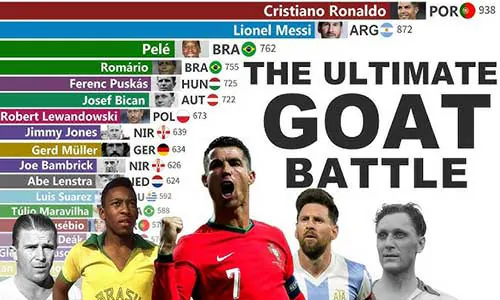
As football fans worldwide gear up for the highly anticipated FIFA World Cup 2026, the eternal debate surrounding the greatest of all time continues to intensify. While opinions on dribbling ability, leadership, and playmaking remain subjective, goals are the ultimate, undisputed currency of football. The chase for the title of the highest goalscorer in the history of the sport has captured the imaginations of millions, especially with two active legends still rewriting the record books.
In this comprehensive guide, we delve deep into the official records verified by FIFA, IFFHS, and the Rec.Sport.Soccer Statistics Foundation (RSSSF). From historical trailblazers like Josef Bican to modern giants preparing for the FIFA World Cup 2026, we break down the statistics, debate the controversial milestones, and present the definitive, up-to-date rankings of the most prolific goalscorers of all time.
Table of Contents
- 1. Official Rankings of All-Time Goalscorers
- 2. The Active Legends: How Modern Icons Prepare for the FIFA World Cup 2026
- 3. Will Cristiano Ronaldo Extend His Lead at the FIFA World Cup 2026?
- 4. Can Lionel Messi Defend His Legacy at the FIFA World Cup 2026?
- 5. Historical Icons: The Legends of Yesterday
- 6. The Methodology: How Official Goals Are Counted
- 7. The Role of the FIFA World Cup 2026 in Rewriting Football Records
- 8. Active Contenders Chasing the Legends
- 9. Frequently Asked Questions (FAQ)
Official Rankings of All-Time Goalscorers
Pinpointing the exact number of goals scored by historical figures is notoriously difficult. Different governing bodies and databases apply varying criteria for what constitutes an “official” match. To maintain absolute clarity, our rankings are built primarily on verified statistics compiled by the RSSSF and recognized by the FIFA historical archives.
The table below highlights the top 10 goalscorers in the history of association football based on senior competitive matches for club and country.
| Rank | Player | Goals | Matches | Era | Main Teams |
|---|---|---|---|---|---|
| 1 | Cristiano Ronaldo | 973 | 1,280+ | 2002–Present | Real Madrid, Man United, Portugal |
| 2 | Lionel Messi | 910 | 1,120+ | 2003–Present | Barcelona, PSG, Argentina |
| 3 | Josef Bican | 805 | 530+ | 1931–1955 | Slavia Prague, Rapid Vienna |
| 4 | Pelé | 770 | 812 | 1956–1977 | Santos, Cosmos, Brazil |
| 5 | Romário | 761 | 953 | 1985–2009 | Vasco da Gama, PSV, Brazil |
| 6 | Ferenc Puskás | 760 | 746 | 1943–1966 | Budapest Honvéd, Real Madrid |
| 7 | Gerd Müller | 735 | 793 | 1962–1981 | Bayern Munich, West Germany |
| 8 | Robert Lewandowski | 685 | 980+ | 2005–Present | Bayern Munich, Barcelona, Poland |
| 9 | Jimmy Jones | 647 | 614 | 1947–1964 | Glenavon, Belfast Celtic |
| 10 | Ferenc Deák | 576+ | 370+ | 1940–1957 | Szentlőrinci, Ferencváros, Hungary |
The Active Legends: How Modern Icons Prepare for the FIFA World Cup 2026
Modern football is defined by tactical advancements, intensive training methodologies, and unparalleled sports science. These elements have allowed active icons to sustain elite levels of performance deep into their late thirties and early forties. Consequently, the gap between historical figures and today’s superstars is narrowing rapidly as the FIFA World Cup 2026 approaches.
In addition, the longevity of these modern athletes has completely revolutionized what pundits once thought was physically possible. Rather than slowing down, active goalscorers are continually adding to their tallies across elite club leagues and high-stakes international tournaments. Therefore, the global stage remains highly volatile as records are broken on a monthly basis.
Will Cristiano Ronaldo Extend His Lead at the FIFA World Cup 2026?
Cristiano Ronaldo stands at the absolute pinnacle of football’s goalscoring charts. With an astonishing 973 official goals to his name, the Portuguese talisman has shown a relentless desire to push the boundaries of sport. Currently operating in the Saudi Pro League with Al-Nassr, Ronaldo remains highly productive.
With Portugal actively preparing to make a deep run in the upcoming FIFA World Cup 2026, Ronaldo’s presence remains a focal point. Playing in his sixth consecutive tournament would not only set a historic milestone but also provide him with the perfect opportunity to edge closer to the mythical 1,000-goal mark.
Moreover, his international tally of 143 goals is already a world record. His preparation leading up to the FIFA World Cup 2026 demonstrates that his physical conditioning is still elite, despite being 41 years of age. His ability to adapt from a dynamic winger to a lethal box-to-box striker is the primary reason he continues to lead this prestigious race.
Can Lionel Messi Defend His Legacy at the FIFA World Cup 2026?
On the other hand, Lionel Messi continues to pressure Ronaldo’s top position with 910 official goals. Having accomplished his ultimate dream of winning the world title in 2022, Messi has transitioned to Inter Miami in Major League Soccer, where he continues to exhibit masterclass performances.
Furthermore, Argentina’s preparation for the FIFA World Cup 2026 remains centered around Messi. While his playstyle has naturally evolved into a deeper playmaking role, his goalscoring instincts inside the final third remain as sharp as ever. Many analysts believe that a successful tournament at the FIFA World Cup 2026 could allow Messi to dramatically close the gap on Ronaldo.
As a result, the upcoming tournament represents more than just a quest for trophies; it is a battle for final positioning on the all-time list. If Messi remains fit and decides to spearhead Argentina’s title defense in North America, his final goal tally could reach heights previously deemed unreachable for a modern playmaker.
Historical Icons: The Legends of Yesterday
While the modern duo dominates contemporary headlines, the foundations of this record were built by legendary players from previous eras. These players competed in vastly different conditions, with heavier footballs, less protective refereeing, and completely different tactical setups.
Specifically, the legendary Austrian-Czech forward Josef Bican held the crown of the most prolific goalscorer for over half a century. Scoring an estimated 805 official goals in just over 530 matches, his scoring ratio of 1.52 goals per game remains the highest in recorded history. Bican’s career was heavily impacted by World War II, which deprived him of even greater international exposure.
Similarly, the Brazilian icon Pelé is widely revered as the king of football. Officially credited with 770 goals in competitive fixtures, Pelé’s total goal count—including friendly tours and exhibition matches—is reported to exceed 1,200. Despite the modern shift toward counting only official competitive fixtures, Pelé’s impact on popularizing the sport globally remains unmatched.
Additionally, other legendary figures such as Romário and Ferenc Puskás achieved incredible milestones. Romário’s clinical precision inside the box saw him accumulate 761 official goals, while Puskás’ legendary left foot powered Hungary and Real Madrid to European dominance, registering 760 goals.
The Methodology: How Official Goals Are Counted
To understand these rankings, one must comprehend how football statistics are validated. Governing bodies like FIFA and research organizations like the IFFHS only recognize goals scored in senior competitive matches.
These official matches are categorized into:
- Domestic league matches (all professional divisions)
- Domestic cup competitions (e.g., FA Cup, Copa del Rey)
- Continental club tournaments (e.g., UEFA Champions League, Copa Libertadores)
- Official international matches (including friendlies recognized by national associations)
On the other hand, goals scored in reserve team matches, youth academies, amateur regional leagues, and unofficial club friendly tours are strictly excluded. This methodology explains why Pelé’s total of 1,283 goals is officially scaled down to 770. Unlike historical eras where regional tournaments dominated, modern players have highly structured schedules leading up to major landmarks like the FIFA World Cup 2026.
The Role of the FIFA World Cup 2026 in Rewriting Football Records
When we analyze modern vs. historical goalscoring, the expanded format of the FIFA World Cup 2026 is a key talking point. Featuring 48 teams for the first time in history, the tournament will offer more matches, more group-stage fixtures, and consequently, more opportunities for clinical forwards to inflate their international records.
Therefore, the tournament will serve as a massive catalyst for record-breaking performances. While historical players competed in World Cups that featured only 16 or 24 teams, modern players participating in the FIFA World Cup 2026 can play up to eight matches if their country reaches the final four. This expanded schedule increases the probability of higher individual goal outputs.
Consequently, fans of earlier eras argue that modern players benefit from a sheer volume of fixtures, a trend that will culminate in the expanded FIFA World Cup 2026. However, modern advocates point out the increased physical demands and defensive organization of contemporary football as balancing factors.
Active Contenders Chasing the Legends
Beyond Ronaldo and Messi, several active players are currently climbing the ranks and could realistically enter the top five within the next few seasons.
Specifically, Poland’s Robert Lewandowski has established himself as one of the most consistent strikers of the 21st century. With over 685 official goals, Lewandowski continues to perform at a high level for Barcelona. Consequently, the FIFA World Cup 2026 represents a final major opportunity for Poland’s legendary striker to solidify his place among the absolute elite.
Furthermore, younger stars like Erling Haaland and Kylian Mbappé are on historic trajectories. At their current scoring rates, both players have a legitimate chance of challenging the numbers set by Ronaldo and Messi. Therefore, if Norway qualifies for the FIFA World Cup 2026, the world will watch to see if Haaland’s explosive scoring rates can translate to the absolute grandest stage.
Similarly, Kylian Mbappé has already proven his pedigree on the biggest stage, having scored a hat-trick in a World Cup final. Indeed, France’s campaign at the FIFA World Cup 2026 will likely see Mbappé as the primary focal point of their offense, allowing him to rapidly climb the historical goalscoring ladder at a relatively young age.
Frequently Asked Questions (FAQ)
Q1: Who has scored the most official goals in football history?A1: As of mid-2026, Cristiano Ronaldo holds the official world record with 973 goals scored in senior competitive matches for club and country.
Q2: Will Cristiano Ronaldo play in the FIFA World Cup 2026?A2: While Ronaldo has not made a definitive statement regarding his retirement, his current physical form and active role within the Portugal national team suggest he intends to participate in the FIFA World Cup 2026.
Q3: Can Lionel Messi add to his World Cup tally in the FIFA World Cup 2026?A3: Yes, Messi remains an active and vital part of the Argentina national team. If he remains fit, he is widely expected to lead Argentina’s title defense at the FIFA World Cup 2026.
Q4: Why does Pelé’s goal count differ across various sources?A4: Pelé claimed to have scored over 1,200 goals, but that tally includes unofficial friendlies, tour matches, and exhibition games. Historically recognized governing bodies only count his 770 goals scored in official competitive fixtures.
Q5: What constitutes an “official” goal in football statistics?A5: An official goal must be scored in a competitive match organized by a recognized national or international governing body. Friendly matches played between senior national teams are also included.
Q6: Is Josef Bican’s record fully verified?A6: FIFA formally recognized Josef Bican’s tally of 805 official goals. However, some statistical databases like RSSSF suggest his competitive top-level count is closer to 743 due to debates surrounding wartime matches and reserve league statistics.
Conclusion: The Ultimate Race for Football Immortality
As we draw closer to the FIFA World Cup 2026, the race for the most goals in football history is far from over. While Cristiano Ronaldo maintains a comfortable lead, Lionel Messi’s extraordinary playmaking and consistency keep the competition alive. These active legends have elevated the sport to unprecedented heights, setting benchmarks that the next generation of players can only dream of reaching.
Ultimately, whether you side with Ronaldo’s relentless work ethic or Messi’s natural genius, we are witnessing a golden era of football that may never be replicated. The upcoming FIFA World Cup 2026 will undoubtedly serve as a crucial battleground that could decide the final rankings of these legendary icons once and for all.
What are your thoughts? Will Cristiano Ronaldo reach the historic 1,000-goal mark at the FIFA World Cup 2026, or will Lionel Messi close the gap? Let us know your predictions in the comments below!