Offside Rule Explained: A Beginner’s Guide to Football’s Most Confusing Law
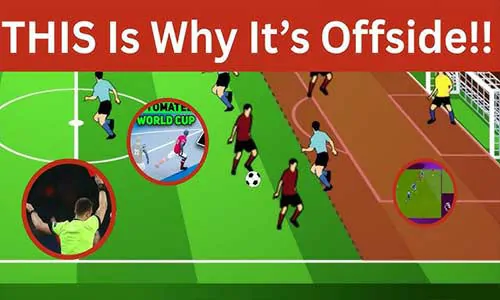
Offside Rule Explained: A Beginner’s Guide and FIFA World Cup 2026 Preview
Football is a beautiful game, but certain rules can puzzle new fans. Among these regulations, Law 11—commonly known as the offside rule—stands as one of the most discussed and debated. As excitement builds for the upcoming FIFA World Cup 2026, understanding this rule is essential for fully enjoying the matches. Whether you are a newcomer preparing to watch the global tournament or a casual viewer trying to follow the action, this guide breaks down the offside rule in simple terms so you can confidently follow every play.
Table of Contents
- What is the Offside Rule in Football?
- How the Law Will Shape the FIFA World Cup 2026
- The Three Criteria for an Offside Position
- Understanding the “Second-Last Opponent” Rule
- Active Play vs. Passive Offside
- Practical Scenarios to Watch for at the FIFA World Cup 2026
- Exceptions to the Offside Rule
- The Role of Assistant Referees and VAR
- Semi-Automated Offside Technology at the FIFA World Cup 2026
- Tactical Implications of the Offside Rule
- Frequently Asked Questions (FAQs)
What is the Offside Rule in Football?
At its core, the offside rule prevents attacking players from lingering near the opponent’s goal to wait for a long pass. Without this rule, the game would likely devolve into simple long-ball strategies, reducing the tactical depth and excitement of modern football. Therefore, Law 11 ensures that teams must rely on passing, dribbling, and strategic movement to break down a defense.
As we look ahead to the FIFA World Cup 2026, matches will showcase the highest level of defensive organization. Teams will use the offside rule as a tactical tool to squeeze the playing space, forcing attackers to time their runs perfectly. Consequently, a single mistimed step can nullify a crucial goal and change the course of an entire tournament.
How the Law Will Shape the FIFA World Cup 2026
The implementation of defensive tactics during the FIFA World Cup 2026 will revolve heavily around how well players manage the offside boundary. Historically, teams that master the timing of their defensive line have found immense success on the international stage. In addition, the high-pressure environment of the tournament means that even minor errors in defensive coordination can lead to game-defining opportunities for opponents.
Furthermore, because the FIFA World Cup 2026 features forty-eight teams, the diversity of tactical styles will be unprecedented. Some squads will employ a low defensive block, minimizing the space behind them to avoid giving away offside run opportunities. On the other hand, highly aggressive teams will push their defensive lines high up the pitch, relying on speed and coordination to catch opposing forwards in offside positions.
The Three Criteria for an Offside Position
To understand when a referee will blow the whistle, one must first understand what constitutes an offside position. Being in an offside position is not an offense on its own. Instead, it is a state of play that only becomes a penalty under specific conditions. During the FIFA World Cup 2026, players must master their spatial awareness to avoid triggering these criteria.
A player is considered to be in an offside position if they meet all of the following three conditions simultaneously:
| Criterion | Detailed Description |
|---|---|
| Opponent’s Half | The player must be entirely within the opponent’s half of the field. A player on the halfway line is not offside. |
| Closer to the Goal Line than the Ball | The player must be positioned ahead of the ball. If the ball is played backward or laterally, the receiver is onside. |
| Closer to the Goal Line than the Second-Last Opponent | There must be fewer than two defensive players (including the goalkeeper) between the attacker and the goal line. |
Understanding the “Second-Last Opponent” Rule
This is where many beginners get confused. Typically, the goalkeeper is the last defending player on the pitch. Therefore, the “second-last opponent” is almost always the last outfield defender. However, if the goalkeeper runs forward during a corner kick or a desperate attacking move, a scenario we will likely see during the FIFA World Cup 2026 when teams are chasing late equalizers, the rules adjust. In such instances, two outfield defenders must be between the attacker and the goal line for the attacker to remain onside.
In addition, it is important to note that the rule applies to any part of the head, torso, or feet that can legally score a goal. Hands and arms are not considered when determining offside positions, as players cannot score with these body parts. Consequently, a leaning shoulder can sometimes put a player in an offside position by just a few millimeters.
Active Play vs. Passive Offside
As previously mentioned, simply standing in an offside position is not against the rules. A player is only penalized if they become involved in “active play” at the exact moment the ball is touched or played by a teammate. This distinction will be heavily analyzed during the FIFA World Cup 2026, where every decision is scrutinized by fans and pundits worldwide.
According to the International Football Association Board (IFAB), a player in an offside position becomes active in three distinct ways:
- Interfering with play: Playing or touching the ball passed or touched by a teammate.
- Interfering with an opponent: Preventing an opponent from playing the ball, blocking a goalkeeper’s line of sight, or physically challenging a defender for possession.
- Gaining an advantage: Playing the ball after it has rebounded off the goalpost, crossbar, or an opposing player.
Practical Scenarios to Watch for at the FIFA World Cup 2026
At the FIFA World Cup 2026, forward players will need to demonstrate incredible intelligence to utilize “passive” offside positions. For example, an attacker might stand in an offside position to distract defenders while a teammate runs from an onside position to claim the ball. If the offside player does not make a movement toward the ball or obstruct the goalkeeper, play continues without interruption.
Therefore, understanding the line between active and passive play is crucial. For instance, if an attacker in an offside position stands directly in front of the goalkeeper, blocking their vision as a teammate shoots from distance, the goal will be disallowed. This is because the offside player actively interfered with the goalkeeper’s ability to make a save.
Exceptions to the Offside Rule
While the offside rule is highly restrictive, football provides a few exceptions where a player can receive the ball in an offside position without being penalized. These exceptions are crucial nuances to keep in mind while watching the FIFA World Cup 2026, as they often lead to unexpected goal-scoring opportunities.
A player can never be called offside if they receive the ball directly from any of the following three restarts:
- A Throw-in: Attackers can stand as deep as they want behind the defensive line during a throw-in.
- A Corner Kick: Since the ball is placed on the corner boundary, any attacking player is technically behind or level with the ball, making offside impossible at the moment of the kick.
- A Goal Kick: A player receiving a direct pass from their own goalkeeper’s goal kick cannot be ruled offside.
Additionally, if an attacking player receives the ball from a deliberate play by an opponent (such as an intentional backpass or clearance gone wrong), they are not considered offside. However, if the ball merely deflects off a defender without deliberate intent, the attacker is still subject to the offside law.
The Role of Assistant Referees and VAR
Historically, officiating offside was one of the most difficult jobs in sports. Assistant referees (linesmen) had to keep their eyes on the passer and the defensive line simultaneously. Consequently, human error was common. Today, the Video Assistant Referee (VAR) system provides a safety net, which is expected to play a critical role in the FIFA World Cup 2026.
When a goal is scored, VAR officials review the play using multiple camera angles to ensure the attacking player was onside when the pass was made. If the system detects an error, the referee on the field is notified to overturn the decision. This addition has brought a higher degree of accuracy to the sport, though it has also sparked discussions regarding the flow of the game.
Semi-Automated Offside Technology at the FIFA World Cup 2026
The FIFA World Cup 2026 will implement state-of-the-art semi-automated offside technology to speed up decision-making. This system utilizes specialized tracking cameras installed beneath the stadium roof, which monitor dozens of data points on each player’s body. Furthermore, the official match ball contains an inertial measurement unit (IMU) sensor that transmits data to the VAR room 500 times per second, precisely determining the exact moment the ball is kicked.
Consequently, the technology automatically generates offside lines within seconds, alerting the VAR officials. This system helps reduce the time required for reviews, ensuring that the FIFA World Cup 2026 is governed by precise, rapid, and fair officiating. This technological leap has transformed how fans, players, and coaches experience the game.
Tactical Implications of the Offside Rule
The offside rule shapes how modern managers organize their teams, as coaches prepare their squads for the FIFA World Cup 2026. One of the most famous tactical applications is the “offside trap.” In this system, defenders coordinate their movements to step forward collectively just before an opposing midfielder passes the ball. As a result, the attacking forward is caught ahead of the defensive line, resulting in an offside call.
However, running an offside trap comes with significant risks. A high defensive line at the FIFA World Cup 2026 could be exposed if even one defender fails to step up at the correct moment. Fast attackers can exploit this lapse, break through clean on goal, and face the goalkeeper in a one-on-one situation. Therefore, teams must practice this strategy extensively to ensure flawless execution.
Why the Offside Rule is Crucial for Football
Ultimately, the offside rule is what makes modern football a sport of skill, movement, and intellect. It forces teams to build play through the midfield, create intricate passing triangles, and rely on athletic movements rather than simply relying on physical size in the penalty box. This evolution has led us to the highly dynamic style of play seen today, leading up to the FIFA World Cup 2026 where the global audience will witness the pinnacle of athletic competition.
Frequently Asked Questions (FAQs)
Q1: Can a player be offside in their own half of the field?No, a player cannot be in an offside position if they are in their own half of the field when the ball is played. The offside law only applies in the opponent’s half.
Q2: Is a player offside if they receive a pass from a throw-in?No, there is no offside offense if a player receives the ball directly from a throw-in, even if they are standing behind the last defender.
Q3: What does “passive offside” mean?A passive offside occurs when a player is in an offside position but does not interfere with play, influence an opponent, or gain an advantage from the position. In this case, the referee does not stop the game.
Q4: Why does the goalkeeper count as part of the offside calculation?The rule states that an attacker must have two opponents between them and the goal line. Typically, this is the goalkeeper and one defender. If the goalkeeper is further up the pitch, then two outfield defenders must be behind the attacker.
Q5: Can you be offside if the ball is passed backward?No. If the ball is played backward or sideways, the receiver is behind the ball at the moment of the pass, which automatically makes them onside.
Q6: Will semi-automated technology be used at the FIFA World Cup 2026?Yes, the FIFA World Cup 2026 will utilize the latest semi-automated offside technology, featuring limb-tracking cameras and ball-tracking sensors to ensure fast and accurate decisions.
Conclusion
The offside rule may seem complicated at first, but breaking it down into basic criteria makes it much easier to comprehend. As you prepare to watch the FIFA World Cup 2026, keeping these rules in mind will elevate your viewing experience, allowing you to appreciate the tactical battles taking place on the pitch.
For more official updates on rules and regulations, you can check the official FIFA website. What are your thoughts on the offside rule? Who do you think will master the offside trap at the FIFA World Cup 2026? Share your thoughts in the comments below!