UEFA Away Goals Rule: Why It Was Removed and What Changed
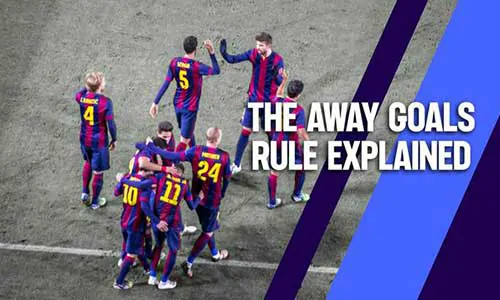
For over half a century, the UEFA away goals rule was one of the most thrilling, agonizing, and defining elements of European club football knockout ties. Introduced in 1965, this rule was designed to encourage away teams to attack, but by 2021, UEFA decided it was time for a historic change. The abolition of the away goals rule has permanently reshaped tactical approaches across Europe. Understanding how these structural updates alter player performance, mental fatigue, and strategic preparation is more relevant than ever as we look forward to global spectacles like the FIFA World Cup 2026.
Table of Contents
- 1. The History and Origin of the Away Goals Rule
- 2. Why UEFA Abolished the Away Goals Rule in 2021
- 3. What Changed: The New Knockout Format Explained
- 4. How Scrapping the Rule Alters Tactics for the FIFA World Cup 2026
- 5. Managing Player Fatigue Ahead of the FIFA World Cup 2026
- 6. Comparing UEFA’s Decisive Changes to the FIFA World Cup 2026 Structure
- 7. Statistical Comparison: Before vs. After the Rule Change
- 8. Conclusion and Key Takeaways
- 9. Frequently Asked Questions (FAQ)
The History and Origin of the Away Goals Rule
To fully comprehend why the away goals rule was scrapped, we must first look at why it was created. In the mid-1960s, playing an away match in European competition was a daunting, exhausting ordeal. Traveling teams faced long journeys across multiple borders, often dealing with poor transport infrastructure and hostile stadium atmospheres. Furthermore, pitch sizes were not standardized, match balls varied in weight, and television coverage was virtually non-existent.
Consequently, visiting teams adopted ultra-defensive strategies. The famous Italian Catenaccio system popularized defensive setups where visiting sides aimed solely for a 0-0 draw, refusing to attack. This approach often produced dull, uninspiring spectacles for fans. To combat this defensive trend, UEFA introduced the away goals rule in the 1965–66 European Cup Winners’ Cup.
The premise of the rule was simple: if the aggregate score over two legs was tied, the team that scored more goals away from home would progress. In practice, away goals acted as a tiebreaker, giving away teams a massive sporting incentive to attack. It succeeded in changing the game, prompting teams to push forward on their travels and initiating some of the most dramatic comebacks in football history.
For decades, this rule provided high-stakes drama. Iconic fixtures, such as Tottenham’s stunning comeback against Ajax in 2019 or Chelsea’s dramatic stand at the Camp Nou in 2012, were defined by the psychological weight of the away goal. However, over time, the landscape of modern football shifted dramatically, rendering the rule counter-productive.
Why UEFA Abolished the Away Goals Rule in 2021
In June 2021, following extensive feedback from the UEFA Club Competitions Committee, the governing body officially announced the removal of the away goals rule across all club competitions. UEFA President Aleksander Čeferin explained that the rule was no longer fulfilling its original purpose. Specifically, it had begun to actively discourage home teams from playing attacking football.
Over the decades, home-field advantage has steadily declined. UEFA’s historical data showed that from the mid-1970s to 2021, the gap between home and away wins narrowed significantly. Home win percentages dropped from over 61% to roughly 47%, while away wins rose from 19% to nearly 30%. This shift happened due to several key factors:
- Standardized Facilities: Pitch dimensions, turf quality, and stadium conditions are now highly regulated across Europe.
- Advanced Travel and Recovery: Elite clubs travel in private luxury charters and use highly customized sports science and nutrition plans to eliminate travel fatigue.
- Improved Refereeing and Technology: The introduction of VAR and goal-line technology has greatly reduced the subconscious home bias often influenced by partisan crowds.
Because home-field advantage is no longer the overwhelming obstacle it once was, the away goals rule began to penalize home teams unfairly. Managers became terrified of conceding a single goal on their own turf, leading to highly cautious, defensive home-leg displays. Conversely, away teams would score once and immediately defend in a low block. Rather than encouraging attacking play, the rule had begun to stifle it.
What Changed: The New Knockout Format Explained
With the rule officially removed starting in the 2021/22 season, the mathematical logic of a two-legged knockout tie is incredibly simple. A goal is a goal, regardless of where it is scored. If Team A wins 2-1 at home and loses 1-0 away, the aggregate score is 2-2.
Under the previous format, Team B would have progressed to the next round because they scored an away goal. Under the current system, however, the tie goes directly to 30 minutes of extra time (divided into two 15-minute halves). If the teams remain level after 120 minutes of total play in the second leg, a penalty shootout determines the winner.
This simple change has successfully removed complex tactical calculations from the sideline. However, it also introduces a heavy physical demand on players. Matches are far more likely to go the distance, increasing the likelihood of extra time and high-pressure penalty shootouts.
How Scrapping the Rule Alters Tactics for the FIFA World Cup 2026
The elimination of the away goals rule has caused managers to adjust their setups in both legs of a tie. Data shows a significant shift in how teams approach the first leg. Home teams play with much greater tactical freedom, knowing that a conceded goal is no longer a catastrophic blow. This openness will undoubtedly shape player performance during the FIFA World Cup 2026, where maintaining physical energy and tactical consistency across a grueling tournament is paramount.
However, there are unexpected tactical trade-offs. According to recent technical match analyses, the removal of the rule has actually seen a slight decrease in high-risk vertical passes and rapid counterattacks during the early phases of a knockout tie. Instead, teams favor slower, possession-oriented build-ups to manage the game state and prevent defensive exposure.
The tactical evolution of modern defenders ahead of the FIFA World Cup 2026
Defenders are no longer instructed to defend deep at all costs during home matches to prevent an away goal. Instead, modern center-backs must be highly skilled in possession and capable of breaking opposition lines with accurate short-to-medium range passing. This tactical shift has transformed European defenders into playmaker-hybrids, a vital profile that will dictate how national teams build up from the back at the FIFA World Cup 2026.
Moreover, the shift in rules will impact teams qualifying for the FIFA World Cup 2026 by raising the technical expectations placed on defenders worldwide. As coaches look for players who can remain calm under high-pressing systems, the lessons learned in the UEFA Champions League without the away goals rule will be directly applied on the global stage.
Managing Player Fatigue Ahead of the FIFA World Cup 2026
Managing player fatigue ahead of the FIFA World Cup 2026
The most prominent physical consequence of eliminating the away goals rule is the dramatic increase in extra time. Playing an additional 30 minutes of high-intensity football places immense physical and mental strain on players. Over a long European club season, these extra minutes accumulate, leading to muscle fatigue, soft tissue injuries, and mental burnout.
This could be a crucial determining factor at the FIFA World Cup 2026, as players arriving from grueling European club campaigns will face an expanded tournament structure. National team coaches must carefully monitor physical workloads to prevent their key assets from breaking down. Consequently, rotation policies and advanced sports science recovery will become more critical than ever.
Why penalty shootout preparation is vital for the FIFA World Cup 2026
With more games ending in draws on aggregate, penalty shootouts have become a regular fixture of the knockout stages. This has forced clubs to invest heavily in psychological conditioning, goalkeeper analytics, and penalty-taking drills. Players are now getting much more live-game practice under extreme pressure.
This preparation will dictate the tactics that national managers will rely on at the FIFA World Cup 2026, where knockout matches will inevitably come down to the dramatic spot-kick lottery. Goalkeepers are studying shooter habits more extensively, and penalty takers are training to control their heart rates, ensuring they are psychologically prepared for the ultimate pressure cookers in North America.
Comparing UEFA’s Decisive Changes to the FIFA World Cup 2026 Structure
The international stage presents a very different dynamic. At the final tournament of the World Cup, matches are hosted in neutral venues, meaning the away goals rule has never been applicable. However, the elimination of the rule in UEFA club competitions means that the majority of elite players participating in the FIFA World Cup 2026 are now thoroughly conditioned to play full 120-minute matches.
In the past, European-based players would often strategize around the away goals rule during their club seasons, which is in stark contrast to what we expect in the FIFA World Cup 2026, where direct, winner-take-all matches are the norm. The mental adjustment to a “must-win” scenario in every single knockout game is now second nature to these athletes.
Furthermore, the introduction of technology like semi-automated offside and VAR, which helped render the away goals rule obsolete by leveling home advantages, will also be heavily utilized during the FIFA World Cup 2026. This ensures a fair, technology-driven playing field where athletic endurance and tactical flexibility are the ultimate deciders.
For players, adapting to a singular, uniform set of knockout rules across both club and international football simplifies preparation. Mental resilience is tested in extra time—the ultimate high-pressure situation in the FIFA World Cup 2026. This streamlined transition helps teams maintain high tactical standards leading up to the momentous tournament of the FIFA World Cup 2026.
Statistical Comparison: Before vs. After the Rule Change
The impact of removing the away goals rule can be clearly seen when analyzing performance metrics. The table below outlines how matches have changed tactically and physically since the rule was officially discarded in 2021.
| Performance Metric | With Away Goals Rule (Before 2021) | Without Away Goals Rule (Post-2021) |
|---|---|---|
| Home Team Tactics (1st Leg) | Ultra-cautious, defensive priority to avoid conceding. | Attacking, open play; conceding a goal is less punishing. |
| Frequency of Extra Time | Lower; ties were often decided in 90 minutes via away goals. | Significantly higher; aggregate ties must play the extra 30 minutes. |
| Tactical Risk-Taking | High-risk transitions, frequent long balls, and counterattacks. | Controlled possession, short passing, and careful game management. |
| Player Fatigue Levels | Moderate; fewer extended matches over a season. | High; cumulative extra minutes place a heavier physical load. |
Conclusion and Key Takeaways
In conclusion, UEFA’s decision to remove the away goals rule was a logical response to the evolution of modern football. As standard facilities, fast travel, and VAR minimized traditional home-field advantages, the rule became a tactical burden that promoted defensive football rather than attacking flair. Its removal has brought simplicity back to knockout ties, ensuring that a goal scored carries the exact same weight regardless of the stadium.
For fans and players, this means more drama, more extra time, and a greater emphasis on physical conditioning and penalty shootout preparation. These tactical and physiological adjustments are serving as vital preparation as elite players transition to their national teams ahead of the FIFA World Cup 2026.
What are your thoughts on the removal of the away goals rule? Do you prefer the drama of extra time, or do you miss the unique tension of the away goal? Let us know in the comments below, and share this article with your fellow football fans!
Frequently Asked Questions (FAQ)
Q1: Why did UEFA decide to remove the away goals rule?
UEFA removed the rule because modern travel, standardized pitches, and VAR had significantly reduced home-field advantage. Instead of encouraging away teams to attack, the rule made home teams overly defensive to avoid conceding a heavily weighted away goal. This shift will influence player tactics as we head into the highly anticipated FIFA World Cup 2026.
Q2: What happens now if a two-legged tie ends in a draw on aggregate?
If the aggregate score is tied after 180 minutes, the match goes into 30 minutes of extra time (two 15-minute halves). If the score remains tied after extra time, the winner is decided by a penalty shootout, which is also the standard format for the FIFA World Cup 2026.
Q3: Does the away goals rule still apply in extra time of UEFA matches?
No, the away goals rule is completely abolished. Away goals do not carry any extra weight in normal time or extra time. This creates a balanced competitive environment, preparing elite stars for the intensity of the FIFA World Cup 2026.
Q4: In which UEFA competitions was the away goals rule removed?
The rule was removed from all UEFA club competitions, including the Men’s Champions League, Europa League, Europa Conference League, Women’s Champions League, and youth tournaments.
Q5: How does this rule change affect goalkeeper and player preparation?
Since ties are more likely to end in extra time and penalties, teams are dedicating significantly more training time to spot-kick tactics, psychological pressure management, and goalkeeper analysis. This acts as vital preparation for the knockout rounds of the FIFA World Cup 2026.
Q6: Will the FIFA World Cup 2026 use the away goals rule?
No. Because the World Cup is held in neutral host countries, the away goals rule has never applied to the main tournament. However, understanding the physical and mental stamina required for 120-minute matches is making it a critical study point for the FIFA World Cup 2026.