Why the Rose Bowl Was Not Selected for Major FIFA World Cup 2026 Matches
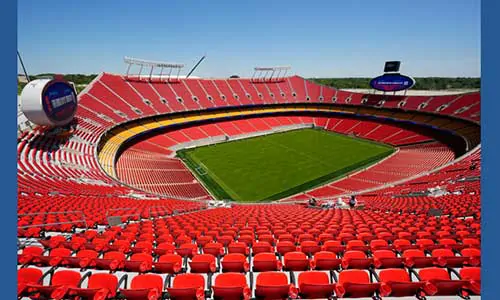
Among the most shocking omissions from the tournament lineup is the legendary Rose Bowl in Pasadena, California. Historically, the Rose Bowl has stood as the spiritual home of soccer in the United States, famously hosting the final match of the tournament in 1994. However, for the FIFA World Cup 2026, all Los Angeles-area matches will be played at Inglewood’s state-of-the-art SoFi Stadium instead, leaving the historic Pasadena venue on the sidelines.
Table of Contents
- The Storied Legacy of the Rose Bowl in Global Soccer
- The Rise of SoFi Stadium: A $5.5 Billion Masterpiece
- Key Reasons the Rose Bowl Was Not Selected for the FIFA World Cup 2026
- 1. The Corporate Hospitality and Luxury Suite Disparity
- 2. Transportation, Transit Infrastructure, and Valley Bottlenecks
- 3. Pitch Dimensions, Turf Management, and Stadium Upgrades
- 4. Financial Feasibility and FIFA’s Commercial Requirements
- Rose Bowl vs. SoFi Stadium: A Direct Venue Comparison
- The Broader Selection Process for the FIFA World Cup 2026 Venues
- Frequently Asked Questions (FAQ)
- Conclusion and Final Takeaways
The Storied Legacy of the Rose Bowl in Global Soccer
To understand why the exclusion of the Rose Bowl caused such a stir, one must first look at its incomparable history. Built in 1922 and recognized as a National Historic Landmark, this massive stadium has hosted some of the most iconic moments in American sports history. Beyond its deep association with college football, the venue has played a foundational role in growing the popularity of soccer across the United States.
Most notably, the Rose Bowl served as the crown jewel of the 1994 tournament, hosting eight matches, including the historic final where Brazil defeated Italy on penalty kicks. Additionally, the venue hosted the iconic 1999 FIFA Women’s World Cup Final, where Brandi Chastain’s decisive penalty shootout victory secured the championship for the United States in front of over 90,000 screaming fans. These events demonstrated that Pasadena could draw massive, passionate crowds for international soccer.
Furthermore, the stadium has continued to host high-profile club friendlies and international exhibitions. From sold-out matches featuring European giants like Real Madrid, Barcelona, and Manchester United to high-profile MLS derbies, the venue has consistently proven its capability to handle massive crowds. Despite this rich history, modern operational shifts have altered how international soccer tournaments select their host sites.
The Rise of SoFi Stadium: A $5.5 Billion Masterpiece
As the planning for the tournament progressed, it became increasingly clear that nostalgia alone would not be enough to secure matches. Enter SoFi Stadium, an ultra-modern facility located in Inglewood, California. Opened in 2020 at an estimated cost of $5.5 billion, the privately funded complex represents the absolute pinnacle of contemporary stadium architecture and fan experience.
Designed by the global architecture firm HKS, SoFi Stadium features a striking translucent canopy roof, a massive double-sided 4K Samsung Infinity Screen, and an open-air concept that utilizes the region’s mild climate. It serves as the home turf for two NFL franchises, the Los Angeles Rams and the Los Angeles Chargers, and has already hosted high-caliber events such as Super Bowl LVI. This architectural marvel was designed from day one to accommodate premier commercial opportunities.
How SoFi Stadium Aligns with FIFA World Cup 2026 Standards
Modern international sporting events require more than just a large seating capacity. They demand highly sophisticated digital infrastructure, vast commercial zones, and flexible broadcast facilities that can transmit matches to billions of viewers worldwide. SoFi Stadium was engineered specifically to meet these intense requirements, making it the ideal partner for the organizing committee.
Additionally, the surrounding Hollywood Park development offers a sprawling mixed-use entertainment district. This space provides FIFA with ample room for sponsor activations, fan zones, VIP villages, and auxiliary media hubs. Consequently, while the Pasadena venue offered history, the Inglewood venue offered a highly lucrative and operationally efficient look into the future of sports entertainment.
Key Reasons the Rose Bowl Was Not Selected for the FIFA World Cup 2026
When the joint North American bid was originally compiled, the Los Angeles World Cup Host Committee submitted a proposal that included both SoFi Stadium and the Rose Bowl. The initial hope was that the region might secure matches across both venues. However, FIFA eventually decided to focus on a single, primary venue per major metropolitan market to optimize logistics and match-day operations.
Ultimately, the selection committee prioritized the venue that could offer the highest standard of modern amenities, commercial viability, and transportation logistics. Below, we break down the critical factors that led to the historic Pasadena venue being bypassed for the landmark FIFA World Cup 2026.
1. The Corporate Hospitality and Luxury Suite Disparity
One of the primary drivers of revenue for modern international tournaments is premium hospitality. Corporate sponsors, VIP guests, and high-net-worth individuals generate a substantial portion of the event’s income through the purchase of luxury suites and executive boxes. In this category, the century-old Pasadena stadium faced an uphill battle.
Historically built as a single, continuous concrete bowl, the Pasadena venue has limited options for premium seating. While it underwent a major modernization effort in the early 2010s—which included the construction of the Terry Donahue Pavilion—it still features far fewer luxury suites than its modern counterpart. Specifically, the Terry Donahue Pavilion offers approximately 54 luxury suites and 48 loge boxes.
In contrast, SoFi Stadium boasts over 260 luxury suites, alongside numerous high-end club spaces, field-level cabanas, and exclusive VIP dining areas. This massive disparity meant that hosting matches at the modern venue would generate exponentially more revenue from premium hospitality packages, a detail that the governing body simply could not ignore.
2. Transportation, Transit Infrastructure, and Valley Bottlenecks
Managing the flow of up to 90,000 spectators on match day is a monumental logistical challenge. The geographical setting of each stadium played a major role in the selection committee’s decision. The historic Pasadena stadium is nestled deep within the scenic Arroyo Seco valley, surrounded by quiet residential neighborhoods.
Consequently, accessing the venue is notoriously difficult. With limited direct roadways leading down into the valley, traffic bottlenecks are a common issue during major events. Furthermore, public transit options to the stadium are highly limited, requiring most fans to ride a light rail line to a nearby station and then catch shuttle buses to reach the venue. Parking is similarly challenging, often forcing operators to park cars on the adjacent Brookside Golf Course.
On the other hand, the Inglewood venue is situated closer to the geographical center of the Los Angeles basin. It is located just a few miles from Los Angeles International Airport (LAX), making it highly accessible for incoming international travelers. Additionally, it is surrounded by a dense network of major freeways and benefits from the expanding Los Angeles Metro transit system, ensuring a smoother transportation experience for global spectators.
3. Pitch Dimensions, Turf Management, and Stadium Upgrades
Another major technical hurdle revolved around the physical playing surface. Under the strict guidelines set for the FIFA World Cup 2026, host venues are required to feature natural grass pitches that meet exact dimensions. The standard field size for elite international matches is 105 meters long by 68 meters wide, with clear safety run-off areas on all sides.
While the Pasadena stadium has a wide, natural turf field that easily accommodates soccer, maintaining elite-level natural grass under intense summer heat remains a highly demanding task. However, the venue’s overall facilities are aging. Bringing the lockerooms, press boxes, and spectator concourses up to modern standards would have required significant structural modifications.
Interestingly, the modern Inglewood stadium faced its own challenges regarding field size. Because it was originally designed primarily for American football, the field level was somewhat narrow, requiring the removal of some field-level concrete and luxury seating elements to properly fit the wider soccer pitch. Nevertheless, because of the stadium’s modern engineering, these structural alterations were far easier to implement than trying to retroactively modernize a century-old historic landmark.
4. Financial Feasibility and FIFA’s Commercial Requirements
Finally, the financial reality of hosting a modern tournament cannot be overlooked. Hosting matches requires local municipalities, stadium operators, and taxpayers to shoulder significant financial burdens. As part of the bidding process, the governing body demands strict tax waivers, infrastructure funding, and full control over stadium commercial zones during the tournament.
For municipal operators, these demands can be difficult to reconcile. Jens Weiden, the General Manager of the Rose Bowl, noted in media reports that the business model is highly challenging for public venues. Cities are often required to fund expensive stadium modifications while the governing body retains the vast majority of the revenue generated from ticket sales, local sponsorships, and concessions.
Because SoFi Stadium is a privately owned facility backed by Kroenke Sports & Entertainment, the financial risk and capital improvements could be absorbed by private developers. This private backing shielded local Pasadena taxpayers from potentially risky investments, making the modern Inglewood facility a more financially sound and politically feasible choice for the region’s primary bid.
Rose Bowl vs. SoFi Stadium: A Direct Venue Comparison
To better understand how these two iconic Southern California venues stack up against one another, let us look at their structural, financial, and logistical specifications side-by-side.
| Feature | Rose Bowl Stadium | SoFi Stadium (LA Stadium) |
|---|---|---|
| Location | Pasadena, California | Inglewood, California |
| Year Opened | 1922 | 2020 |
| Construction Cost | ~$272,000 (historical value) | ~$5.5 Billion |
| Seating Capacity | ~88,500 | ~70,000 (expandable to 100,000) |
| Luxury Suites | 54 (within modern pavilion) | Over 260 |
| Roof Structure | Completely Open-Air | Translucent Canopy (Semi-Indoor) |
| Proximity to Airport | ~34 miles from LAX | ~4 miles from LAX |
The Broader FIFA World Cup 2026 Venue Selection Context
The exclusion of the Pasadena landmark was not an isolated incident. Throughout the FIFA World Cup 2026 selection process, the governing body made several difficult decisions that bypassed legendary stadiums in favor of newer, more commercial venues. Other iconic locations, such as Chicago’s Soldier Field and Washington D.C.’s FedEx Field, also missed out on the final roster of host sites.
In many of these cases, local governments and sports commissions chose to withdraw their bids due to concerns over the steep financial demands imposed by the international organizers. Consequently, the selection process highlighted a significant shift in global sports. Modern international soccer is no longer just about the romance of the game; it is an incredibly complex, multi-billion-dollar business enterprise that requires cutting-edge logistics and corporate infrastructure.
This paradigm shift ultimately worked in favor of newer venues. While soccer fans will undoubtedly miss the historic charm and historic echoes of Pasadena, the selection of the modern Inglewood facility ensures that the Los Angeles region will still serve as one of the premier operational hubs for the tournament. The region is scheduled to host eight marquee matches, including the opening match for the United States Men’s National Team (USMNT).
Frequently Asked Questions (FAQ)
Is the Rose Bowl hosting any matches during the FIFA World Cup 2026?
No, the Rose Bowl was not selected as an official host venue. All matches scheduled for the Los Angeles metropolitan area will take place exclusively at SoFi Stadium in Inglewood, which will be rebranded as the “Los Angeles Stadium” for the duration of the tournament.
Why was SoFi Stadium chosen over the Rose Bowl for the FIFA World Cup 2026?
SoFi Stadium was selected due to its ultra-modern design, superior corporate hospitality options (including over 260 luxury suites), proximity to Los Angeles International Airport (LAX), and integration with modern public transportation. The century-old Rose Bowl lacks the high-end corporate infrastructure required for the event.
Did the Rose Bowl host a World Cup final in the past?
Yes, the Rose Bowl is one of the most historic soccer venues in the United States. It famously hosted the 1994 Men’s World Cup Final between Brazil and Italy, as well as the legendary 1999 Women’s World Cup Final between the United States and China.
What are the transit issues associated with the Rose Bowl?
The Rose Bowl is nestled in the Arroyo Seco valley, which has limited access roads and no direct mass transit rail connections. This geography creates severe traffic congestion during major events. In contrast, SoFi Stadium is closer to major freeways and regional transit hubs.
Will the Rose Bowl host other major soccer tournaments soon?
Yes, despite missing out on the 2026 matches, the Rose Bowl remains a highly active sports venue. It continues to host major international club friendlies, MLS matches, and is scheduled to serve as a key venue for the 2028 Summer Olympics in Los Angeles.
How did SoFi Stadium resolve its pitch dimension issues?
SoFi Stadium was originally built too narrow for international soccer. To comply with strict regulations, the stadium operators had to remove several concrete elements and field-level seats to widen the playing area, ensuring it could accommodate a regulation-size natural grass pitch.
Conclusion and Final Takeaways
Ultimately, the decision to bypass the Rose Bowl for the FIFA World Cup 2026 marks the end of an era, but it also highlights the modern reality of global sports entertainment. While Pasadena offers an unparalleled legacy of historical moments, the corporate demands, transit complexities, and hospitality requirements of modern international tournaments naturally favor cutting-edge facilities like SoFi Stadium.
Nevertheless, Southern California remains one of the premier capitals of global soccer. As fans from across the globe descend upon Los Angeles, they will experience a state-of-the-art tournament environment that sets a new standard for future sports events. Whether you plan to watch the matches live in Inglewood or follow the action from home, the tournament promises to deliver an unforgettable spectacle.
What are your thoughts on this decision?
Do you think the historic charm of the Rose Bowl should have triumphed over modern luxury, or was SoFi Stadium the right choice for Southern California? Leave a comment below and share your thoughts with fellow soccer enthusiasts!